The right side captures both the Auckland harbour/city departure and the mountainous Viti Levu approach into Nadi, while the left side sees mostly open Pacific Ocean during takeoff's initial climb and a featureless ocean approach on landing.
Flight Path
The cruise phase is almost entirely over open South Pacific Ocean with no landmasses until Fiji's outer islands come into view during descent.
Great circle distance and headings ›Phase by phase
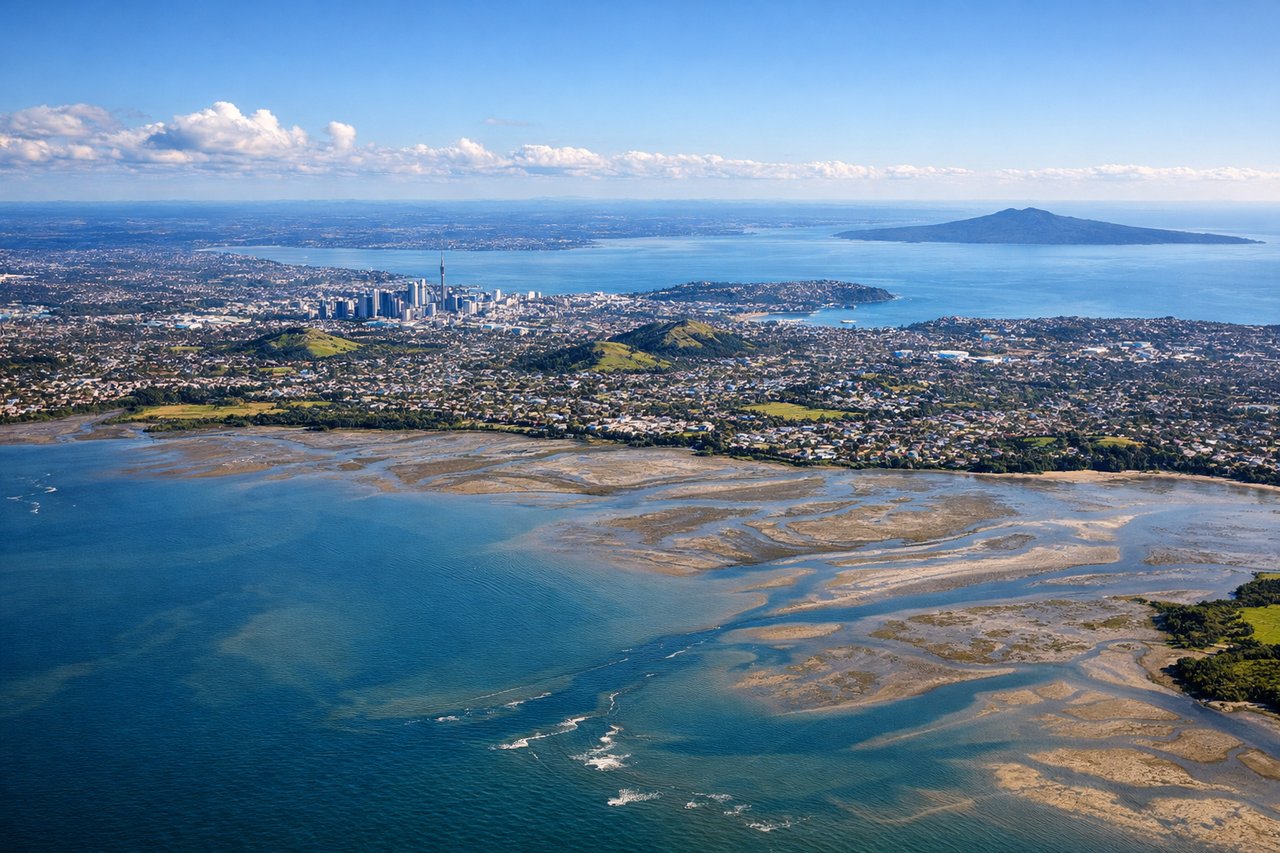
Takeoff from AKL
RIGHTDeparting AKL's runway 23L, the aircraft climbs southwest over Manukau Harbour then banks right onto its northerly track toward Fiji, swinging over central Auckland. Right-side passengers get a good look at the city skyline, Waitemata Harbour, and the volcanic cones dotting the isthmus before heading out over the Hauraki Gulf islands.
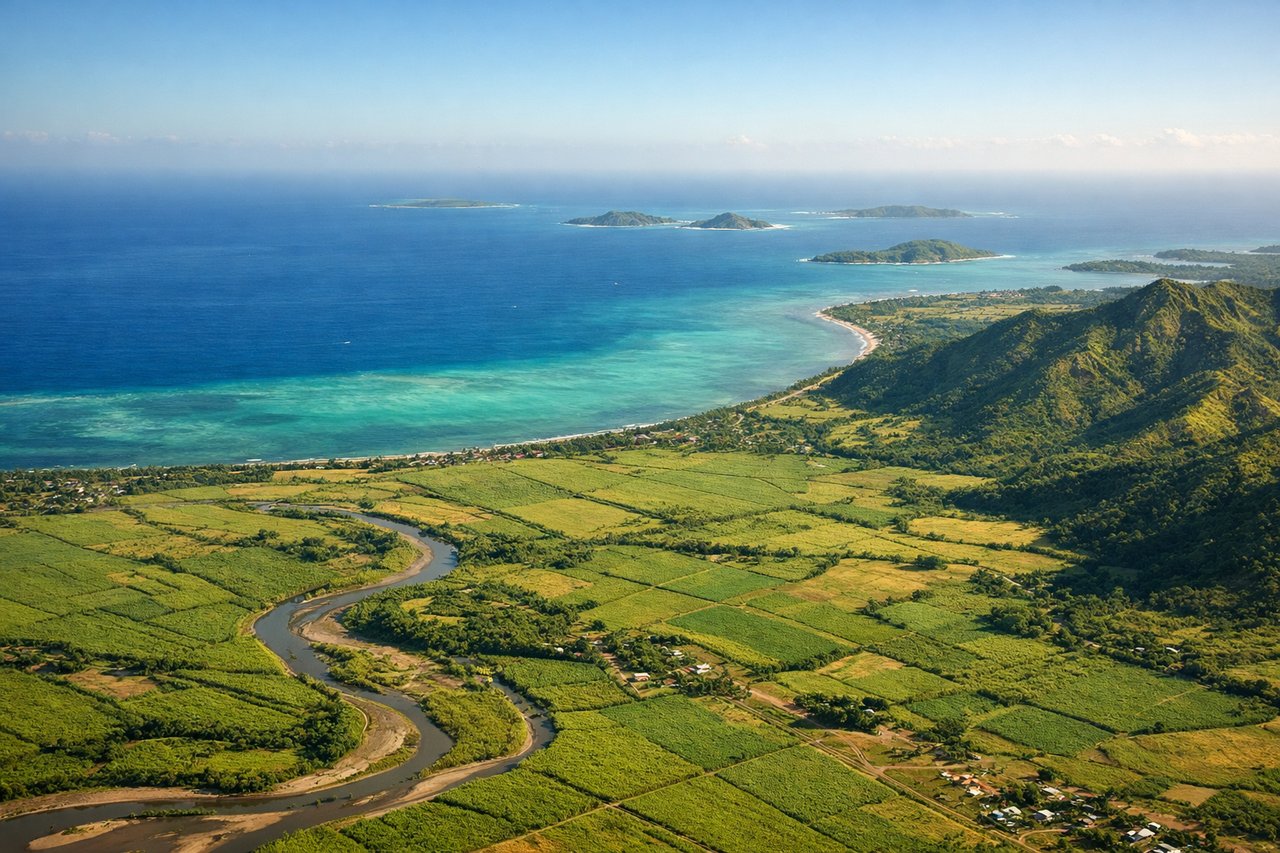
Landing at NAN
RIGHTArrivals into NAN typically land on runway 02, approaching from the south along Viti Levu's western coastline. Right-side passengers descending on this track see the island's rugged interior peaks and ridgelines rising inland, plus the turquoise reef-fringed waters of Nadi Bay just before touchdown.
Landmarks on this routeAll landmarks →
Will your flight be in sunlight?
See exactly which side of the plane gets sun and shade at your departure time.
About This Route
Which side of the plane should I sit on flying from Auckland International (AKL) to Nadi International (NAN)?
Sit on the Right side of the plane for the best views on flights from Auckland to Nandi. The right side captures both the Auckland harbour/city departure and the mountainous Viti Levu approach into Nadi, while the left side sees mostly open Pacific Ocean during takeoff's initial climb and a featureless ocean approach on landing.
What can I see during takeoff from Auckland International in Auckland?
During takeoff from Auckland International (AKL), sit on the Right side for the best views. Departing AKL's runway 23L, the aircraft climbs southwest over Manukau Harbour then banks right onto its northerly track toward Fiji, swinging over central Auckland. Right-side passengers get a good look at the city skyline, Waitemata Harbour, and the volcanic cones dotting the isthmus before heading out over the Hauraki Gulf islands. Notable sights include: Manukau Harbour, Auckland city skyline, Waitemata Harbour, Hauraki Gulf islands (Waiheke, Rangitoto).
What can I see when landing at Nadi International in Nandi?
When landing at Nadi International (NAN), sit on the Right side for the best views. Arrivals into NAN typically land on runway 02, approaching from the south along Viti Levu's western coastline. Right-side passengers descending on this track see the island's rugged interior peaks and ridgelines rising inland, plus the turquoise reef-fringed waters of Nadi Bay just before touchdown. Notable sights include: Viti Levu interior mountains, Nadi Bay coral reefs, Nadi River delta, Mamanuca Islands offshore.
How long is the flight from Auckland to Nandi?
The flight from Auckland International (AKL) to Nadi International (NAN) takes 3h 10m.
What does the Auckland to Nandi flight path pass over?
The cruise phase is almost entirely over open South Pacific Ocean with no landmasses until Fiji's outer islands come into view during descent.