The left side wins on the strength of the cruise phase, where passengers get a close, clear view of the snow-capped volcanic peaks of Tongariro National Park (Ruapehu, Ngauruhoe, and Tongariro) rising above the central plateau near Lake Taupo, a landmark cluster the flight path passes closer to than Mount Taranaki on the opposite side. Combined with the brief Auckland skyline view on departure, the left side offers a more consistently scenic experience across the short flight.
Flown AKL to WLG? Did we get it right?
Flight Path
Auckland to Wellington is 298 miles (480 km), a flight of about 1 hour 5 minutes.
Central North Island volcanic plateau, including Lake Taupo and the Tongariro National Park volcanoes (Ruapehu, Ngauruhoe, Tongariro), with Mount Taranaki's isolated cone visible farther west near the Tasman coast.
Great circle distance and headings ›Phase by phase
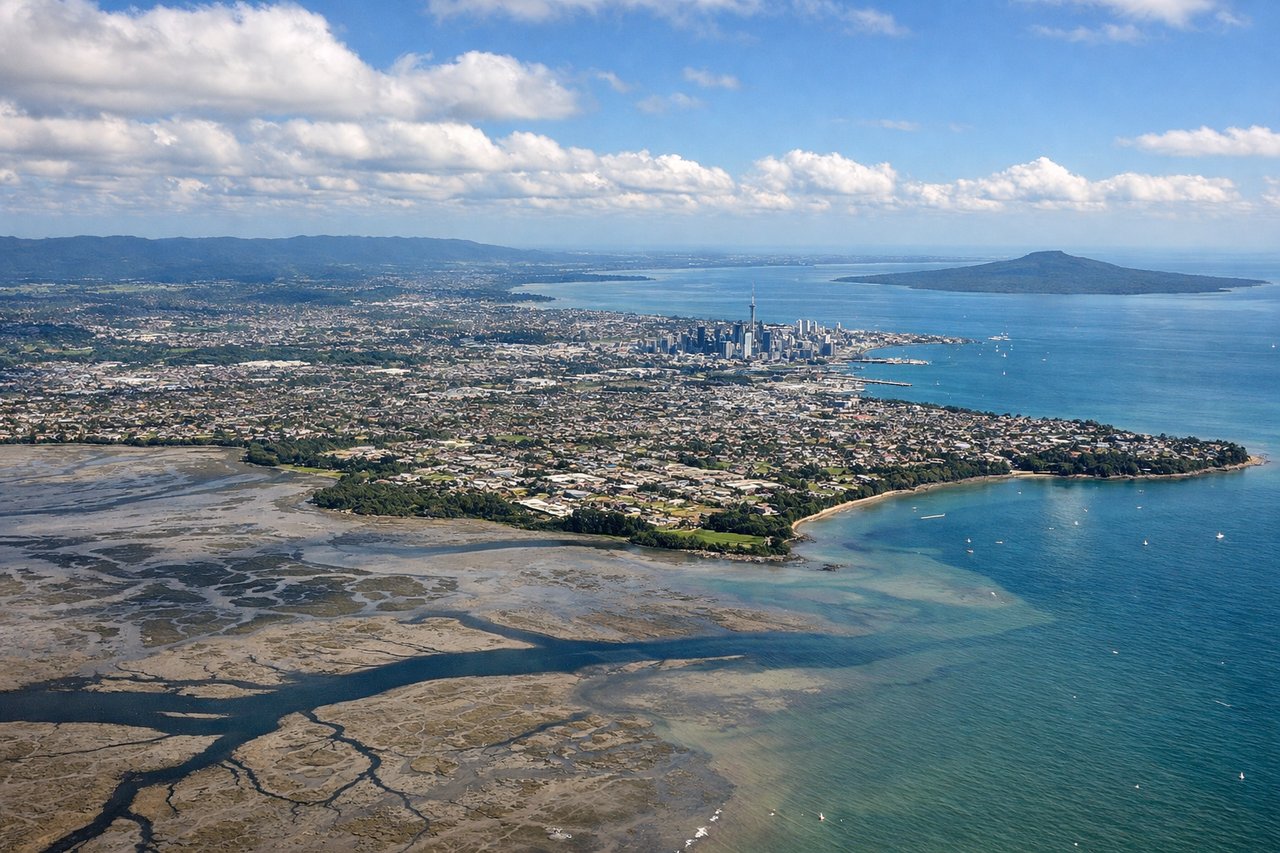
Takeoff from AKL
LEFTAKL typically departs southwest on runway 23L before curving south toward Wellington, giving left-side passengers a brief but clear view back over Auckland's CBD and the Waitemata Harbour as the city falls away. The Sky Tower and the volcanic cone of Rangitoto Island in the Hauraki Gulf are both visible in this window before the aircraft settles onto its southbound track.
Landing at WLG
RIGHTWith northerly winds favoring runway 34, the aircraft typically swings out over Cook Strait and turns back north to land, putting the Miramar Peninsula and Wellington's harbour entrance on the right side during the final turn. This gives a good look at the city's compact skyline tucked against the hills as the plane lines up for landing.
Will your flight be in sunlight?
Pick a date and time in the Sun Map to watch the sun move across your whole flight.
About This Route
Which side of the plane should I sit on flying from Auckland International (AKL) to Wellington International (WLG)?
Sit on the Left side of the plane for the best views on flights from Auckland to Wellington. The left side wins on the strength of the cruise phase, where passengers get a close, clear view of the snow-capped volcanic peaks of Tongariro National Park (Ruapehu, Ngauruhoe, and Tongariro) rising above the central plateau near Lake Taupo, a landmark cluster the flight path passes closer to than Mount Taranaki on the opposite side. Combined with the brief Auckland skyline view on departure, the left side offers a more consistently scenic experience across the short flight.
What can I see during takeoff from Auckland International in Auckland?
During takeoff from Auckland International (AKL), sit on the Left side for the best views. AKL typically departs southwest on runway 23L before curving south toward Wellington, giving left-side passengers a brief but clear view back over Auckland's CBD and the Waitemata Harbour as the city falls away. The Sky Tower and the volcanic cone of Rangitoto Island in the Hauraki Gulf are both visible in this window before the aircraft settles onto its southbound track. Notable sights include: Auckland CBD skyline and Sky Tower, Waitemata Harbour, Rangitoto Island, Hauraki Gulf.
What can I see when landing at Wellington International in Wellington?
When landing at Wellington International (WLG), sit on the Right side for the best views. With northerly winds favoring runway 34, the aircraft typically swings out over Cook Strait and turns back north to land, putting the Miramar Peninsula and Wellington's harbour entrance on the right side during the final turn. This gives a good look at the city's compact skyline tucked against the hills as the plane lines up for landing. Notable sights include: Miramar Peninsula, Wellington Harbour entrance, Wellington CBD skyline, Cook Strait.
How long is the flight from Auckland to Wellington?
The flight from Auckland International (AKL) to Wellington International (WLG) takes about 1 hour 5 minutes. The shortest flight path between them is 298 miles (480 km); winds and air traffic control usually add a few percent.
What does the Auckland to Wellington flight path pass over?
Central North Island volcanic plateau, including Lake Taupo and the Tongariro National Park volcanoes (Ruapehu, Ngauruhoe, Tongariro), with Mount Taranaki's isolated cone visible farther west near the Tasman coast.