Albany to New York is 146 miles (235 km), a flight of about 50 minutes.
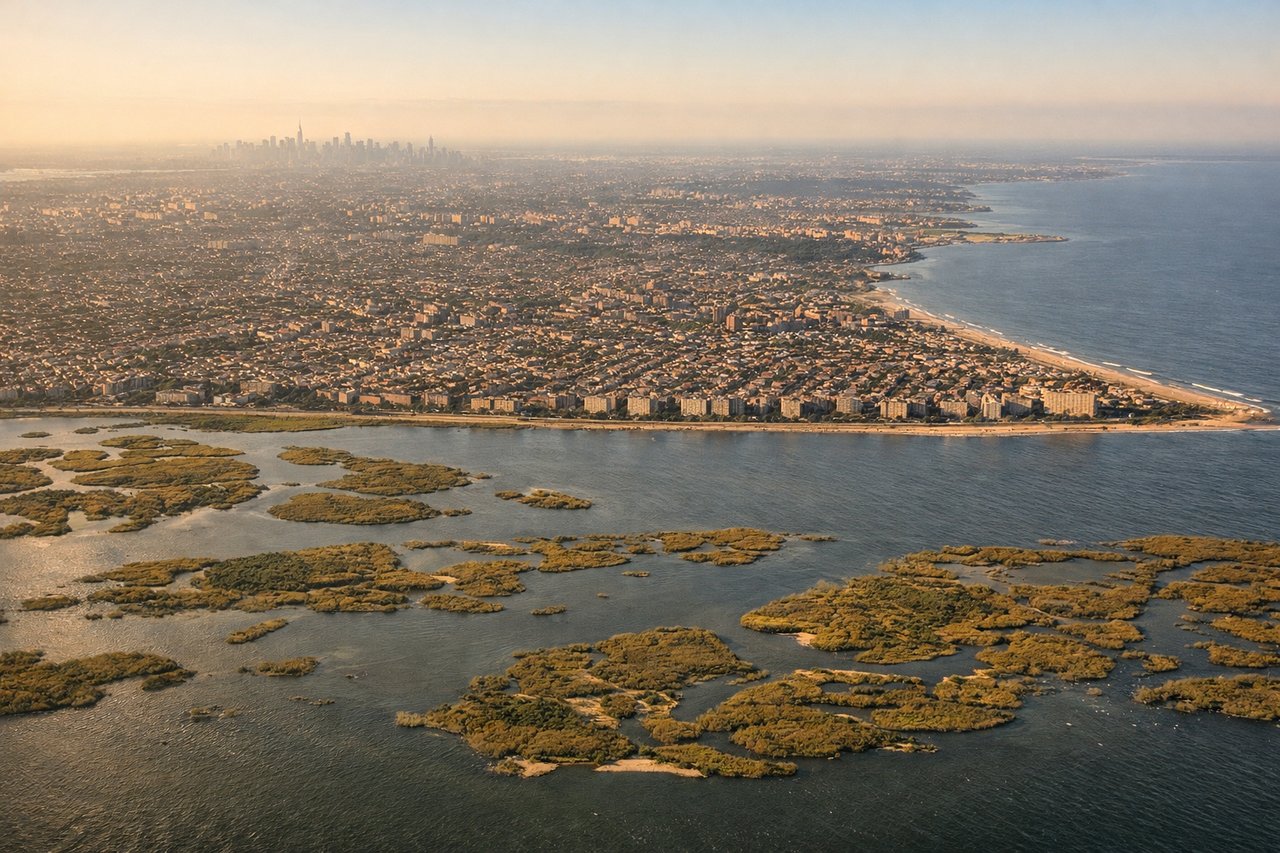
While the takeoff offers mountain views, the landing approach into JFK provides more dramatic and recognizable urban scenery—the Manhattan skyline, East River, and Jamaica Bay are iconic and visually compelling. Left-side seats capture these features most effectively during descent.
Flight Path
During cruise, the flight path passes over the Hudson River valley and Westchester County. Notable features include the Hudson River's continued southward flow, the Palisades cliffs on the New Jersey side, and the transition from rural/forested terrain to increasingly dense suburban development as the aircraft approaches the New York metropolitan area. The Tappan Zee Bridge area and the widening of the Hudson near Tarrytown are visible geographic markers along the route.
Great circle distance and headings ›.jpeg?width=600)
.jpg?width=600)
Phase by phase
Takeoff from ALB
RIGHTRight-side seats offer views of the Hudson River valley as the aircraft climbs southwestward from Albany. You'll see the river's meandering path and the Catskill Mountains rising to the west, which are prominent from altitude during the initial climb.
Landing at JFK
LEFTLeft-side seats provide excellent views during the descent approach into JFK. You'll see the East River, Manhattan's skyline, and the convergence of the Hudson and East Rivers as the aircraft descends toward the runway. The urban landscape and water bodies are visually striking from this angle.
Landmarks on this routeAll landmarks →
Will your flight be in sunlight?
Pick a date and time in the Sun Map to watch the sun move across your whole flight.
About This Route
Which side of the plane should I sit on flying from Albany International (ALB) to John F Kennedy International (JFK)?
Sit on the Left side of the plane for the best views on flights from Albany to New York. While the takeoff offers mountain views, the landing approach into JFK provides more dramatic and recognizable urban scenery—the Manhattan skyline, East River, and Jamaica Bay are iconic and visually compelling. Left-side seats capture these features most effectively during descent.
What can I see during takeoff from Albany International in Albany?
During takeoff from Albany International (ALB), sit on the Right side for the best views. Right-side seats offer views of the Hudson River valley as the aircraft climbs southwestward from Albany. You'll see the river's meandering path and the Catskill Mountains rising to the west, which are prominent from altitude during the initial climb. Notable sights include: Hudson River, Catskill Mountains, Albany city grid, Mohawk River confluence.
What can I see when landing at John F Kennedy International in New York?
When landing at John F Kennedy International (JFK), sit on the Left side for the best views. Left-side seats provide excellent views during the descent approach into JFK. You'll see the East River, Manhattan's skyline, and the convergence of the Hudson and East Rivers as the aircraft descends toward the runway. The urban landscape and water bodies are visually striking from this angle. Notable sights include: Manhattan skyline, East River, Hudson River, Jamaica Bay.
How long is the flight from Albany to New York?
The flight from Albany International (ALB) to John F Kennedy International (JFK) takes about 50 minutes. The shortest flight path between them is 146 miles (235 km); winds and air traffic control usually add a few percent.
What does the Albany to New York flight path pass over?
During cruise, the flight path passes over the Hudson River valley and Westchester County. Notable features include the Hudson River's continued southward flow, the Palisades cliffs on the New Jersey side, and the transition from rural/forested terrain to increasingly dense suburban development as the aircraft approaches the New York metropolitan area. The Tappan Zee Bridge area and the widening of the Hudson near Tarrytown are visible geographic markers along the route.