Algier to Istanbul is 1,401 miles (2,255 km), a flight of about 2 hours 50 minutes.
The left side wins narrowly thanks to the scenic Algiers Bay departure and the Sea of Marmara views on arrival, while the right side offers only modest inland terrain during both phases. The long Mediterranean cruise segment is fairly featureless on either side, keeping both scores moderate.
Flight Path
Mediterranean Sea crossing south of Sicily and Malta, then over the Ionian Sea approaching the Greek mainland and Aegean before reaching the Turkish coast
Great circle distance and headings ›Phase by phase
Takeoff from ALG
LEFTDeparting Algiers eastbound, the left side offers a sweeping view of Algiers Bay and the Mediterranean coastline curving away, with the whitewashed city and harbor visible below. The right side mostly shows the drier Atlas foothills, which are less visually striking from cruise altitude.
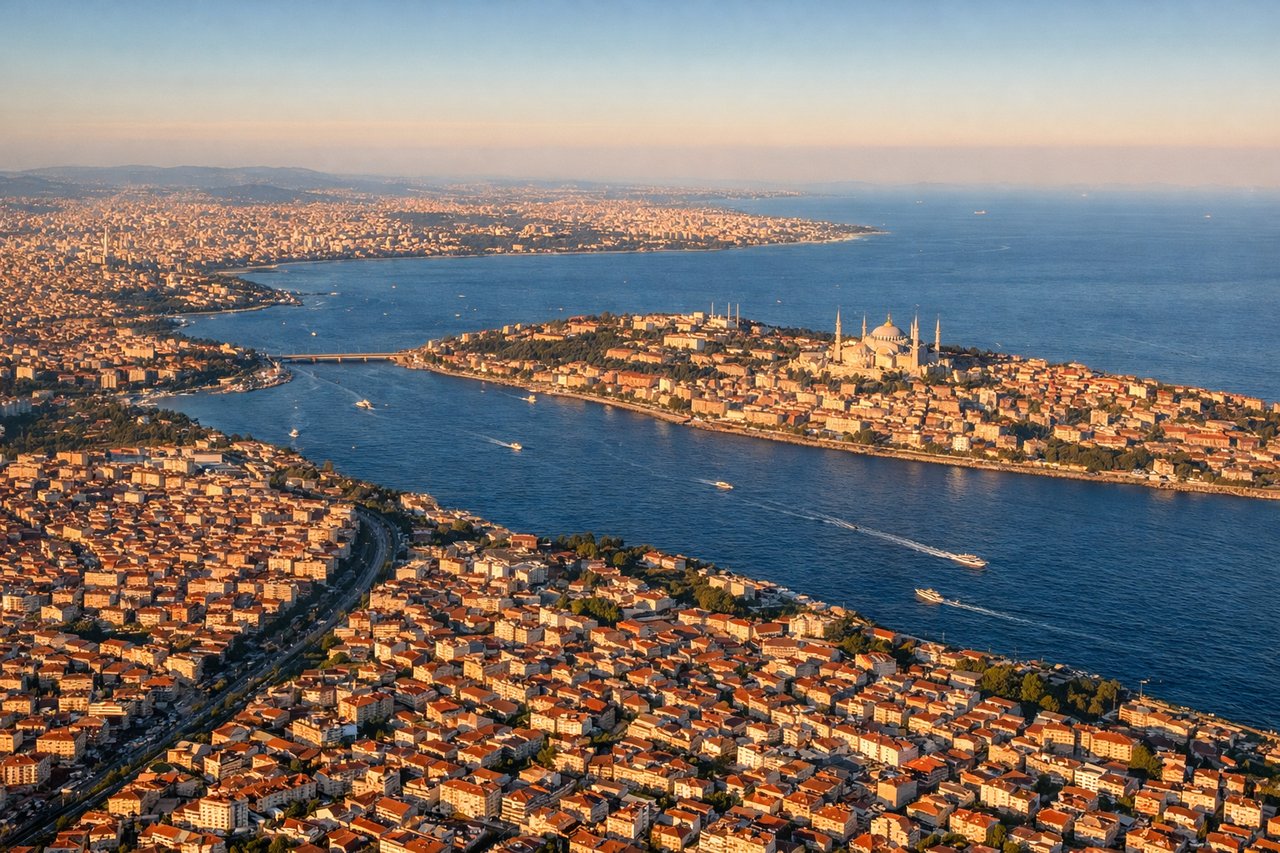
Landing at IST
LEFTOn approach to Istanbul Airport from the west, the left side typically faces south toward the Sea of Marmara, offering glimpses of its coastline and scattered islands before the final turn to land. The right side mostly shows the flatter Thracian countryside with fewer distinctive features.
Landmarks on this routeAll landmarks →
Will your flight be in sunlight?
Pick a date and time in the Sun Map to watch the sun move across your whole flight.
About This Route
Which side of the plane should I sit on flying from Houari Boumediene (ALG) to İstanbul Airport (IST)?
Sit on the Left side of the plane for the best views on flights from Algier to Istanbul. The left side wins narrowly thanks to the scenic Algiers Bay departure and the Sea of Marmara views on arrival, while the right side offers only modest inland terrain during both phases. The long Mediterranean cruise segment is fairly featureless on either side, keeping both scores moderate.
What can I see during takeoff from Houari Boumediene in Algier?
During takeoff from Houari Boumediene (ALG), sit on the Left side for the best views. Departing Algiers eastbound, the left side offers a sweeping view of Algiers Bay and the Mediterranean coastline curving away, with the whitewashed city and harbor visible below. The right side mostly shows the drier Atlas foothills, which are less visually striking from cruise altitude. Notable sights include: Algiers Bay, Mediterranean coastline, Casbah district, Kabylie foothills in the distance.
What can I see when landing at İstanbul Airport in Istanbul?
When landing at İstanbul Airport (IST), sit on the Left side for the best views. On approach to Istanbul Airport from the west, the left side typically faces south toward the Sea of Marmara, offering glimpses of its coastline and scattered islands before the final turn to land. The right side mostly shows the flatter Thracian countryside with fewer distinctive features. Notable sights include: Sea of Marmara, Princes' Islands, Istanbul European-side suburbs, Bosphorus entrance.
How long is the flight from Algier to Istanbul?
The flight from Houari Boumediene (ALG) to İstanbul Airport (IST) takes about 2 hours 50 minutes. The shortest flight path between them is 1,401 miles (2,255 km); winds and air traffic control usually add a few percent.
What does the Algier to Istanbul flight path pass over?
Mediterranean Sea crossing south of Sicily and Malta, then over the Ionian Sea approaching the Greek mainland and Aegean before reaching the Turkish coast