The right side wins overall. The Mediterranean departure view from Algiers is genuinely spectacular — the bay, the white city, and the coastline are hard to beat. Over the flight, the right side also gives slightly better angles on the Spanish coast and Pyrenees as you track northwest. The London approach advantage on the left is real but more modest.
Flown ALG to LHR? Did we get it right?
Flight Path
Algier to London is 1,037 miles (1,669 km), a flight of about 2 hours 55 minutes.
After crossing the Mediterranean (roughly 30-40 minutes), the flight tracks over the Spanish coast near Alicante or Cartagena, then crosses the Spanish meseta plateau and Madrid region, passes over the Pyrenees mountain range into France, crosses southern and central France including the Massif Central highlands, then the English Channel before descending into London. The Pyrenees crossing is the most visually dramatic midpoint feature, with snow-capped peaks visible from cruising altitude on clear days.
Great circle distance and headings ›


Phase by phase
Takeoff from ALG
RIGHTAlgiers airport sits just east of the city on the coast. Departures heading northwest toward Europe typically use runway 05/23 or 09/27. A right-side seat gives you the Bay of Algiers sweeping westward, with the white city (La Casbah district) visible along the coastal hillside before you climb out over the Mediterranean.
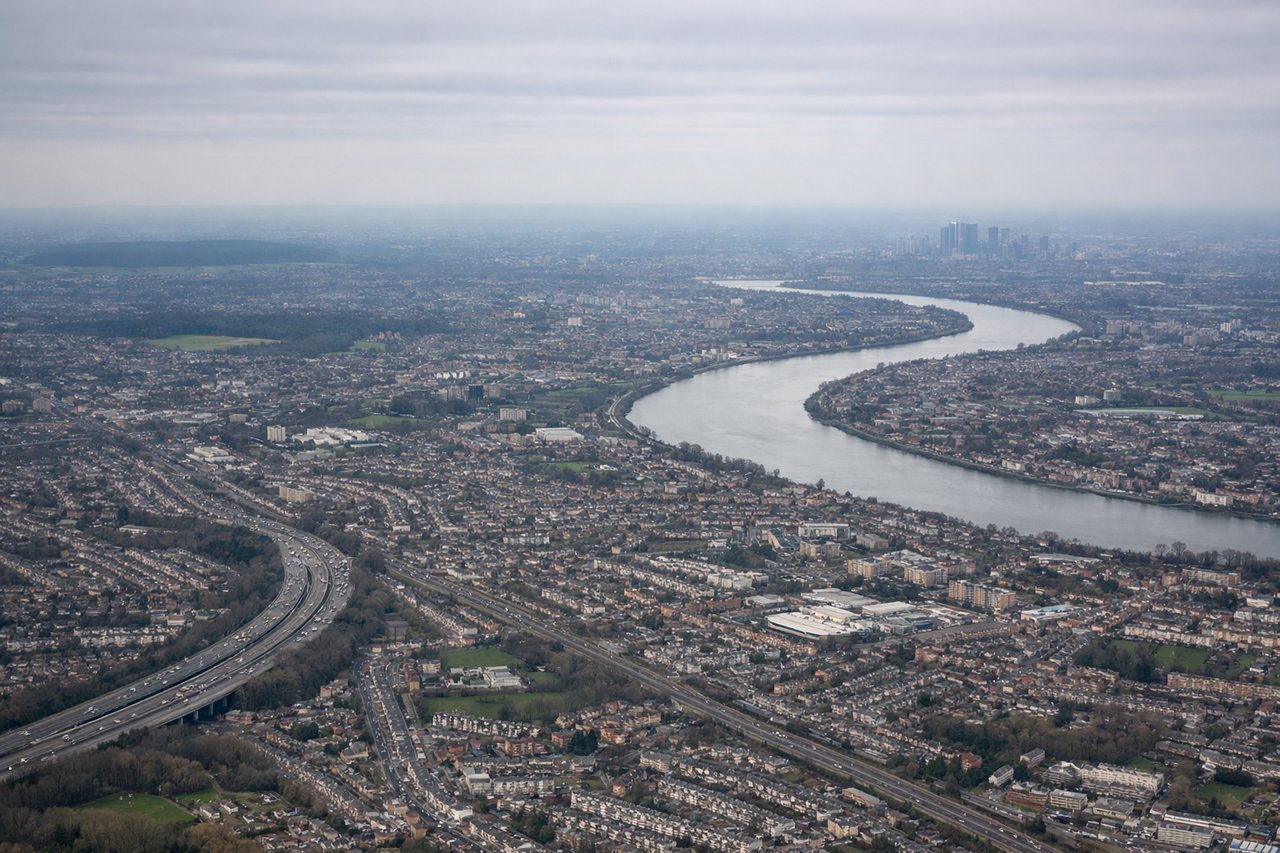
Landing at LHR
LEFTHeathrow arrivals from the south typically use the eastbound runways (09L/09R), approaching over Windsor and west London. A left-side seat on final approach gives you Windsor Castle, the Thames bending through west London, and the dense urban grid of Greater London spreading to the northeast.
Will your flight be in sunlight?
Pick a date and time in the Sun Map to watch the sun move across your whole flight.
About This Route
Which side of the plane should I sit on flying from Houari Boumediene (ALG) to Heathrow (LHR)?
Sit on the Right side of the plane for the best views on flights from Algier to London. The right side wins overall. The Mediterranean departure view from Algiers is genuinely spectacular — the bay, the white city, and the coastline are hard to beat. Over the flight, the right side also gives slightly better angles on the Spanish coast and Pyrenees as you track northwest. The London approach advantage on the left is real but more modest.
What can I see during takeoff from Houari Boumediene in Algier?
During takeoff from Houari Boumediene (ALG), sit on the Right side for the best views. Algiers airport sits just east of the city on the coast. Departures heading northwest toward Europe typically use runway 05/23 or 09/27. A right-side seat gives you the Bay of Algiers sweeping westward, with the white city (La Casbah district) visible along the coastal hillside before you climb out over the Mediterranean. Notable sights include: Bay of Algiers, La Casbah hillside district, Algiers port and harbor breakwaters, Mediterranean coastline stretching west toward Tipaza.
What can I see when landing at Heathrow in London?
When landing at Heathrow (LHR), sit on the Left side for the best views. Heathrow arrivals from the south typically use the eastbound runways (09L/09R), approaching over Windsor and west London. A left-side seat on final approach gives you Windsor Castle, the Thames bending through west London, and the dense urban grid of Greater London spreading to the northeast. Notable sights include: Windsor Castle and Windsor Great Park, River Thames bend at Staines-upon-Thames, Wembley Stadium arch visible to the northeast, M25 motorway ring visible below.
How long is the flight from Algier to London?
The flight from Houari Boumediene (ALG) to Heathrow (LHR) takes about 2 hours 55 minutes. The shortest flight path between them is 1,037 miles (1,669 km); winds and air traffic control usually add a few percent.
What does the Algier to London flight path pass over?
After crossing the Mediterranean (roughly 30-40 minutes), the flight tracks over the Spanish coast near Alicante or Cartagena, then crosses the Spanish meseta plateau and Madrid region, passes over the Pyrenees mountain range into France, crosses southern and central France including the Massif Central highlands, then the English Channel before descending into London. The Pyrenees crossing is the most visually dramatic midpoint feature, with snow-capped peaks visible from cruising altitude on clear days.