The left side wins overall because the Beirut approach delivers one of the most dramatic coastal-mountain arrival views in the region, and during the cruise the left side also captures the Alps crossing over Switzerland and northern Italy, the Adriatic coast, and the Greek islands — a stronger sequence of landmarks than the right side offers across the full flight.
Flight Path
The route tracks southeast from the Netherlands over Germany, crosses the Alps over Switzerland or Austria with clear views of alpine terrain, continues over northern Italy and the Adriatic Sea, passes over Greece and the Aegean with its island chains visible below, crosses the eastern Mediterranean, and descends toward the Lebanese coast. The Alps and the Aegean island scatter are the two most visually distinctive midpoint features.
Great circle distance and headings ›
.jpg?width=600)
Phase by phase
Takeoff from AMS
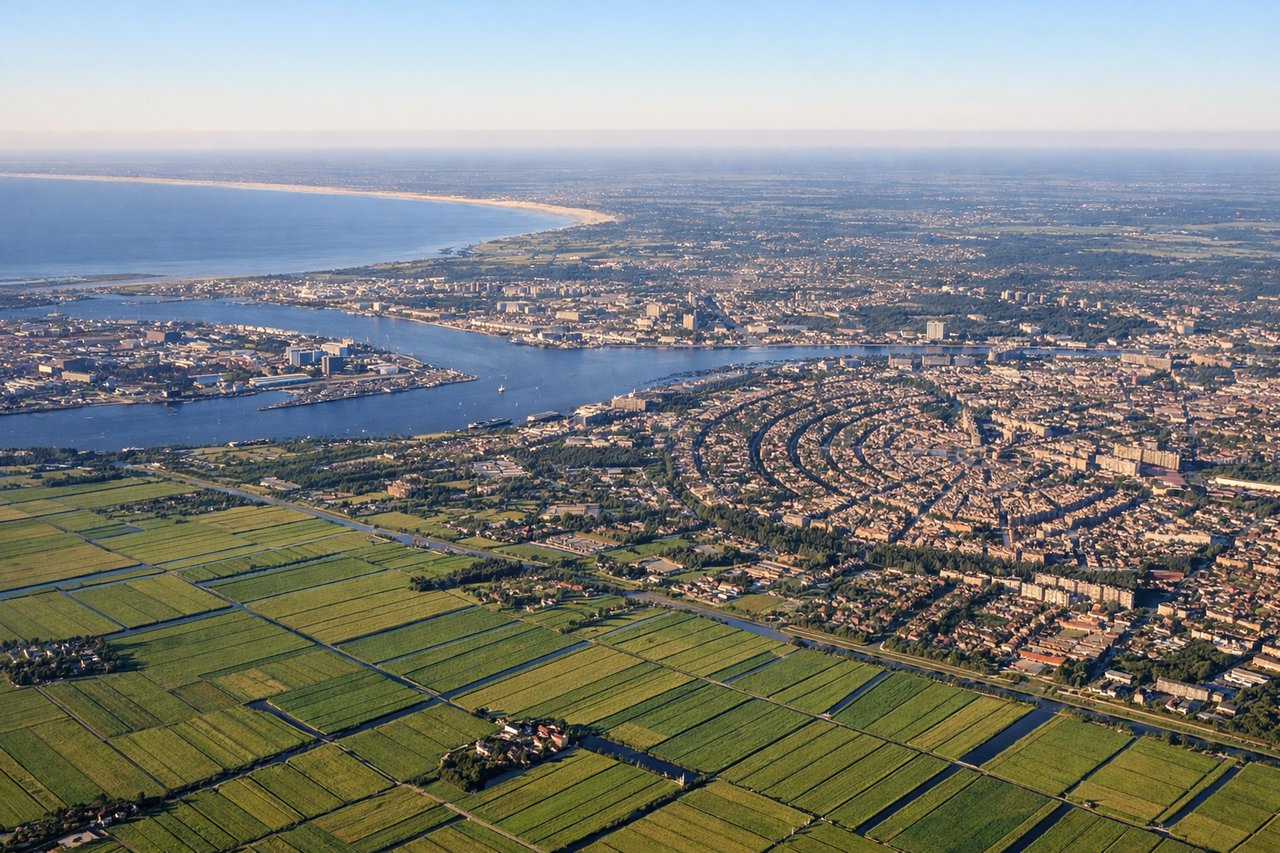
RIGHTSchiphol typically departs southeast on runway 18R/36L or eastward on 18C, meaning a right-side seat looks back over central Amsterdam, the IJ waterway, and the historic canal ring as you climb out. Left side faces open polder farmland with less visual interest.
Landing at BEY
LEFTBeirut International typically lands from the west on runway 03, meaning the aircraft approaches from over the Mediterranean. The left side gives a clear view of Beirut city, the distinctive peninsula of the city center, and the Lebanon Mountain range rising sharply behind the coast.
Landmarks on this routeAll landmarks →
Will your flight be in sunlight?
See exactly which side of the plane gets sun and shade at your departure time.
About This Route
Which side of the plane should I sit on flying from Schiphol (AMS) to Beirut International (BEY)?
Sit on the Left side of the plane for the best views on flights from Amsterdam to Beirut. The left side wins overall because the Beirut approach delivers one of the most dramatic coastal-mountain arrival views in the region, and during the cruise the left side also captures the Alps crossing over Switzerland and northern Italy, the Adriatic coast, and the Greek islands — a stronger sequence of landmarks than the right side offers across the full flight.
What can I see during takeoff from Schiphol in Amsterdam?
During takeoff from Schiphol (AMS), sit on the Right side for the best views. Schiphol typically departs southeast on runway 18R/36L or eastward on 18C, meaning a right-side seat looks back over central Amsterdam, the IJ waterway, and the historic canal ring as you climb out. Left side faces open polder farmland with less visual interest. Notable sights include: Amsterdam canal ring and Amstel river, IJ waterway and Amsterdam Centraal area, Markermeer lake to the northeast, greenhouse polder districts of Aalsmeer.
What can I see when landing at Beirut International in Beirut?
When landing at Beirut International (BEY), sit on the Left side for the best views. Beirut International typically lands from the west on runway 03, meaning the aircraft approaches from over the Mediterranean. The left side gives a clear view of Beirut city, the distinctive peninsula of the city center, and the Lebanon Mountain range rising sharply behind the coast. Notable sights include: Beirut city center peninsula and port, Mount Lebanon range rising steeply from the coast, Jounieh Bay to the north, Mediterranean coastline stretching south toward Sidon.
How long is the flight from Amsterdam to Beirut?
The flight from Schiphol (AMS) to Beirut International (BEY) takes Approximately 4 hours 30 minutes.
What does the Amsterdam to Beirut flight path pass over?
The route tracks southeast from the Netherlands over Germany, crosses the Alps over Switzerland or Austria with clear views of alpine terrain, continues over northern Italy and the Adriatic Sea, passes over Greece and the Aegean with its island chains visible below, crosses the eastern Mediterranean, and descends toward the Lebanese coast. The Alps and the Aegean island scatter are the two most visually distinctive midpoint features.