While takeoff favors the left side with Amsterdam's urban and coastal features, the landing on the right side provides more dramatic scenery with Lake Tanganyika, the Burundi highlands, and the distinctive waterfront approach to Bujumbura. The cruise phase over central Africa offers minimal visual distinction between sides (savanna and forest canopy), so the landing experience tips the overall score to the right. Both sides score equally at 2.5 because the 7+ hour flight is dominated by featureless terrain (African savanna and forest) with no major mountain ranges, dramatic coastlines, or recognizable landmarks visible at cruise altitude along the typical flight path.
Flown AMS to BJM? Did we get it right?
Flight Path
Amsterdam to Bujumbura is 4,103 miles (6,603 km), a flight of about 7 hours 15 minutes.
The flight path crosses from the North Sea over Belgium and France, then over the Sahara Desert (southern Algeria and Niger), and finally descends through Central African savanna and forest (Democratic Republic of Congo, Tanzania border region) before reaching Lake Tanganyika. At cruise altitude, the Sahara's vast sand dunes and sparse settlements are visible in the midpoint, but offer minimal visual drama. The transition from European temperate zones to African savanna occurs gradually over 4-5 hours of flight, with the Sahara dominating the middle 2-3 hours. Lake Tanganyika becomes visible approximately 30-40 minutes before landing, marking the final descent into Bujumbura.
Great circle distance and headings ›Phase by phase
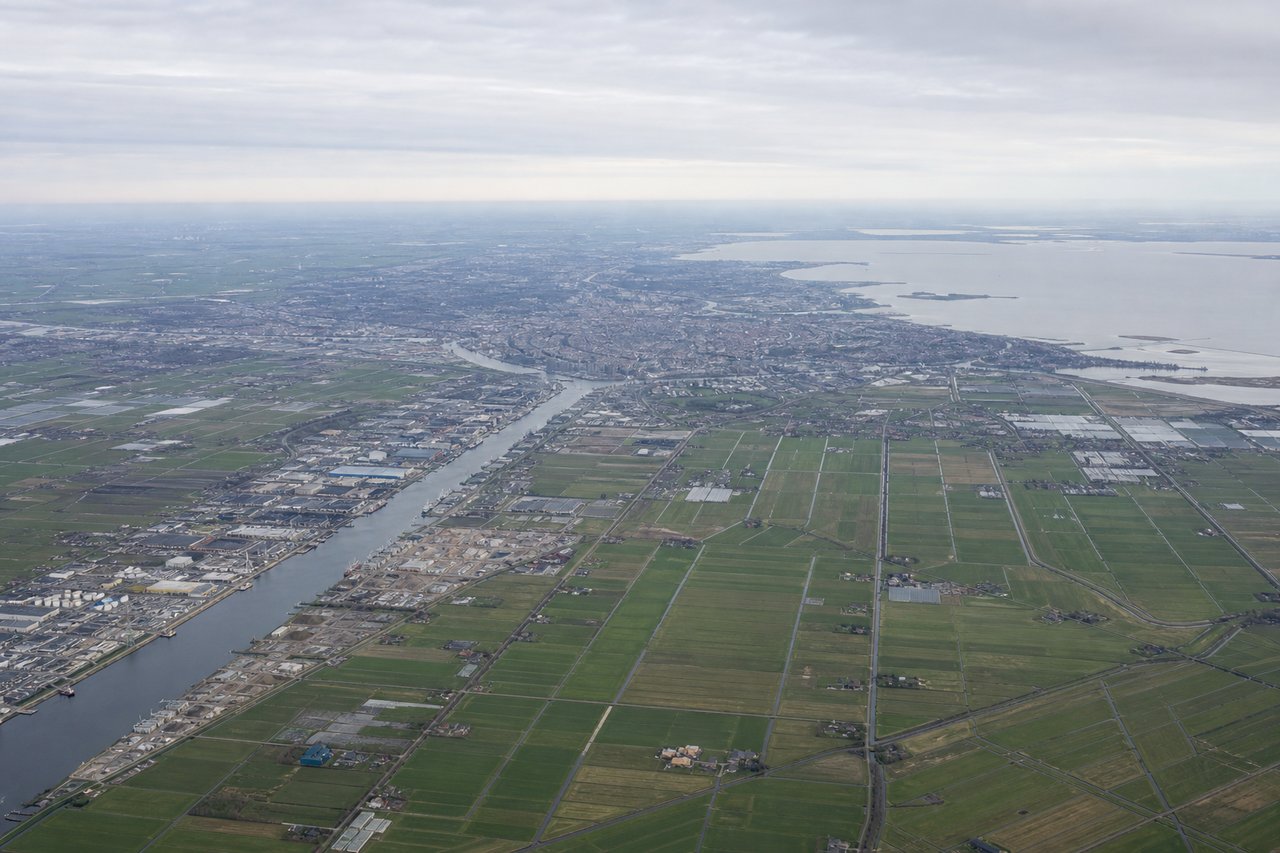
Takeoff from AMS
LEFTLeft side (north/northwest) offers views of Amsterdam's urban sprawl, the North Sea coast, and the Wadden Sea islands during initial climb. Right side faces inland polder flatlands with minimal visual interest during departure.
Landing at BJM
RIGHTRight side (east/southeast) during descent into Bujumbura provides views of Lake Tanganyika's eastern shoreline, the Burundi highlands, and the city's waterfront setting. Left side faces the open lake and Congo basin with less distinctive terrain.
Will your flight be in sunlight?
Pick a date and time in the Sun Map to watch the sun move across your whole flight.
About This Route
Which side of the plane should I sit on flying from Schiphol (AMS) to Bujumbura International (BJM)?
Sit on the Right side of the plane for the best views on flights from Amsterdam to Bujumbura. While takeoff favors the left side with Amsterdam's urban and coastal features, the landing on the right side provides more dramatic scenery with Lake Tanganyika, the Burundi highlands, and the distinctive waterfront approach to Bujumbura. The cruise phase over central Africa offers minimal visual distinction between sides (savanna and forest canopy), so the landing experience tips the overall score to the right. Both sides score equally at 2.5 because the 7+ hour flight is dominated by featureless terrain (African savanna and forest) with no major mountain ranges, dramatic coastlines, or recognizable landmarks visible at cruise altitude along the typical flight path.
What can I see during takeoff from Schiphol in Amsterdam?
During takeoff from Schiphol (AMS), sit on the Left side for the best views. Left side (north/northwest) offers views of Amsterdam's urban sprawl, the North Sea coast, and the Wadden Sea islands during initial climb. Right side faces inland polder flatlands with minimal visual interest during departure. Notable sights include: Amsterdam city center and harbor, North Sea coastline, Wadden Sea barrier islands (Texel, Vlieland), flat Dutch polder landscape.
What can I see when landing at Bujumbura International in Bujumbura?
When landing at Bujumbura International (BJM), sit on the Right side for the best views. Right side (east/southeast) during descent into Bujumbura provides views of Lake Tanganyika's eastern shoreline, the Burundi highlands, and the city's waterfront setting. Left side faces the open lake and Congo basin with less distinctive terrain. Notable sights include: Lake Tanganyika's eastern shore, Burundi highlands and escarpment, Bujumbura city waterfront, Congo basin to the west.
How long is the flight from Amsterdam to Bujumbura?
The flight from Schiphol (AMS) to Bujumbura International (BJM) takes about 7 hours 15 minutes. The shortest flight path between them is 4,103 miles (6,603 km); winds and air traffic control usually add a few percent.
What does the Amsterdam to Bujumbura flight path pass over?
The flight path crosses from the North Sea over Belgium and France, then over the Sahara Desert (southern Algeria and Niger), and finally descends through Central African savanna and forest (Democratic Republic of Congo, Tanzania border region) before reaching Lake Tanganyika. At cruise altitude, the Sahara's vast sand dunes and sparse settlements are visible in the midpoint, but offer minimal visual drama. The transition from European temperate zones to African savanna occurs gradually over 4-5 hours of flight, with the Sahara dominating the middle 2-3 hours. Lake Tanganyika becomes visible approximately 30-40 minutes before landing, marking the final descent into Bujumbura.