While the right side wins at takeoff for Amsterdam views, the left side captures the more dramatic scenery overall: the Rhine and Main river valleys over Germany in the cruise phase, and the spectacular Budapest approach with the Danube, Castle Hill, and Buda hills on final. The left side also picks up views of the Ore Mountains (Erzgebirge) on the German-Czech border and the Bohemian basin during cruise.
Flight Path
The route crosses the Rhine delta flatlands of the Netherlands, then over the North Rhine-Westphalia industrial Ruhr region, the Hessian highlands near Frankfurt, the Thuringian Forest, the Ore Mountains (Erzgebirge) on the German-Czech border, the Bohemian Basin around Prague, the Bohemian-Moravian Highlands, and the Little Carpathians before descending into the Pannonian Plain toward Budapest.
Great circle distance and headings ›
.jpg?width=600)
Phase by phase
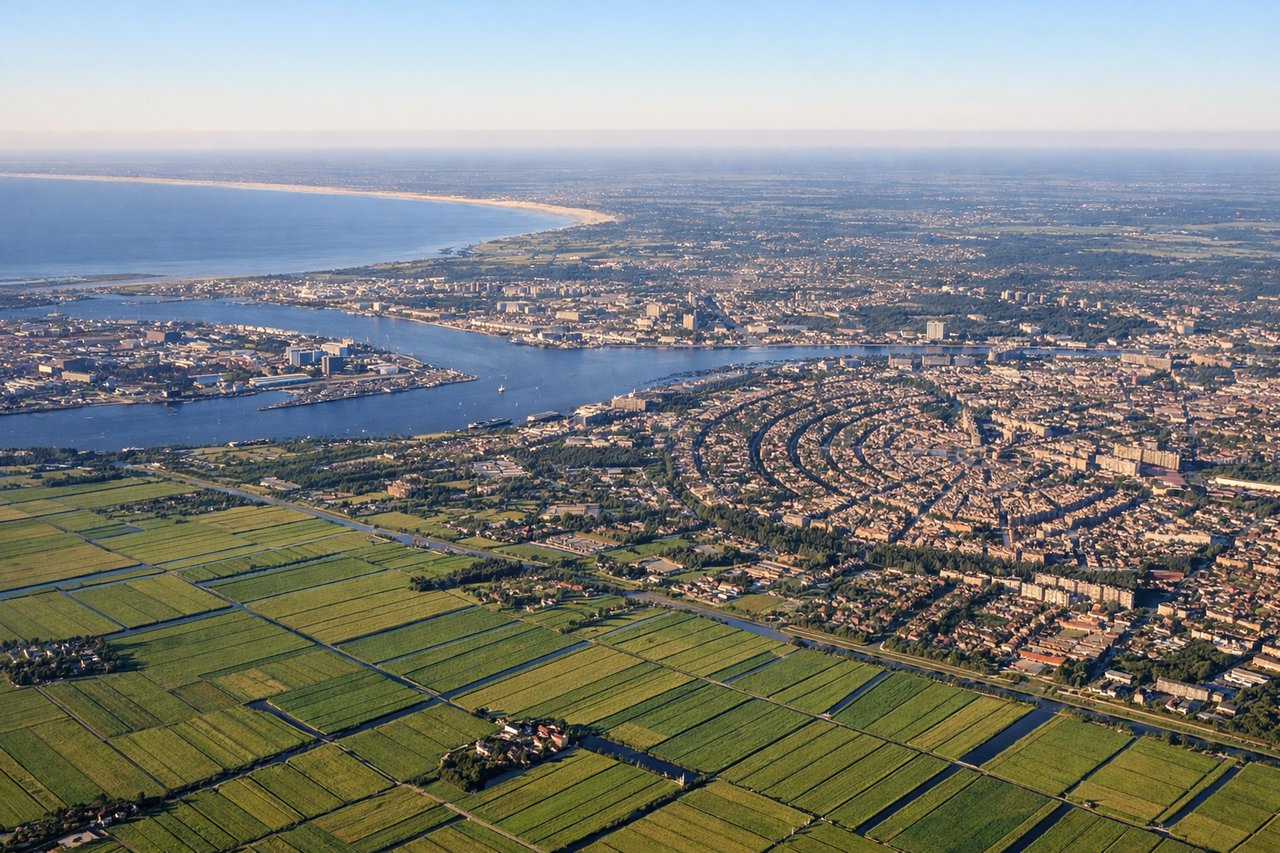
Takeoff from AMS
RIGHTSchiphol typically departs eastward on runway 36C/18C or uses the Polderbaan (36L), meaning a right-side seat gives views over Amsterdam city center, the IJ river, and the distinctive canal ring as the aircraft climbs and turns southeast. The left side faces open polder farmland and greenhouse complexes.
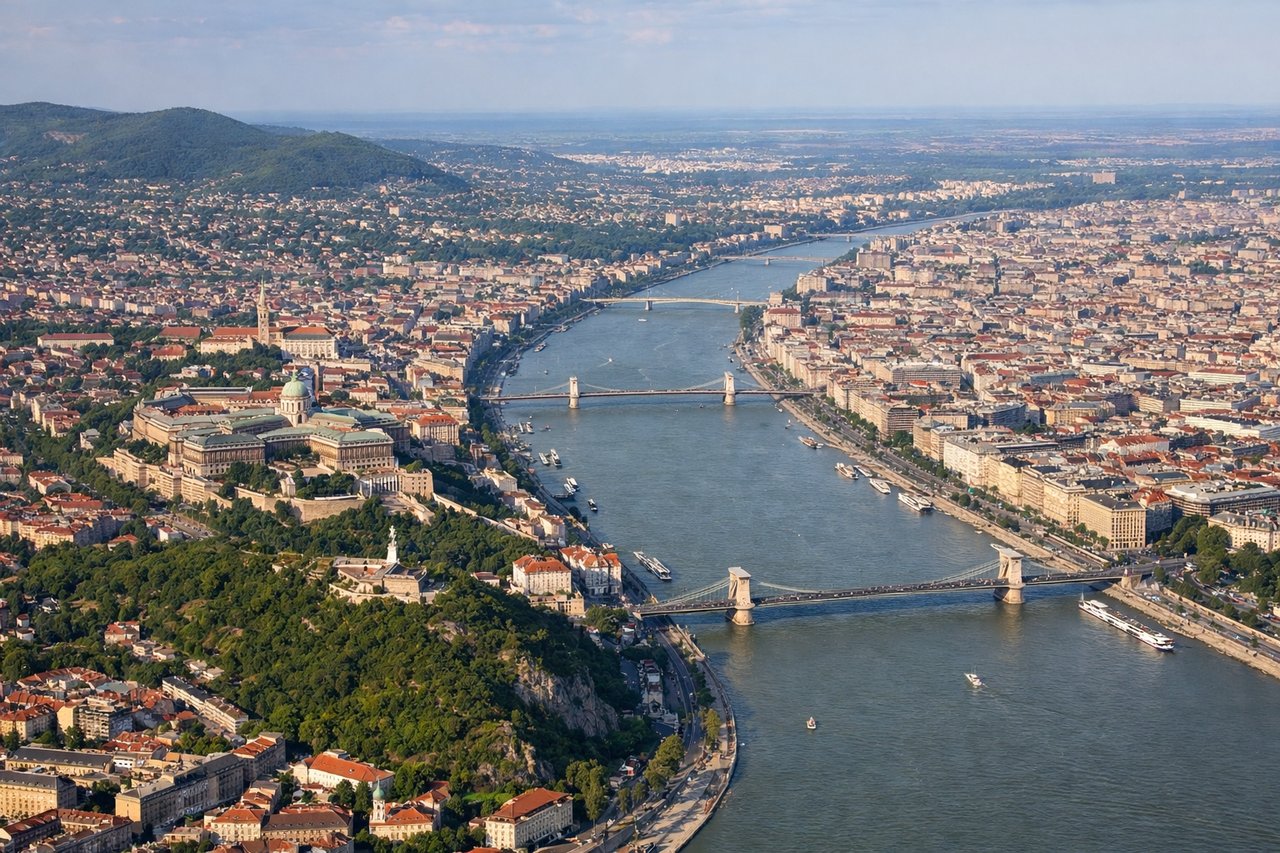
Landing at BUD
LEFTBudapest Ferihegy sits southeast of the city, and aircraft typically approach from the west or northwest on runway 31L/31R, meaning the final approach tracks over the city. The left side offers views of the Danube bend, Buda hills, and the city center including Castle Hill and the river bridges.
Landmarks on this routeAll landmarks →
Will your flight be in sunlight?
See exactly which side of the plane gets sun and shade at your departure time.
About This Route
Which side of the plane should I sit on flying from Schiphol (AMS) to Ferihegy (BUD)?
Sit on the Left side of the plane for the best views on flights from Amsterdam to Budapest. While the right side wins at takeoff for Amsterdam views, the left side captures the more dramatic scenery overall: the Rhine and Main river valleys over Germany in the cruise phase, and the spectacular Budapest approach with the Danube, Castle Hill, and Buda hills on final. The left side also picks up views of the Ore Mountains (Erzgebirge) on the German-Czech border and the Bohemian basin during cruise.
What can I see during takeoff from Schiphol in Amsterdam?
During takeoff from Schiphol (AMS), sit on the Right side for the best views. Schiphol typically departs eastward on runway 36C/18C or uses the Polderbaan (36L), meaning a right-side seat gives views over Amsterdam city center, the IJ river, and the distinctive canal ring as the aircraft climbs and turns southeast. The left side faces open polder farmland and greenhouse complexes. Notable sights include: Amsterdam canal ring (UNESCO), IJ river and harbor, Almere new town across the IJmeer, Flevoland polder geometry.
What can I see when landing at Ferihegy in Budapest?
When landing at Ferihegy (BUD), sit on the Left side for the best views. Budapest Ferihegy sits southeast of the city, and aircraft typically approach from the west or northwest on runway 31L/31R, meaning the final approach tracks over the city. The left side offers views of the Danube bend, Buda hills, and the city center including Castle Hill and the river bridges. Notable sights include: Danube river through Budapest, Buda Castle and Castle Hill, Gellért Hill, Chain Bridge and river crossing bridges.
How long is the flight from Amsterdam to Budapest?
The flight from Schiphol (AMS) to Ferihegy (BUD) takes Approximately 2 hours 15 minutes.
What does the Amsterdam to Budapest flight path pass over?
The route crosses the Rhine delta flatlands of the Netherlands, then over the North Rhine-Westphalia industrial Ruhr region, the Hessian highlands near Frankfurt, the Thuringian Forest, the Ore Mountains (Erzgebirge) on the German-Czech border, the Bohemian Basin around Prague, the Bohemian-Moravian Highlands, and the Little Carpathians before descending into the Pannonian Plain toward Budapest.