Right side wins both the departure from Schiphol and the arrival into Cape Town. The Cape Town approach on the right is genuinely one of the most spectacular in commercial aviation, and that alone makes right the definitive choice for this route. Over the Sahara and equatorial Africa the views are similar on both sides, so the bookend moments at origin and destination decide it.
Flight Path
The route tracks southeast over Belgium and France, then crosses the Mediterranean near Sardinia or Sicily. Over North Africa the Sahara Desert dominates for several hours with vast sand seas including the Erg Chebbi dune fields and the Ahaggar mountain massif in Algeria visible as dark rocky uplands rising from the sand. The route then crosses the Congo Basin rainforest, an unbroken dark green canopy for hundreds of miles. Further south, the Kalahari transitions to the drier Karoo scrubland before the Western Cape mountains appear on descent.
Great circle distance and headings ›
_Panoramica_del_centro_della_citt%C3%A0_dal_lago.jpg?width=600)


Phase by phase
Takeoff from AMS
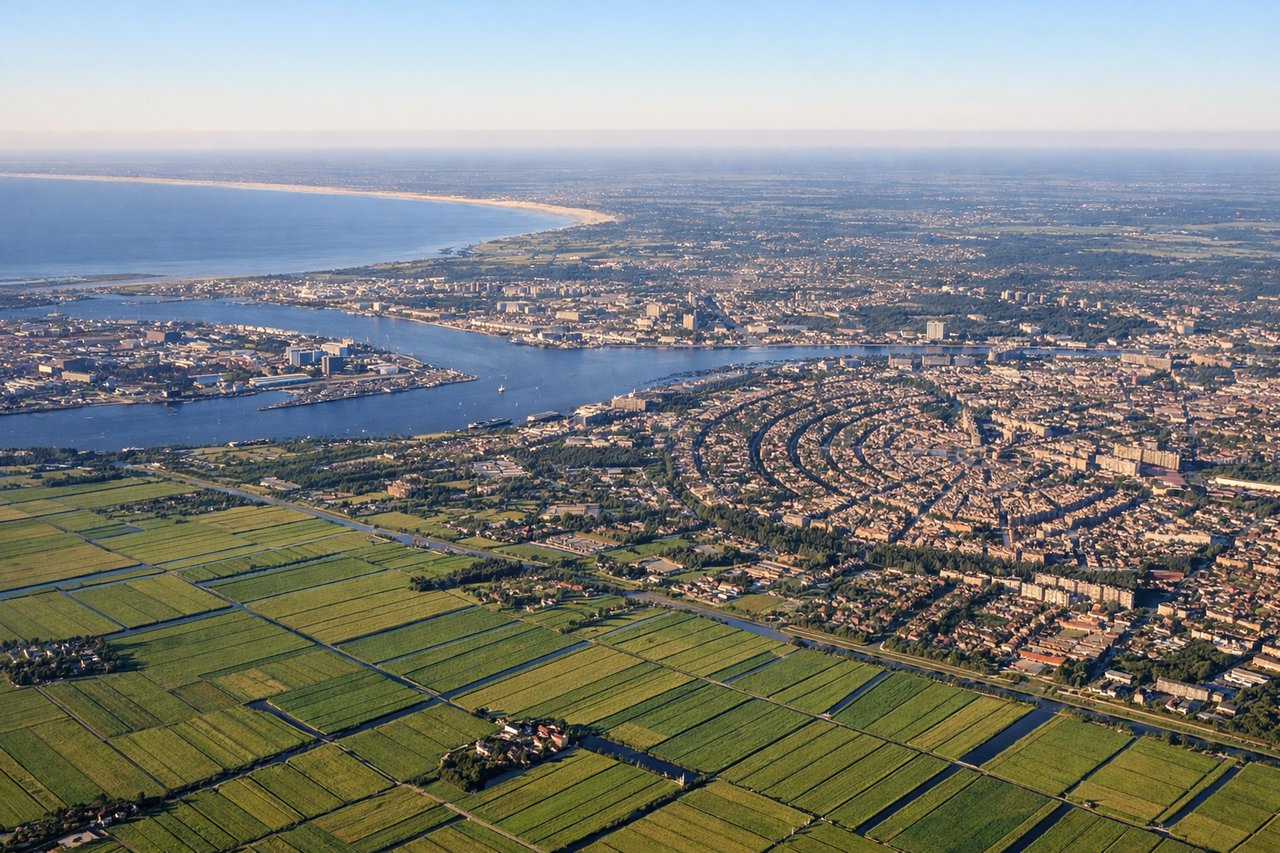
RIGHTSchiphol's primary departure runway 36C/36L sends aircraft northward before turning south, and right-side passengers get views over Amsterdam city center, the IJ river, and the historic canal ring. The Randstad urban sprawl and the IJmeer are clearly visible on the right as the aircraft climbs out and banks southeast.
Landing at CPT
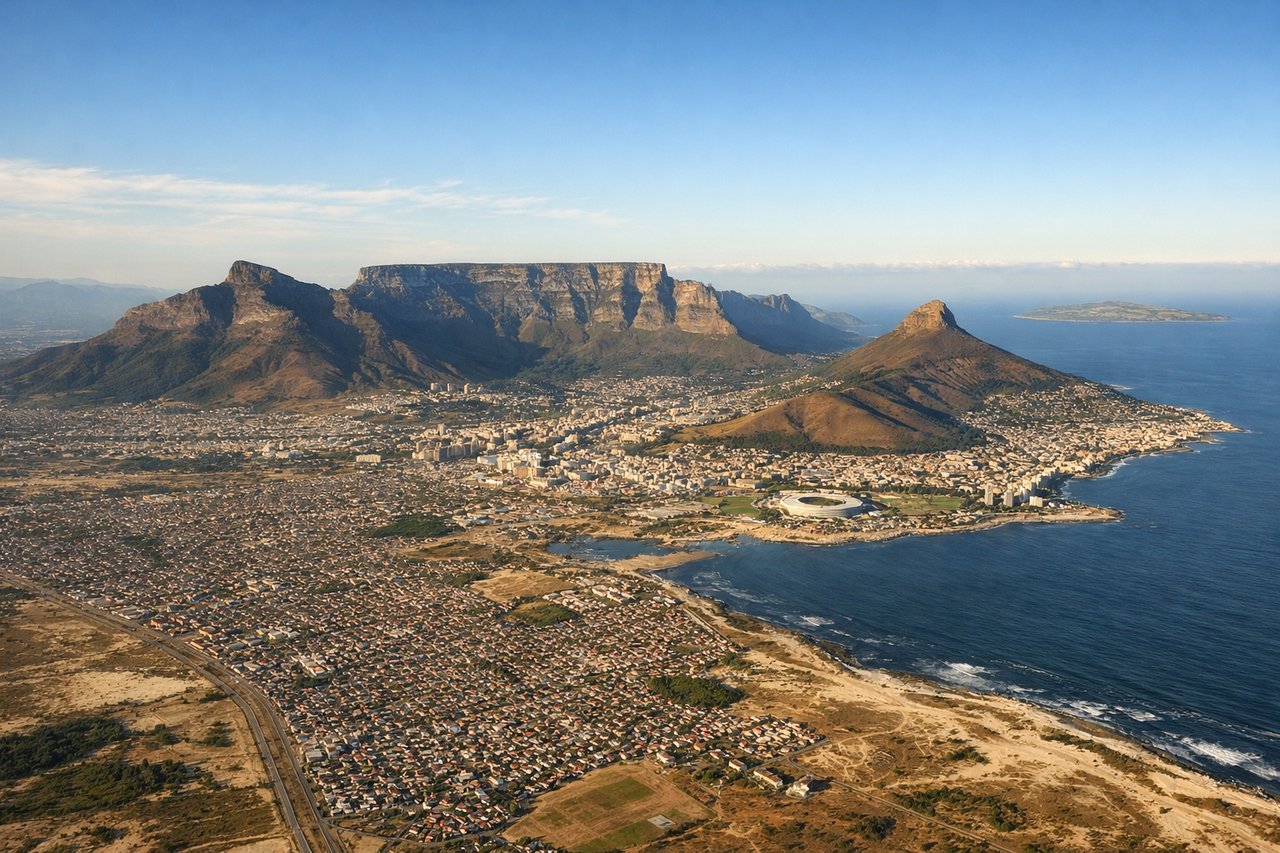
RIGHTCape Town International's primary landing approach on runway 01 brings aircraft in from the south heading north, placing Table Mountain, the Cape Peninsula, and Table Bay on the right side of the aircraft. This is one of the most dramatic airport approaches in the world, with the flat-topped Table Mountain dominating the right window throughout the descent.
Landmarks on this routeAll landmarks →
Will your flight be in sunlight?
See exactly which side of the plane gets sun and shade at your departure time.
About This Route
Which side of the plane should I sit on flying from Schiphol (AMS) to Cape Town International (CPT)?
Sit on the Right side of the plane for the best views on flights from Amsterdam to Cape Town. Right side wins both the departure from Schiphol and the arrival into Cape Town. The Cape Town approach on the right is genuinely one of the most spectacular in commercial aviation, and that alone makes right the definitive choice for this route. Over the Sahara and equatorial Africa the views are similar on both sides, so the bookend moments at origin and destination decide it.
What can I see during takeoff from Schiphol in Amsterdam?
During takeoff from Schiphol (AMS), sit on the Right side for the best views. Schiphol's primary departure runway 36C/36L sends aircraft northward before turning south, and right-side passengers get views over Amsterdam city center, the IJ river, and the historic canal ring. The Randstad urban sprawl and the IJmeer are clearly visible on the right as the aircraft climbs out and banks southeast. Notable sights include: Amsterdam canal ring, IJmeer, Rotterdam port infrastructure to the south, Westerschelde estuary.
What can I see when landing at Cape Town International in Cape Town?
When landing at Cape Town International (CPT), sit on the Right side for the best views. Cape Town International's primary landing approach on runway 01 brings aircraft in from the south heading north, placing Table Mountain, the Cape Peninsula, and Table Bay on the right side of the aircraft. This is one of the most dramatic airport approaches in the world, with the flat-topped Table Mountain dominating the right window throughout the descent. Notable sights include: Table Mountain flat summit, Table Bay and Cape Town waterfront, Robben Island, Cape Flats urban sprawl.
How long is the flight from Amsterdam to Cape Town?
The flight from Schiphol (AMS) to Cape Town International (CPT) takes Approximately 11 to 12 hours.
What does the Amsterdam to Cape Town flight path pass over?
The route tracks southeast over Belgium and France, then crosses the Mediterranean near Sardinia or Sicily. Over North Africa the Sahara Desert dominates for several hours with vast sand seas including the Erg Chebbi dune fields and the Ahaggar mountain massif in Algeria visible as dark rocky uplands rising from the sand. The route then crosses the Congo Basin rainforest, an unbroken dark green canopy for hundreds of miles. Further south, the Kalahari transitions to the drier Karoo scrubland before the Western Cape mountains appear on descent.