Although the right side wins the brief Dutch coastal takeoff, the left side's Caribbean approach into Cancun—with its vivid turquoise water, reef, and Isla Mujeres—is the flight's most striking scenery and outweighs the modest North Sea view during departure.
Flight Path
Most of the route crosses the open North Atlantic Ocean with no landmarks for several hours; the flight path passes south of the Azores and north of the Bahamas before making landfall near Cuba's northern coast and then crossing the Yucatan Channel into Mexico.
Great circle distance and headings ›Phase by phase
Takeoff from AMS
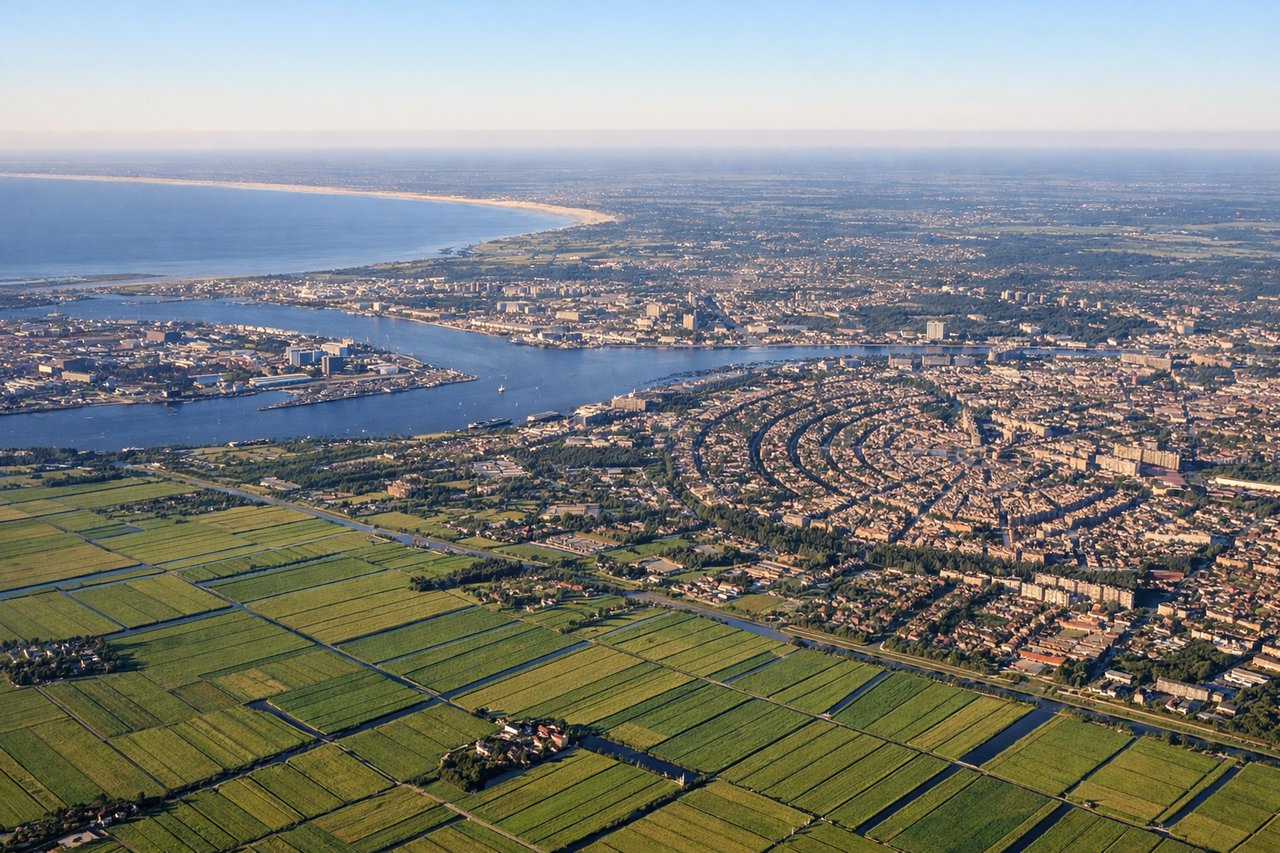
RIGHTDeparting Schiphol on the southbound Polderbaan/Kaagbaan track, the right side faces west toward the Dutch coastline and North Sea, giving a brief glimpse of dunes and coastal towns before the turn out over open water. The left side only shows flat, repetitive polder farmland and inland towns.
Landing at CUN
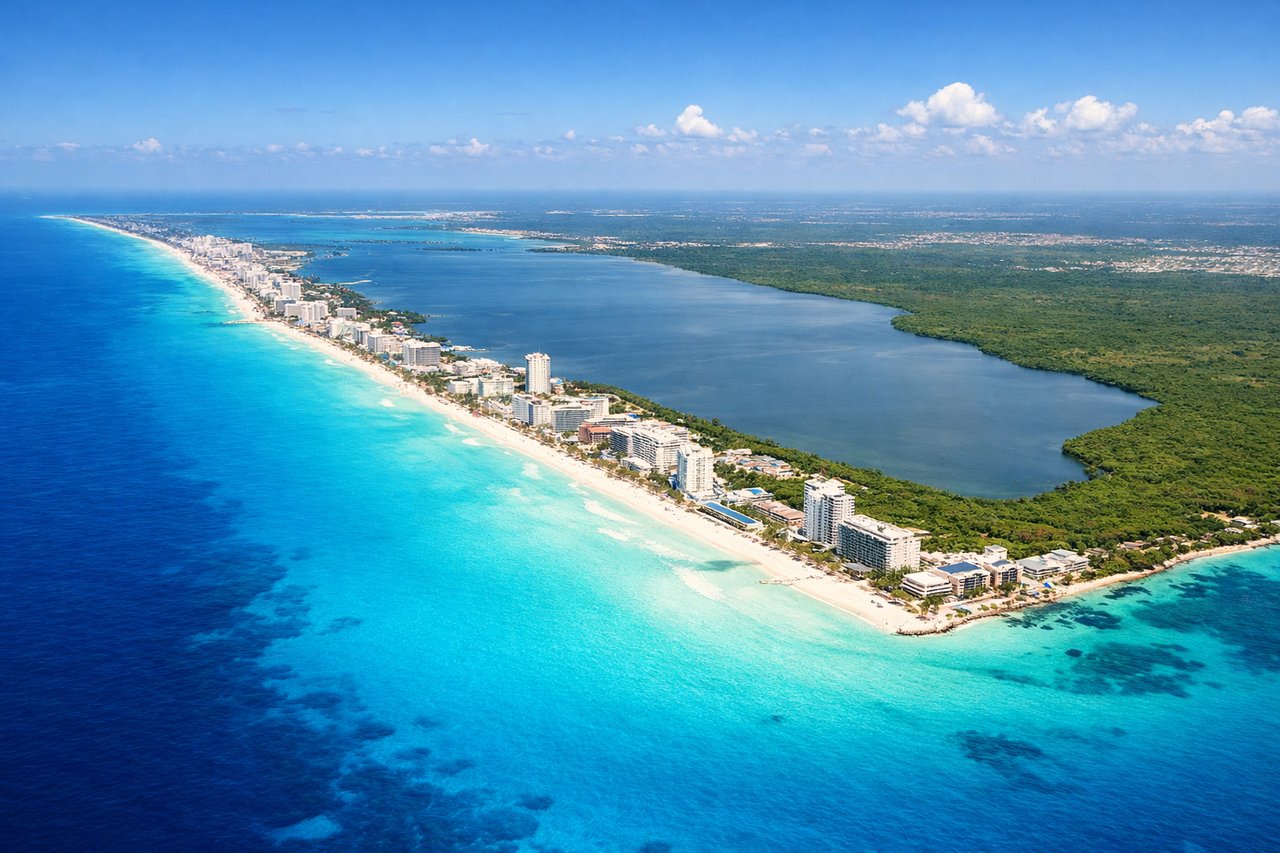
LEFTOn approach to Cancun's runway 12, the aircraft crosses the coastline with the open Caribbean Sea and Isla Mujeres visible on the left, showing the classic turquoise-to-deep-blue color gradient. The right side instead faces inland toward the Nichupte Lagoon and jungle, which is greener but far less vivid.
Landmarks on this routeAll landmarks →
Will your flight be in sunlight?
See exactly which side of the plane gets sun and shade at your departure time.
About This Route
Which side of the plane should I sit on flying from Schiphol (AMS) to Cancun International (CUN)?
Sit on the Left side of the plane for the best views on flights from Amsterdam to Cancun. Although the right side wins the brief Dutch coastal takeoff, the left side's Caribbean approach into Cancun—with its vivid turquoise water, reef, and Isla Mujeres—is the flight's most striking scenery and outweighs the modest North Sea view during departure.
What can I see during takeoff from Schiphol in Amsterdam?
During takeoff from Schiphol (AMS), sit on the Right side for the best views. Departing Schiphol on the southbound Polderbaan/Kaagbaan track, the right side faces west toward the Dutch coastline and North Sea, giving a brief glimpse of dunes and coastal towns before the turn out over open water. The left side only shows flat, repetitive polder farmland and inland towns. Notable sights include: Dutch coastal dunes near Zandvoort, North Sea shoreline, IJmuiden harbor entrance, patchwork polder fields fading behind.
What can I see when landing at Cancun International in Cancun?
When landing at Cancun International (CUN), sit on the Left side for the best views. On approach to Cancun's runway 12, the aircraft crosses the coastline with the open Caribbean Sea and Isla Mujeres visible on the left, showing the classic turquoise-to-deep-blue color gradient. The right side instead faces inland toward the Nichupte Lagoon and jungle, which is greener but far less vivid. Notable sights include: Caribbean Sea turquoise shallows, Isla Mujeres offshore, Cancun's hotel zone coastline, coral-fringed reef line.
How long is the flight from Amsterdam to Cancun?
The flight from Schiphol (AMS) to Cancun International (CUN) takes 10h 45m.
What does the Amsterdam to Cancun flight path pass over?
Most of the route crosses the open North Atlantic Ocean with no landmarks for several hours; the flight path passes south of the Azores and north of the Bahamas before making landfall near Cuba's northern coast and then crossing the Yucatan Channel into Mexico.