Right-side seats capture the most dramatic scenery: the Dutch coastal and polder landscape during departure, then the transition across Germany and into the Balkans. The flight path crosses significant geographical features including the Rhine valley and Danube corridor before reaching Ankara.
Flown AMS to ESB? Did we get it right?
Flight Path
Amsterdam to Ankara is 1,575 miles (2,535 km), a flight of about 4 hours.
Rhine River valley (Germany), Danube River corridor (Hungary/Serbia), Carpathian Mountains (distant views to the south), Balkan plateau terrain, transition from temperate European landscape to semi-arid Anatolian plateau
Great circle distance and headings ›

Phase by phase
Takeoff from AMS
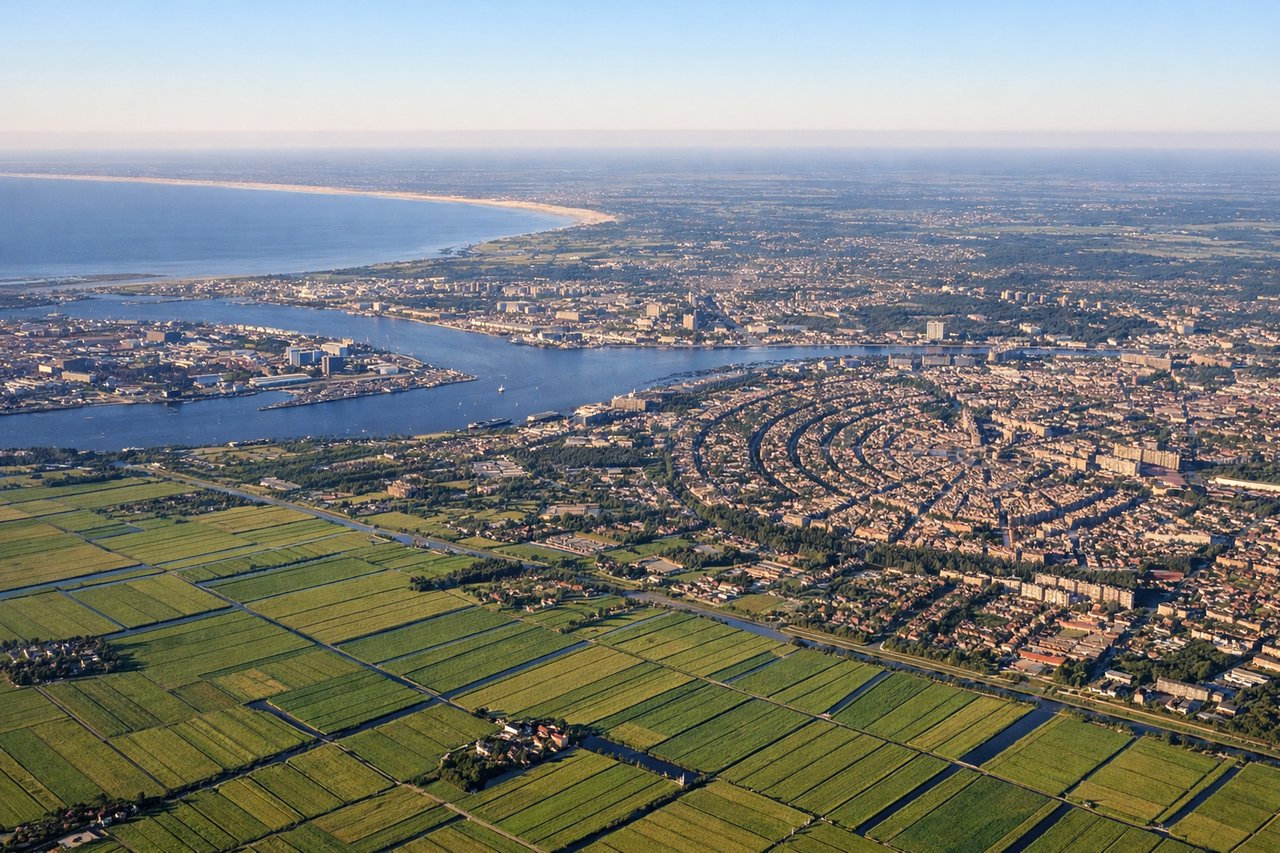
RIGHTRight-side seats offer views of the North Sea coast and the Dutch inland waterways as the aircraft climbs out on a southeasterly heading. You'll see the flat polder landscape with its distinctive canal network and the coastline receding northward.
Landing at ESB
LEFTLeft-side seats provide excellent views during descent into Ankara. You'll see the Anatolian plateau's rolling terrain, the Ankara cityscape, and the surrounding semi-arid landscape with sparse vegetation typical of central Turkey.
Will your flight be in sunlight?
Pick a date and time in the Sun Map to watch the sun move across your whole flight.
About This Route
Which side of the plane should I sit on flying from Schiphol (AMS) to Esenboga (ESB)?
Sit on the Right side of the plane for the best views on flights from Amsterdam to Ankara. Right-side seats capture the most dramatic scenery: the Dutch coastal and polder landscape during departure, then the transition across Germany and into the Balkans. The flight path crosses significant geographical features including the Rhine valley and Danube corridor before reaching Ankara.
What can I see during takeoff from Schiphol in Amsterdam?
During takeoff from Schiphol (AMS), sit on the Right side for the best views. Right-side seats offer views of the North Sea coast and the Dutch inland waterways as the aircraft climbs out on a southeasterly heading. You'll see the flat polder landscape with its distinctive canal network and the coastline receding northward. Notable sights include: North Sea coastline, Dutch polder canal network, IJsselmeer (large inland lake), Flevoland province.
What can I see when landing at Esenboga in Ankara?
When landing at Esenboga (ESB), sit on the Left side for the best views. Left-side seats provide excellent views during descent into Ankara. You'll see the Anatolian plateau's rolling terrain, the Ankara cityscape, and the surrounding semi-arid landscape with sparse vegetation typical of central Turkey. Notable sights include: Ankara city and urban sprawl, Anatolian plateau terrain, Kızılırmak River valley, surrounding semi-arid steppe.
How long is the flight from Amsterdam to Ankara?
The flight from Schiphol (AMS) to Esenboga (ESB) takes about 4 hours. The shortest flight path between them is 1,575 miles (2,535 km); winds and air traffic control usually add a few percent.
What does the Amsterdam to Ankara flight path pass over?
Rhine River valley (Germany), Danube River corridor (Hungary/Serbia), Carpathian Mountains (distant views to the south), Balkan plateau terrain, transition from temperate European landscape to semi-arid Anatolian plateau