The right side combines a strong departure sequence over Amsterdam and the Dutch coast with a reasonable arrival view, while the left side's only real highlight is the Peak District on final approach; overall the right side offers more consistent scenery across the flight.
Flight Path
The North Sea crossing, the English coastline near Lincolnshire and the Humber estuary, and the low Pennine foothills as the route nears Manchester.
Great circle distance and headings ›Phase by phase
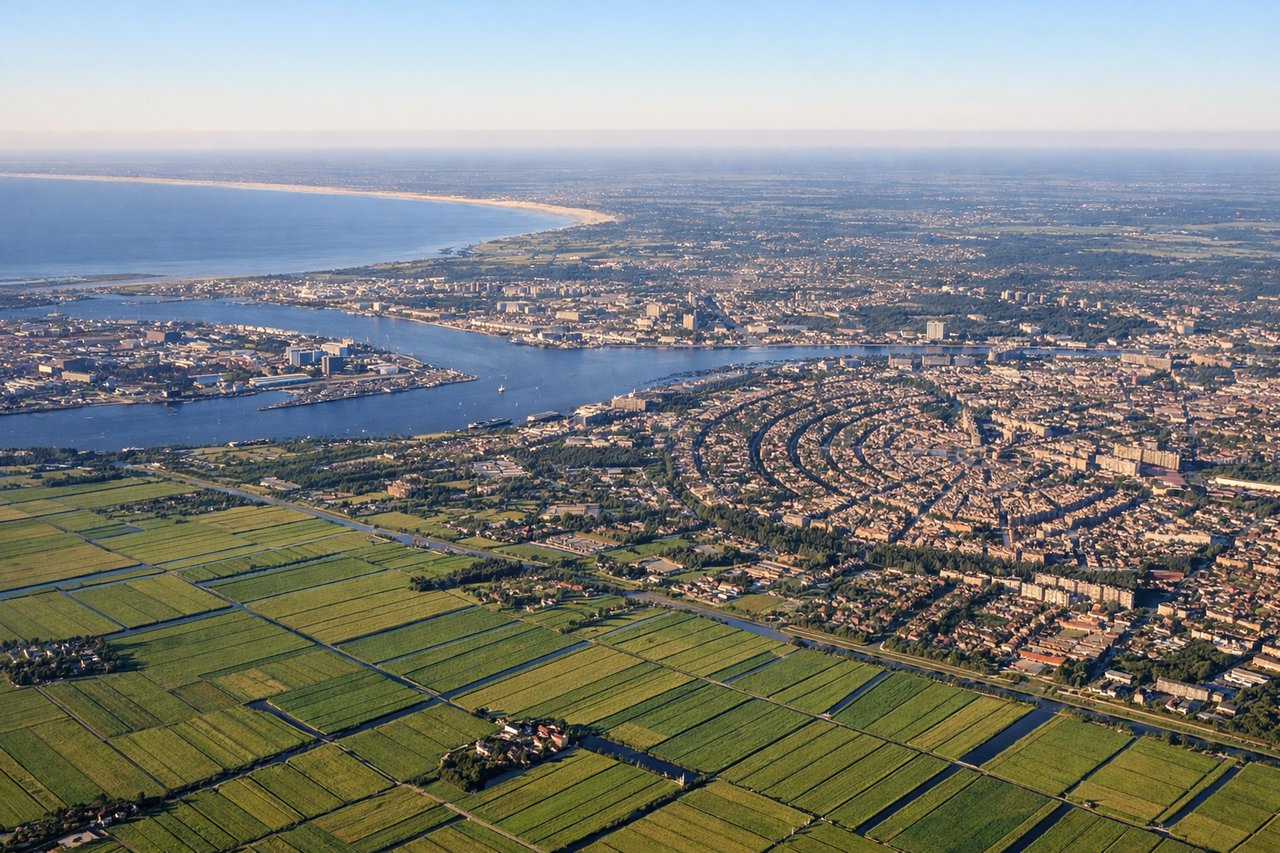
Takeoff from AMS
RIGHTDepartures from Schiphol commonly climb out over or near Amsterdam before turning onto the westbound track, giving the right side a good look at the city's canal ring, the IJsselmeer, and the Dutch coast near IJmuiden. The left side mostly shows flat, repetitive polder farmland with drainage canals.
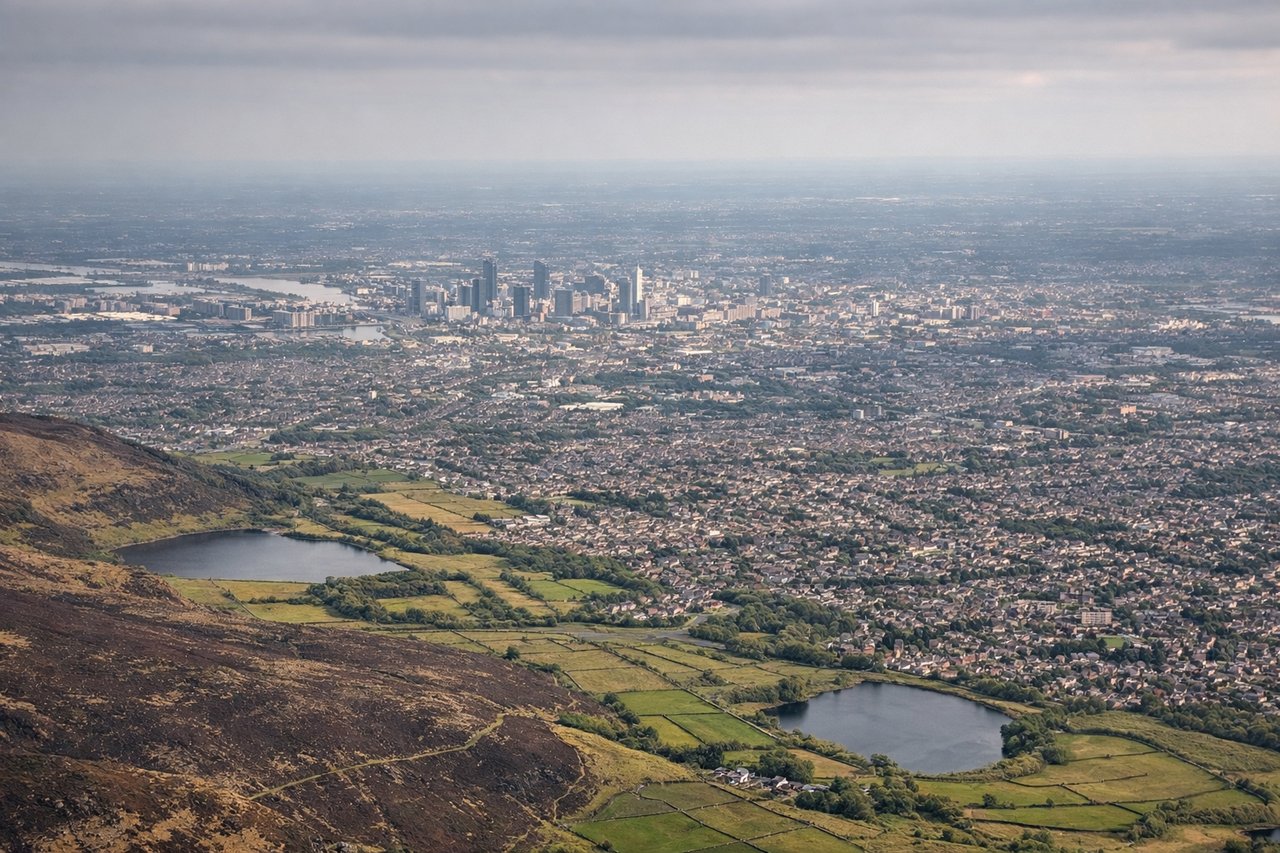
Landing at MAN
LEFTOn the northeast approach into Manchester (runway 23), the left side faces southeast toward the limestone dales and gritstone edges of the Peak District, a much more distinctive landscape than the moorland on the opposite side. The hills give useful depth and texture right before touchdown near the flat Cheshire plain.
Landmarks on this routeAll landmarks →
Will your flight be in sunlight?
See exactly which side of the plane gets sun and shade at your departure time.
About This Route
Which side of the plane should I sit on flying from Schiphol (AMS) to Manchester (MAN)?
Sit on the Right side of the plane for the best views on flights from Amsterdam to Manchester. The right side combines a strong departure sequence over Amsterdam and the Dutch coast with a reasonable arrival view, while the left side's only real highlight is the Peak District on final approach; overall the right side offers more consistent scenery across the flight.
What can I see during takeoff from Schiphol in Amsterdam?
During takeoff from Schiphol (AMS), sit on the Right side for the best views. Departures from Schiphol commonly climb out over or near Amsterdam before turning onto the westbound track, giving the right side a good look at the city's canal ring, the IJsselmeer, and the Dutch coast near IJmuiden. The left side mostly shows flat, repetitive polder farmland with drainage canals. Notable sights include: Amsterdam canal belt, IJsselmeer, North Sea coastline near IJmuiden/Zandvoort, Dutch polder grid.
What can I see when landing at Manchester in Manchester?
When landing at Manchester (MAN), sit on the Left side for the best views. On the northeast approach into Manchester (runway 23), the left side faces southeast toward the limestone dales and gritstone edges of the Peak District, a much more distinctive landscape than the moorland on the opposite side. The hills give useful depth and texture right before touchdown near the flat Cheshire plain. Notable sights include: Peak District dales and edges, Derbyshire hill farmland, Cheshire plain, Manchester's southern suburbs.
How long is the flight from Amsterdam to Manchester?
The flight from Schiphol (AMS) to Manchester (MAN) takes 1h 20m.
What does the Amsterdam to Manchester flight path pass over?
The North Sea crossing, the English coastline near Lincolnshire and the Humber estuary, and the low Pennine foothills as the route nears Manchester.