Amsterdam to Norfolk is 3,904 miles (6,283 km), a flight of about 7 hours 15 minutes.
While the takeoff offers North Sea views, the landing approach provides more dramatic and varied scenery with the Chesapeake Bay system, Hampton Roads, and the transition from water to urban landscape. The landing sequence offers more visual interest for most passengers.
Flight Path
The flight path crosses the Atlantic Ocean for approximately 6 hours over open water with no significant landmarks. The route typically passes south of Greenland and Iceland, then over the Canadian Maritimes (Nova Scotia visible on approach to US airspace). The North American landfall occurs over the northeastern US coast, with views of the New England coastline, then inland over Pennsylvania and Maryland before descending into Virginia. The mid-Atlantic ridge and deep ocean basin dominate the central crossing with no visible surface features.
Great circle distance and headings ›Phase by phase
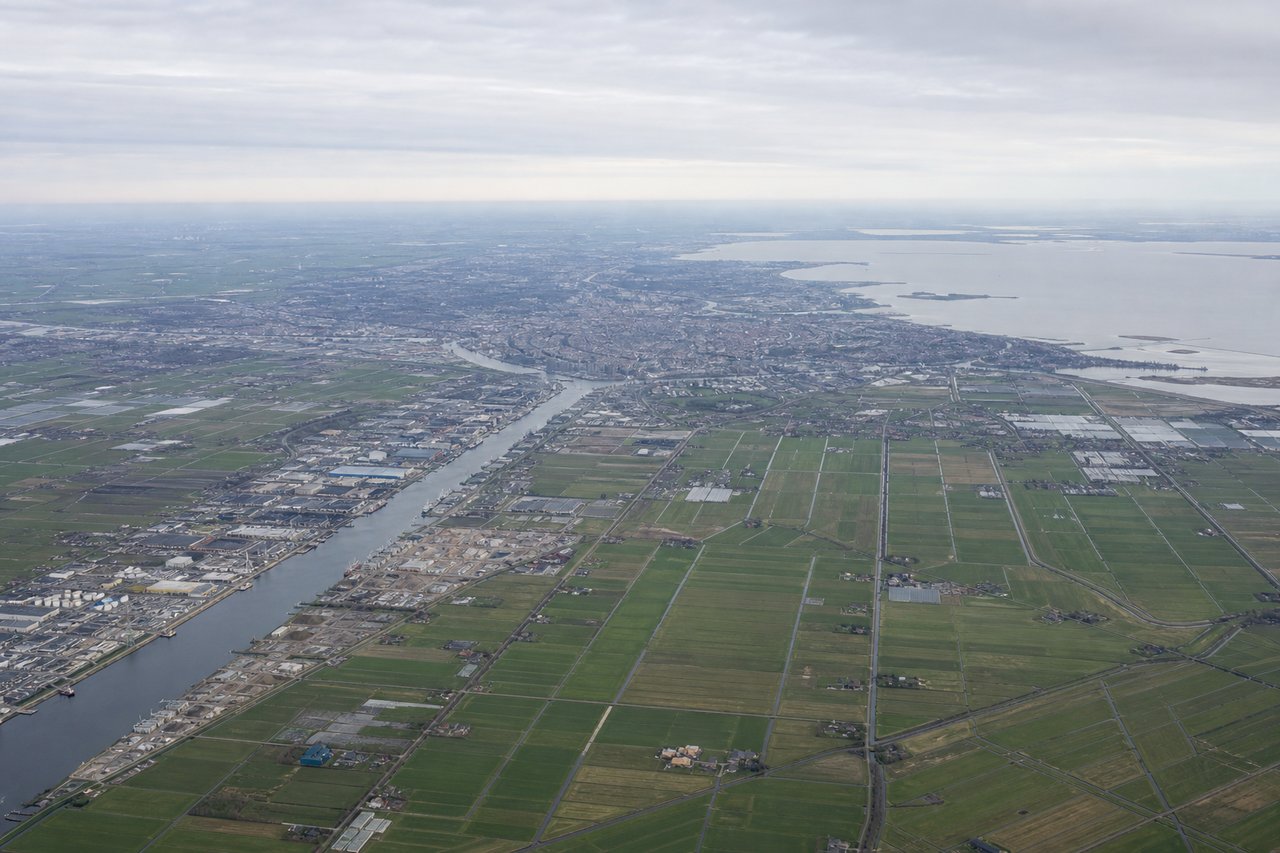
Takeoff from AMS
LEFTLeft side offers views of the North Sea coastline and the Dutch coast as the aircraft climbs northwestward from Schiphol. You'll see the flat polder landscape, waterways, and the transition from land to sea.
Landing at ORF
RIGHTRight side provides views of the Chesapeake Bay and Hampton Roads waterway as the aircraft descends toward Norfolk. You'll see the distinctive water bodies, the peninsula geography, and the urban sprawl of the Norfolk-Virginia Beach area.
Landmarks on this routeAll landmarks →
Will your flight be in sunlight?
Pick a date and time in the Sun Map to watch the sun move across your whole flight.
About This Route
Which side of the plane should I sit on flying from Schiphol (AMS) to Norfolk International (ORF)?
Sit on the Right side of the plane for the best views on flights from Amsterdam to Norfolk. While the takeoff offers North Sea views, the landing approach provides more dramatic and varied scenery with the Chesapeake Bay system, Hampton Roads, and the transition from water to urban landscape. The landing sequence offers more visual interest for most passengers.
What can I see during takeoff from Schiphol in Amsterdam?
During takeoff from Schiphol (AMS), sit on the Left side for the best views. Left side offers views of the North Sea coastline and the Dutch coast as the aircraft climbs northwestward from Schiphol. You'll see the flat polder landscape, waterways, and the transition from land to sea. Notable sights include: North Sea, Dutch coastline near Zandvoort, Ijsselmeer (inland lake), flat polder fields with canal networks.
What can I see when landing at Norfolk International in Norfolk?
When landing at Norfolk International (ORF), sit on the Right side for the best views. Right side provides views of the Chesapeake Bay and Hampton Roads waterway as the aircraft descends toward Norfolk. You'll see the distinctive water bodies, the peninsula geography, and the urban sprawl of the Norfolk-Virginia Beach area. Notable sights include: Chesapeake Bay, Hampton Roads, James River estuary, Norfolk harbor and shipyard facilities.
How long is the flight from Amsterdam to Norfolk?
The flight from Schiphol (AMS) to Norfolk International (ORF) takes about 7 hours 15 minutes. The shortest flight path between them is 3,904 miles (6,283 km); winds and air traffic control usually add a few percent.
What does the Amsterdam to Norfolk flight path pass over?
The flight path crosses the Atlantic Ocean for approximately 6 hours over open water with no significant landmarks. The route typically passes south of Greenland and Iceland, then over the Canadian Maritimes (Nova Scotia visible on approach to US airspace). The North American landfall occurs over the northeastern US coast, with views of the New England coastline, then inland over Pennsylvania and Maryland before descending into Virginia. The mid-Atlantic ridge and deep ocean basin dominate the central crossing with no visible surface features.