The left side wins both the Alaska departure, with Cook Inlet's volcanic peaks, and the Tokyo arrival, with Mount Fuji and the bay skyline, while the right side is dominated by featureless North Pacific ocean for most of the flight.
Flight Path
North Pacific Ocean, Aleutian Islands chain, Kamchatka Peninsula coastline, Kuril Islands
Great circle distance and headings ›


Phase by phase
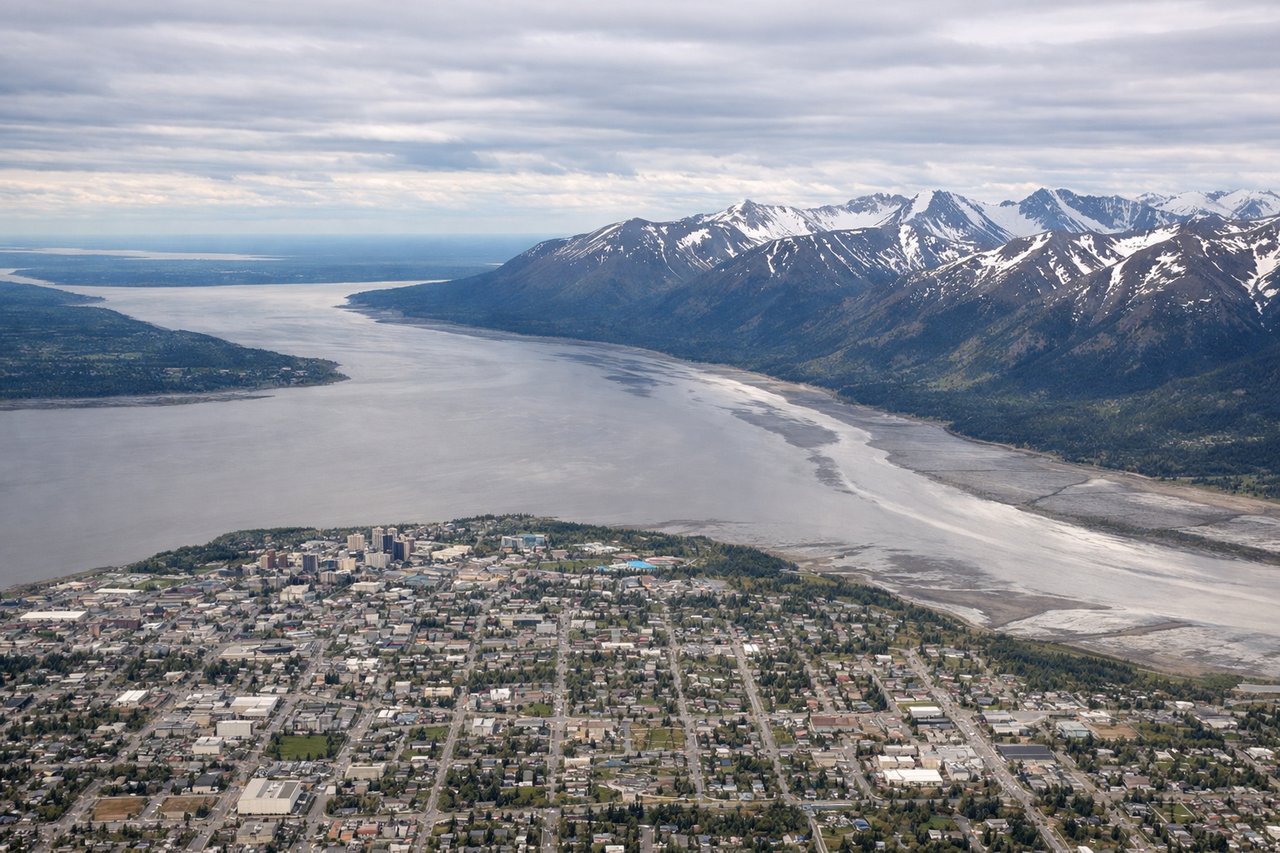
Takeoff from ANC
LEFTDeparting ANC westbound, the aircraft banks over Cook Inlet, putting Anchorage's volcanic backdrop on the left (south) side. Mount Redoubt, Mount Iliamna, and Mount Spurr rise dramatically along the inlet, contrasting with the flatter Chugach foothills visible to the north.
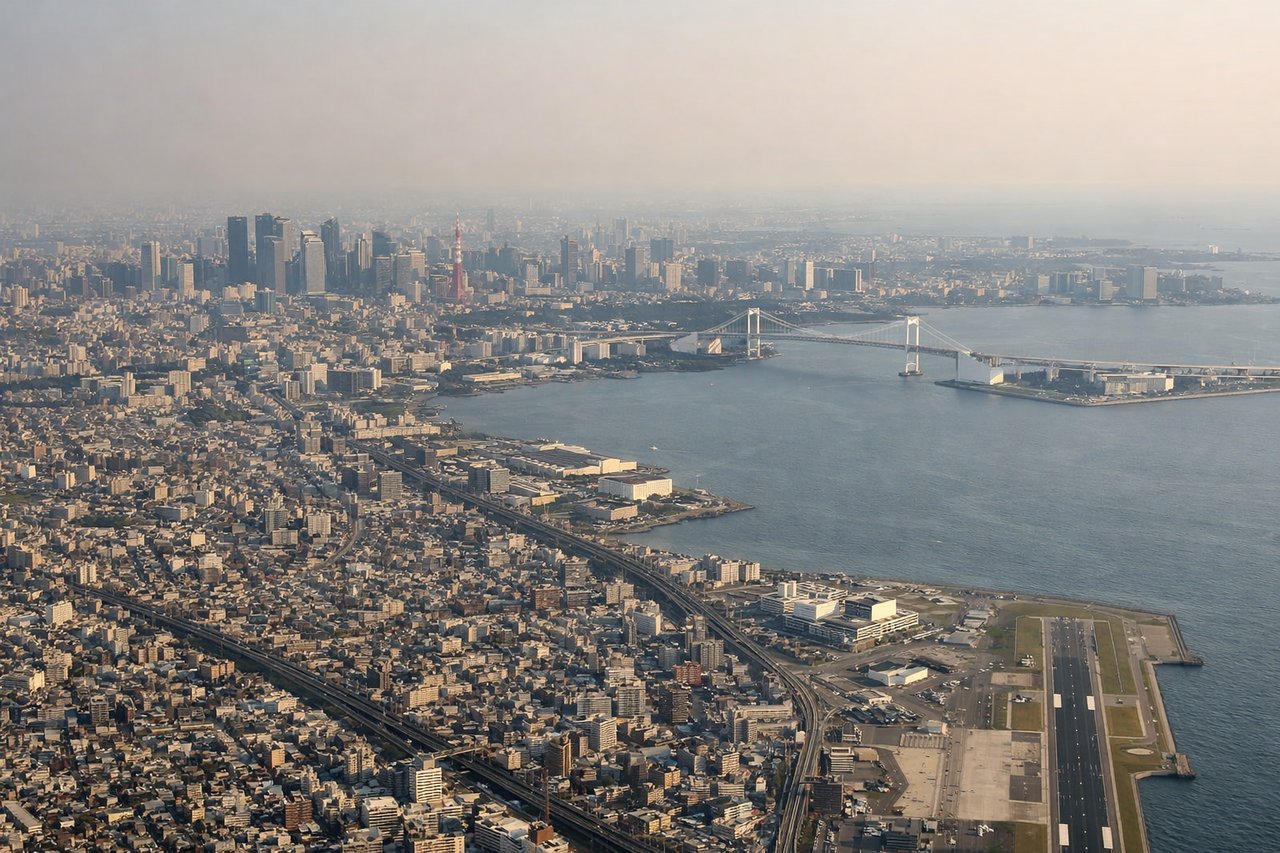
Landing at HND
LEFTOn the common south-wind arrival into HND, aircraft cross Tokyo Bay before turning onto final for runway 34, keeping Mount Fuji and the Yokohama waterfront on the left side of the cabin. The bay's shipping lanes and the dense Tokyo skyline add strong urban scenery to the approach.
Landmarks on this routeAll landmarks →
Will your flight be in sunlight?
See exactly which side of the plane gets sun and shade at your departure time.
About This Route
Which side of the plane should I sit on flying from Ted Stevens Anchorage International (ANC) to Tokyo International (HND)?
Sit on the Left side of the plane for the best views on flights from Anchorage to Tokyo. The left side wins both the Alaska departure, with Cook Inlet's volcanic peaks, and the Tokyo arrival, with Mount Fuji and the bay skyline, while the right side is dominated by featureless North Pacific ocean for most of the flight.
What can I see during takeoff from Ted Stevens Anchorage International in Anchorage?
During takeoff from Ted Stevens Anchorage International (ANC), sit on the Left side for the best views. Departing ANC westbound, the aircraft banks over Cook Inlet, putting Anchorage's volcanic backdrop on the left (south) side. Mount Redoubt, Mount Iliamna, and Mount Spurr rise dramatically along the inlet, contrasting with the flatter Chugach foothills visible to the north. Notable sights include: Cook Inlet, Mount Redoubt, Mount Iliamna, Mount Spurr.
What can I see when landing at Tokyo International in Tokyo?
When landing at Tokyo International (HND), sit on the Left side for the best views. On the common south-wind arrival into HND, aircraft cross Tokyo Bay before turning onto final for runway 34, keeping Mount Fuji and the Yokohama waterfront on the left side of the cabin. The bay's shipping lanes and the dense Tokyo skyline add strong urban scenery to the approach. Notable sights include: Mount Fuji, Tokyo Bay, Yokohama waterfront, Tokyo skyline.
How long is the flight from Anchorage to Tokyo?
The flight from Ted Stevens Anchorage International (ANC) to Tokyo International (HND) takes 7h 35m.
What does the Anchorage to Tokyo flight path pass over?
North Pacific Ocean, Aleutian Islands chain, Kamchatka Peninsula coastline, Kuril Islands