Left side wins both ends of the flight. During the transatlantic crossing the left side also faces south toward the Azores archipelago in the mid-Atlantic, and on the European approach tracks the northern coast of Spain and the Pyrenees on the left horizon before descending into Barcelona.
Flight Path
The route tracks northeast over the Carolinas and Virginia, then out over the North Atlantic via the Newfoundland coast. The mid-ocean crossing passes well north of the Azores. Approaching Europe the route crosses northern Portugal and the Iberian Peninsula, with the Pyrenees visible to the north before descent into Barcelona. The Bay of Biscay coastline of northern Spain may be visible on the left side during descent.
Great circle distance and headings ›.jpeg?width=600)


Phase by phase

Takeoff from ATL
LEFTATL's primary departure runways (8L/8R heading east, or 27L/27R heading west) mean left-side passengers get views over downtown Atlanta's skyline during the climbing turn northeastward. The left side tracks over the city center and Stone Mountain to the east as the aircraft climbs out.
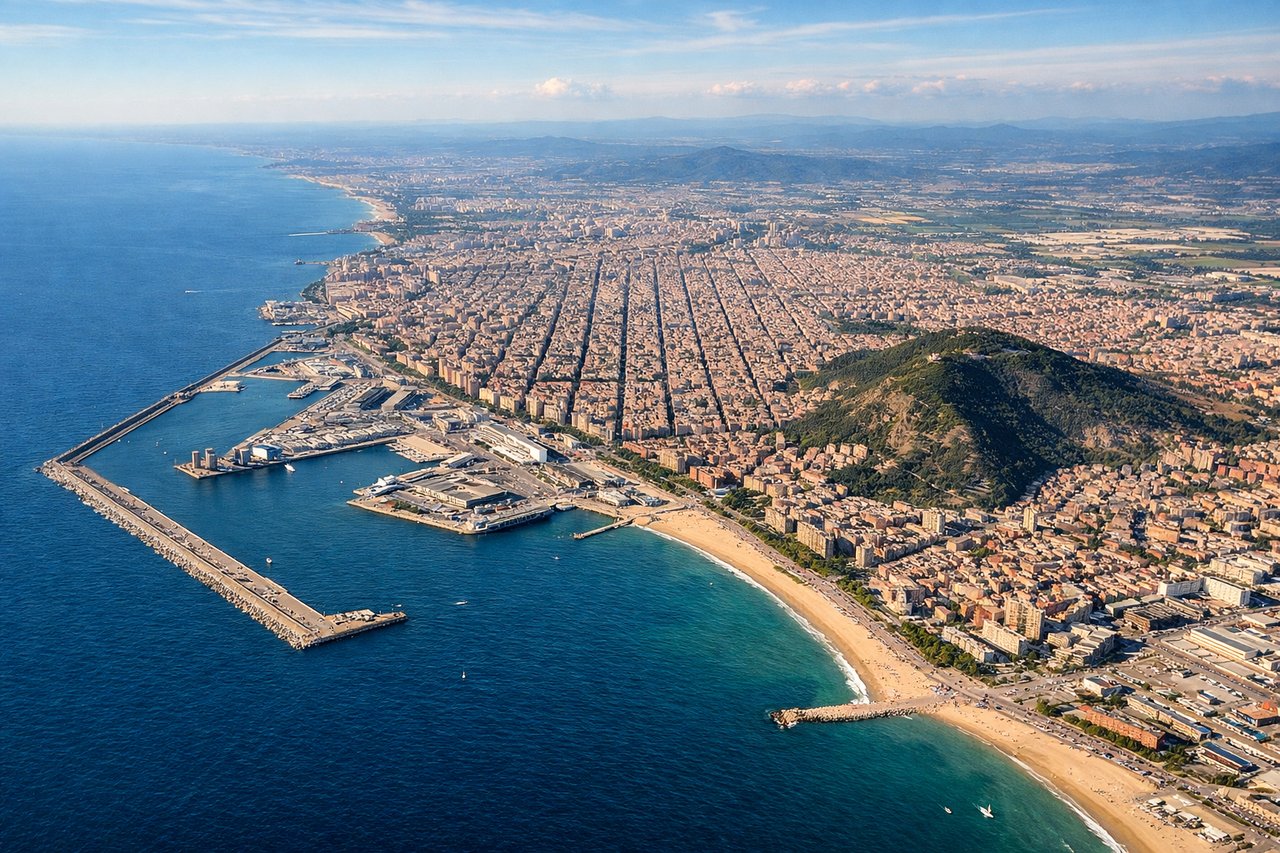
Landing at BCN
LEFTBarcelona's primary landing approach on runway 25L/25R comes in from the east over the Mediterranean, meaning left-side passengers look north toward the city, the Sagrada Familia district, and the Collserola ridge behind Barcelona. Right side faces open sea.
Landmarks on this routeAll landmarks →
Will your flight be in sunlight?
See exactly which side of the plane gets sun and shade at your departure time.
About This Route
Which side of the plane should I sit on flying from The William B Hartsfield Atlanta International (ATL) to Barcelona (BCN)?
Sit on the Left side of the plane for the best views on flights from Atlanta to Barcelona. Left side wins both ends of the flight. During the transatlantic crossing the left side also faces south toward the Azores archipelago in the mid-Atlantic, and on the European approach tracks the northern coast of Spain and the Pyrenees on the left horizon before descending into Barcelona.
What can I see during takeoff from The William B Hartsfield Atlanta International in Atlanta?
During takeoff from The William B Hartsfield Atlanta International (ATL), sit on the Left side for the best views. ATL's primary departure runways (8L/8R heading east, or 27L/27R heading west) mean left-side passengers get views over downtown Atlanta's skyline during the climbing turn northeastward. The left side tracks over the city center and Stone Mountain to the east as the aircraft climbs out. Notable sights include: Downtown Atlanta skyline, Stone Mountain (granite dome 16 miles east of downtown), Lake Lanier to the northeast, Chattahoochee River corridor.
What can I see when landing at Barcelona in Barcelona?
When landing at Barcelona (BCN), sit on the Left side for the best views. Barcelona's primary landing approach on runway 25L/25R comes in from the east over the Mediterranean, meaning left-side passengers look north toward the city, the Sagrada Familia district, and the Collserola ridge behind Barcelona. Right side faces open sea. Notable sights include: Mediterranean Sea coastline, Barcelona city grid and Eixample district, Montjuic hill, Collserola ridge (Serra de Collserola) behind the city.
How long is the flight from Atlanta to Barcelona?
The flight from The William B Hartsfield Atlanta International (ATL) to Barcelona (BCN) takes Approximately 9 to 10 hours.
What does the Atlanta to Barcelona flight path pass over?
The route tracks northeast over the Carolinas and Virginia, then out over the North Atlantic via the Newfoundland coast. The mid-ocean crossing passes well north of the Azores. Approaching Europe the route crosses northern Portugal and the Iberian Peninsula, with the Pyrenees visible to the north before descent into Barcelona. The Bay of Biscay coastline of northern Spain may be visible on the left side during descent.