Right side scores higher due to superior landing approach scenery featuring the Blue Mountains and Hawkesbury River estuary system, which provide dramatic topographic contrast and visual interest during the critical descent phase. While both sides experience extended ocean crossing during cruise (limiting scores), the right side's approach into Sydney is significantly more scenic than the left side's coastal approach. The takeoff from Amritsar also slightly favors the right side with the Sutlej River valley visible.
Flown ATQ to SYD? Did we get it right?
Flight Path
Amritsar to Sydney is 6,724 miles (10,821 km), a flight of about 14 hours 30 minutes.
The flight path crosses the Arabian Sea, the Indian Ocean, and approaches Australia from the west. Notable features along the route include: the Deccan Plateau and Western Ghats visible during initial climb from Amritsar; the Arabian Sea coastline of Gujarat and Maharashtra during the first 2-3 hours; the vast expanse of the Indian Ocean for approximately 8-9 hours of cruise; the approach to Australia reveals the Indian Ocean coast near Perth, then the flight tracks southeast across Western Australia's interior (sparse, flat terrain); the Great Australian Bight forms the southern approach corridor; and finally the approach to Sydney reveals the New South Wales coast, the Blue Mountains inland, and the Hawkesbury River system before landing.
Great circle distance and headings ›Phase by phase
Takeoff from ATQ
RIGHTRight side captures the Punjab plains and the Sutlej River valley during initial climb. Left side faces inland toward flat agricultural terrain with minimal visual interest during the critical takeoff and climb-out phase.
Landing at SYD
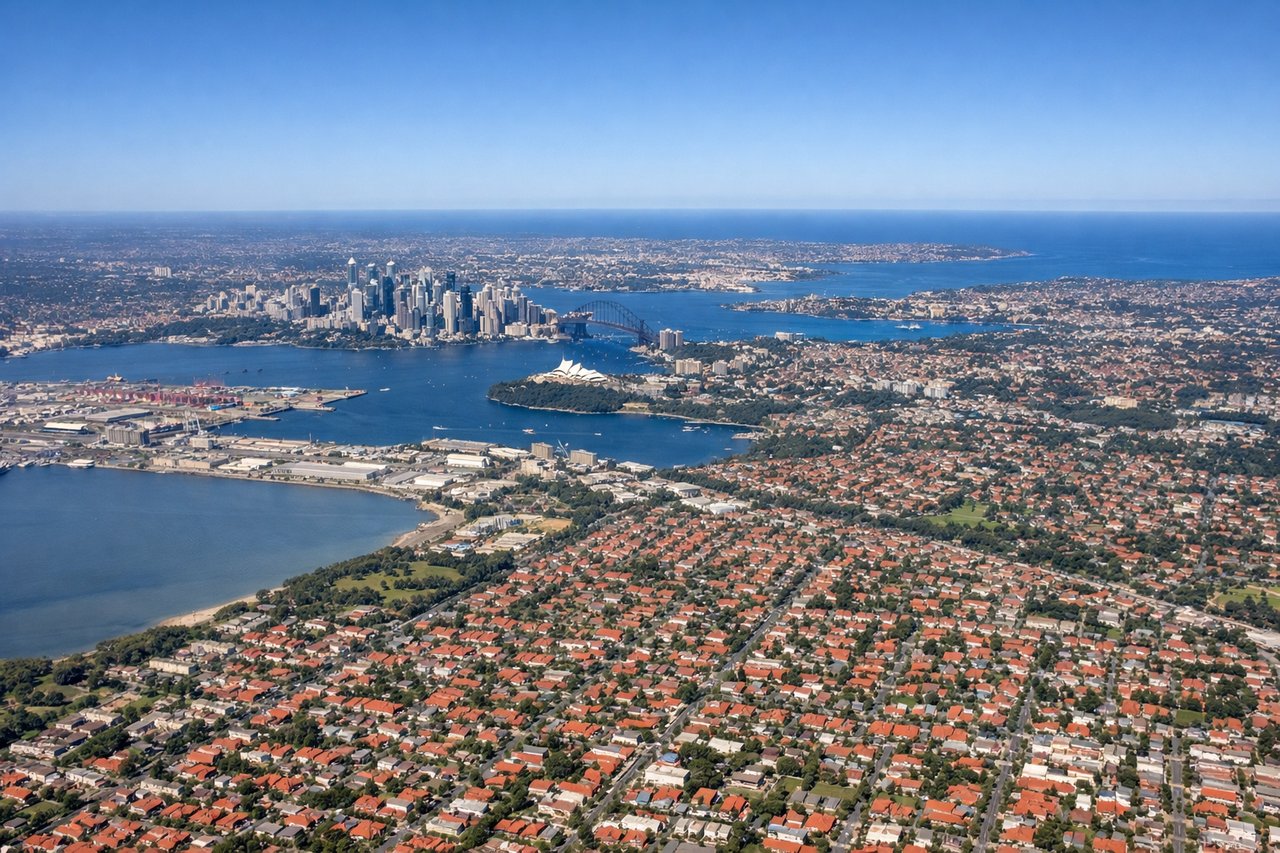
RIGHTRight side offers the most dramatic approach scenery: the Blue Mountains (Great Dividing Range) rising inland, the Hawkesbury River estuary system, and Sydney Harbour with its iconic geography. Left side sees primarily the Tasman Sea and coastal suburbs with less topographic variation.
Will your flight be in sunlight?
Pick a date and time in the Sun Map to watch the sun move across your whole flight.
About This Route
Which side of the plane should I sit on flying from Amritsar (ATQ) to Kingsford Smith International Airport (SYD)?
Sit on the Right side of the plane for the best views on flights from Amritsar to Sydney. Right side scores higher due to superior landing approach scenery featuring the Blue Mountains and Hawkesbury River estuary system, which provide dramatic topographic contrast and visual interest during the critical descent phase. While both sides experience extended ocean crossing during cruise (limiting scores), the right side's approach into Sydney is significantly more scenic than the left side's coastal approach. The takeoff from Amritsar also slightly favors the right side with the Sutlej River valley visible.
What can I see during takeoff from Amritsar in Amritsar?
During takeoff from Amritsar (ATQ), sit on the Right side for the best views. Right side captures the Punjab plains and the Sutlej River valley during initial climb. Left side faces inland toward flat agricultural terrain with minimal visual interest during the critical takeoff and climb-out phase. Notable sights include: Sutlej River (visible as a linear water feature), Punjab agricultural grid pattern, Amritsar city sprawl to the northwest.
What can I see when landing at Kingsford Smith International Airport in Sydney?
When landing at Kingsford Smith International Airport (SYD), sit on the Right side for the best views. Right side offers the most dramatic approach scenery: the Blue Mountains (Great Dividing Range) rising inland, the Hawkesbury River estuary system, and Sydney Harbour with its iconic geography. Left side sees primarily the Tasman Sea and coastal suburbs with less topographic variation. Notable sights include: Blue Mountains (Great Dividing Range) on the inland horizon, Hawkesbury River estuary system, Sydney Harbour and its headlands, coastal suburbs of northern Sydney.
How long is the flight from Amritsar to Sydney?
The flight from Amritsar (ATQ) to Kingsford Smith International Airport (SYD) takes about 14 hours 30 minutes. The shortest flight path between them is 6,724 miles (10,821 km); winds and air traffic control usually add a few percent.
What does the Amritsar to Sydney flight path pass over?
The flight path crosses the Arabian Sea, the Indian Ocean, and approaches Australia from the west. Notable features along the route include: the Deccan Plateau and Western Ghats visible during initial climb from Amritsar; the Arabian Sea coastline of Gujarat and Maharashtra during the first 2-3 hours; the vast expanse of the Indian Ocean for approximately 8-9 hours of cruise; the approach to Australia reveals the Indian Ocean coast near Perth, then the flight tracks southeast across Western Australia's interior (sparse, flat terrain); the Great Australian Bight forms the southern approach corridor; and finally the approach to Sydney reveals the New South Wales coast, the Blue Mountains inland, and the Hawkesbury River system before landing.