Abu Dhabi to Islamabad is 1,263 miles (2,033 km), a flight of about 3 hours 10 minutes.
The left side wins on both ends of the flight: a scenic departure past Abu Dhabi's coastal skyline and islands, a cruise phase brushing past the mountainous Makran and Balochistan terrain, and a dramatic final approach alongside the Margalla Hills into Islamabad. The right side spends most of the flight over flat, featureless plains and open water with little variety.
Flight Path
Strait of Hormuz, the rugged Makran coastal mountains of southern Iran and Pakistani Balochistan, and the arid Sulaiman Range foothills before the route descends into the Indus plain near Islamabad
Great circle distance and headings ›Phase by phase
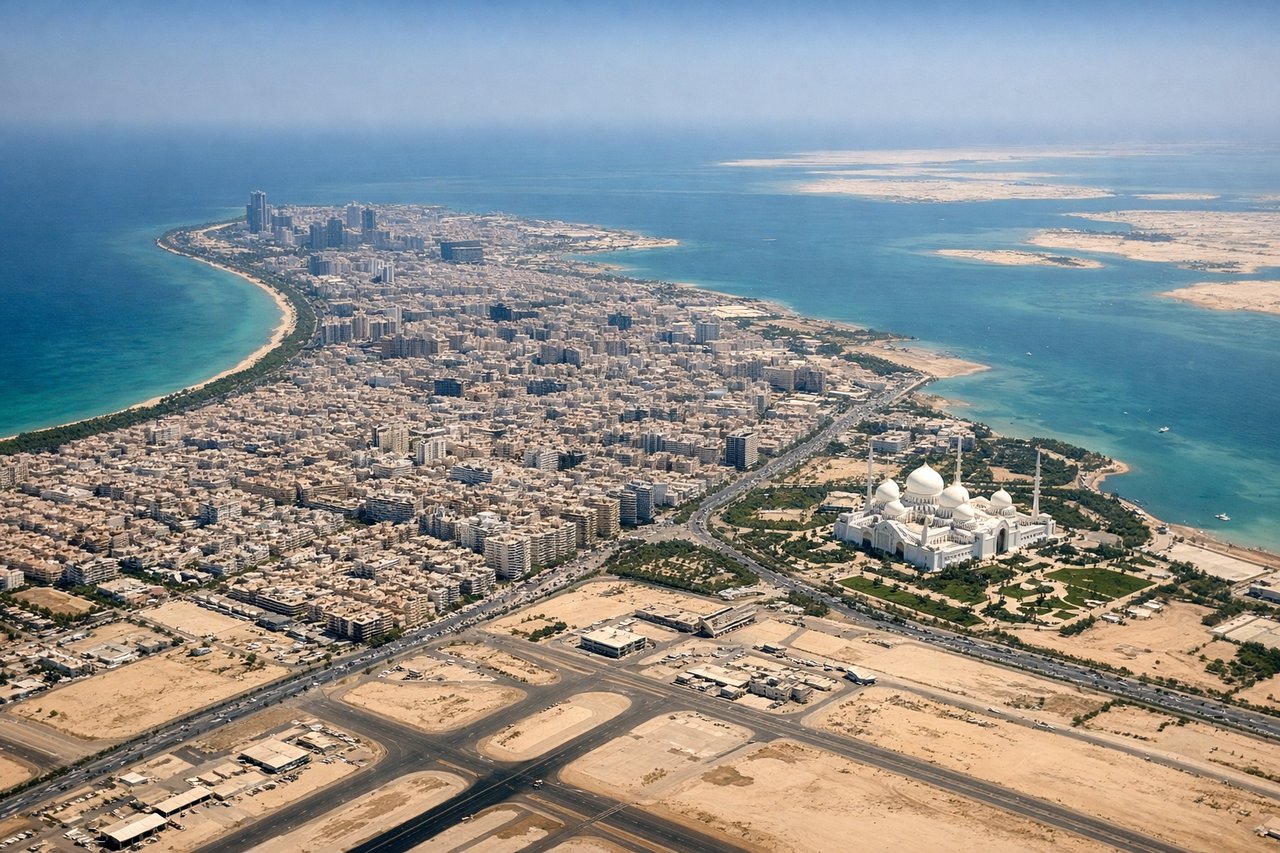
Takeoff from AUH
LEFTDeparting AUH, the initial climb and turn toward the northeast give left-side passengers a view back over Abu Dhabi's skyline, the man-made islands of Saadiyat and Yas, and the turquoise shallows of the Persian Gulf before the aircraft heads inland. The right side mostly shows featureless desert scrubland.
Landing at ISB
LEFTOn approach into Islamabad, the descent path typically brings the Margalla Hills and the first foothills of the Himalayan/Karakoram fringe into view on the left side, a dramatic green-and-grey ridge rising abruptly from the Potohar plateau right next to the airport. The right side during final approach mostly shows flat agricultural land around Rawalpindi.
Landmarks on this routeAll landmarks →
Will your flight be in sunlight?
Pick a date and time in the Sun Map to watch the sun move across your whole flight.
About This Route
Which side of the plane should I sit on flying from Abu Dhabi International (AUH) to Islamabad International Airport (ISB)?
Sit on the Left side of the plane for the best views on flights from Abu Dhabi to Islamabad. The left side wins on both ends of the flight: a scenic departure past Abu Dhabi's coastal skyline and islands, a cruise phase brushing past the mountainous Makran and Balochistan terrain, and a dramatic final approach alongside the Margalla Hills into Islamabad. The right side spends most of the flight over flat, featureless plains and open water with little variety.
What can I see during takeoff from Abu Dhabi International in Abu Dhabi?
During takeoff from Abu Dhabi International (AUH), sit on the Left side for the best views. Departing AUH, the initial climb and turn toward the northeast give left-side passengers a view back over Abu Dhabi's skyline, the man-made islands of Saadiyat and Yas, and the turquoise shallows of the Persian Gulf before the aircraft heads inland. The right side mostly shows featureless desert scrubland. Notable sights include: Abu Dhabi city skyline, Yas Island, Saadiyat Island, Persian Gulf coastline.
What can I see when landing at Islamabad International Airport in Islamabad?
When landing at Islamabad International Airport (ISB), sit on the Left side for the best views. On approach into Islamabad, the descent path typically brings the Margalla Hills and the first foothills of the Himalayan/Karakoram fringe into view on the left side, a dramatic green-and-grey ridge rising abruptly from the Potohar plateau right next to the airport. The right side during final approach mostly shows flat agricultural land around Rawalpindi. Notable sights include: Margalla Hills, Potohar Plateau terraces, Rawalpindi urban sprawl, distant Himalayan foothills.
How long is the flight from Abu Dhabi to Islamabad?
The flight from Abu Dhabi International (AUH) to Islamabad International Airport (ISB) takes about 3 hours 10 minutes. The shortest flight path between them is 1,263 miles (2,033 km); winds and air traffic control usually add a few percent.
What does the Abu Dhabi to Islamabad flight path pass over?
Strait of Hormuz, the rugged Makran coastal mountains of southern Iran and Pakistani Balochistan, and the arid Sulaiman Range foothills before the route descends into the Indus plain near Islamabad