The left side captures the only meaningful landmarks on this route — Austin's skyline and Hill Country at departure, and Amsterdam's canals and the IJsselmeer at arrival — while the right side faces featureless farmland and open sea for most of the flight.
Flight Path
The route crosses the southeastern United States (Louisiana, Mississippi, Tennessee, Virginia), passes near Atlantic Canada (Newfoundland), then crosses roughly five hours of open North Atlantic Ocean before making landfall over Ireland or the UK en route to the Netherlands.
Great circle distance and headings ›


Phase by phase
Takeoff from AUS
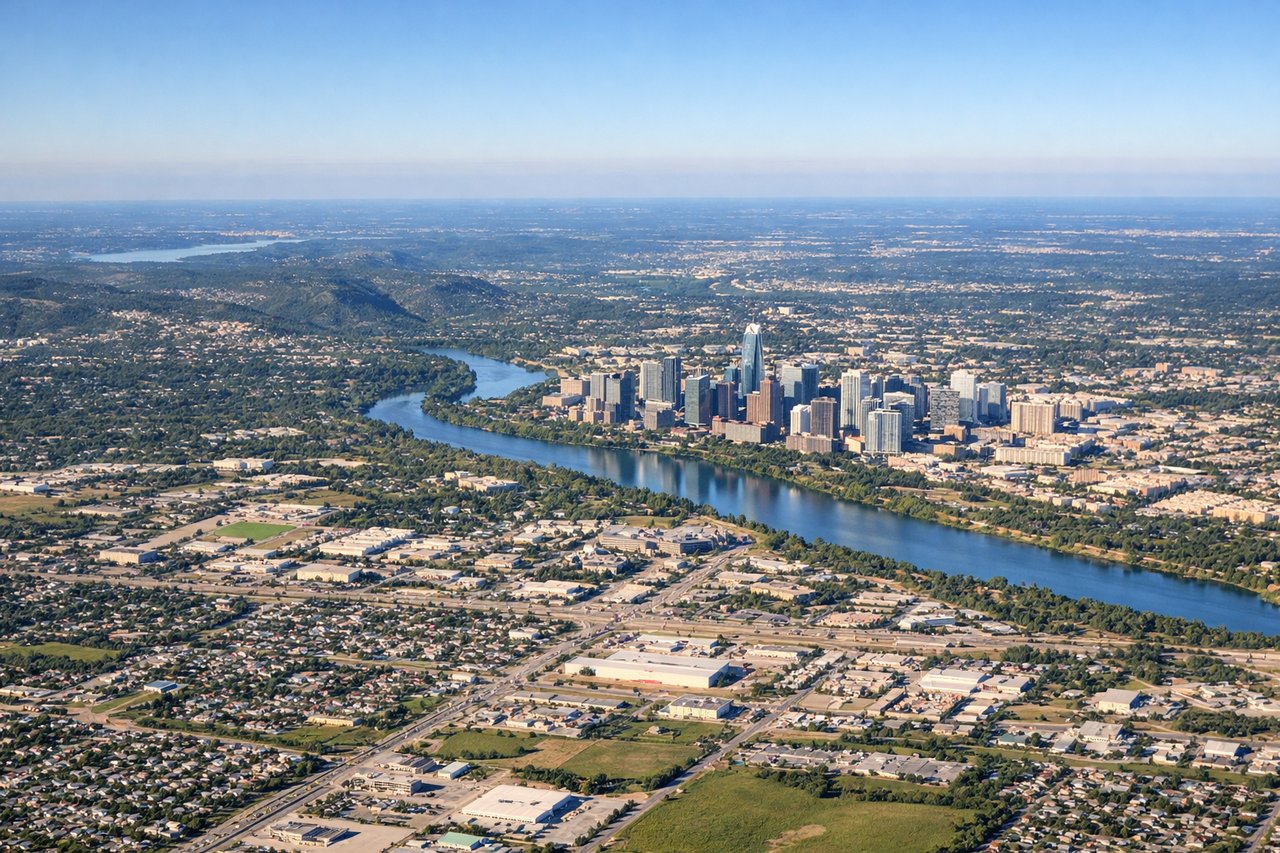
LEFTAUS departures on runway 18 climb south before turning left (east, then northeast) toward the transatlantic route. During that turn, downtown Austin's skyline, Lady Bird Lake, and the rolling Texas Hill Country to the northwest come into view on the left side, while the right side only shows flat farmland southeast of the city.
Landing at AMS
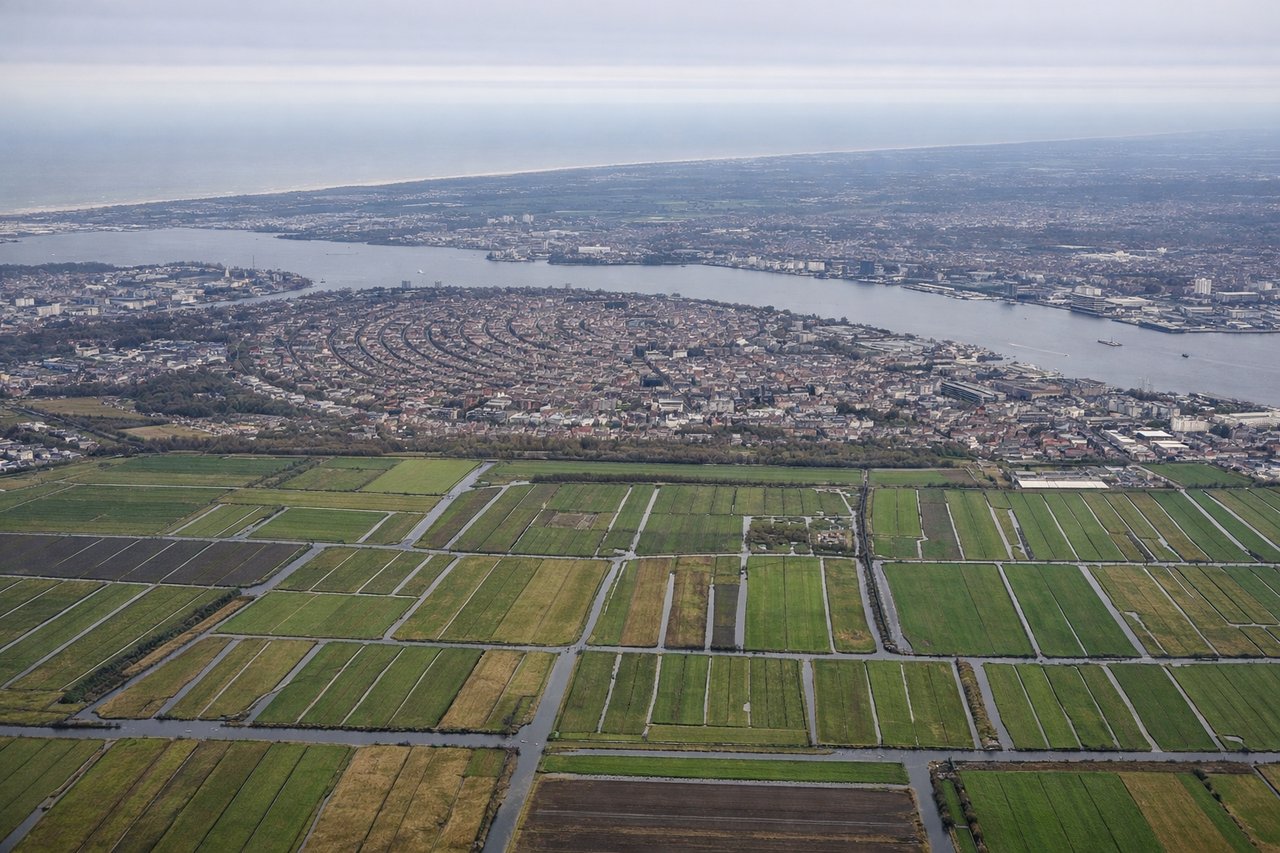
LEFTArrivals into Schiphol from the north on the 18-direction runways bring Amsterdam's city center, canals, and the IJsselmeer into view on the left side of the aircraft, while the right side mostly faces the North Sea and coastal dunes with fewer distinct landmarks.
Landmarks on this routeAll landmarks →
Will your flight be in sunlight?
See exactly which side of the plane gets sun and shade at your departure time.
About This Route
Which side of the plane should I sit on flying from Austin Bergstrom International (AUS) to Schiphol (AMS)?
Sit on the Left side of the plane for the best views on flights from Austin to Amsterdam. The left side captures the only meaningful landmarks on this route — Austin's skyline and Hill Country at departure, and Amsterdam's canals and the IJsselmeer at arrival — while the right side faces featureless farmland and open sea for most of the flight.
What can I see during takeoff from Austin Bergstrom International in Austin?
During takeoff from Austin Bergstrom International (AUS), sit on the Left side for the best views. AUS departures on runway 18 climb south before turning left (east, then northeast) toward the transatlantic route. During that turn, downtown Austin's skyline, Lady Bird Lake, and the rolling Texas Hill Country to the northwest come into view on the left side, while the right side only shows flat farmland southeast of the city. Notable sights include: Downtown Austin skyline, Lady Bird Lake/Colorado River, Texas Hill Country foothills.
What can I see when landing at Schiphol in Amsterdam?
When landing at Schiphol (AMS), sit on the Left side for the best views. Arrivals into Schiphol from the north on the 18-direction runways bring Amsterdam's city center, canals, and the IJsselmeer into view on the left side of the aircraft, while the right side mostly faces the North Sea and coastal dunes with fewer distinct landmarks. Notable sights include: IJsselmeer, Amsterdam canal ring and city center, North Sea coastline near IJmuiden.
How long is the flight from Austin to Amsterdam?
The flight from Austin Bergstrom International (AUS) to Schiphol (AMS) takes 9h30m.
What does the Austin to Amsterdam flight path pass over?
The route crosses the southeastern United States (Louisiana, Mississippi, Tennessee, Virginia), passes near Atlantic Canada (Newfoundland), then crosses roughly five hours of open North Atlantic Ocean before making landfall over Ireland or the UK en route to the Netherlands.