While the takeoff offers good Texas Hill Country scenery on the right, the landing approach to Rome on the left provides more dramatic and iconic geography—the Tiber estuary, Mediterranean coastline, and the approach to one of Europe's most historic cities outweigh the Austin departure views.
Flight Path
The flight path crosses the Atlantic Ocean for roughly 6-7 hours. Notable features include: the Appalachian Mountains and Atlantic coastline during the initial eastbound climb over the eastern United States; the Mid-Atlantic Ridge (not visible but the aircraft passes over deep ocean); the Irish and British coastlines as the aircraft approaches European airspace; and the transition over France toward the Mediterranean approach corridor. The North Atlantic itself dominates the middle 6 hours of flight—open ocean with no visible landmarks except occasional cloud formations and the curvature of the horizon at cruising altitude.
Great circle distance and headings ›

.jpeg?width=600)


Phase by phase
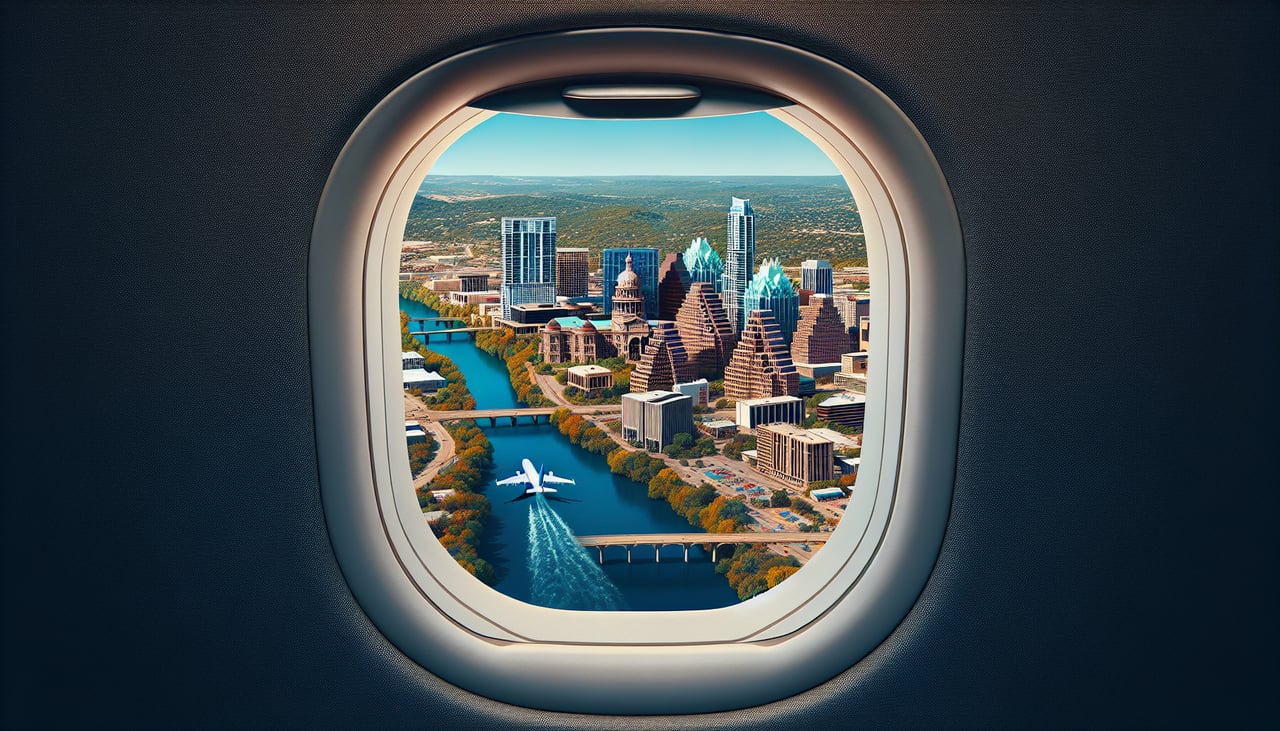
Takeoff from AUS
RIGHTRight-side seats capture the Colorado River and the Texas Hill Country terrain as the aircraft climbs northeast out of Austin. The landscape features rolling hills, lake systems, and the river valley that are distinctive from this angle.
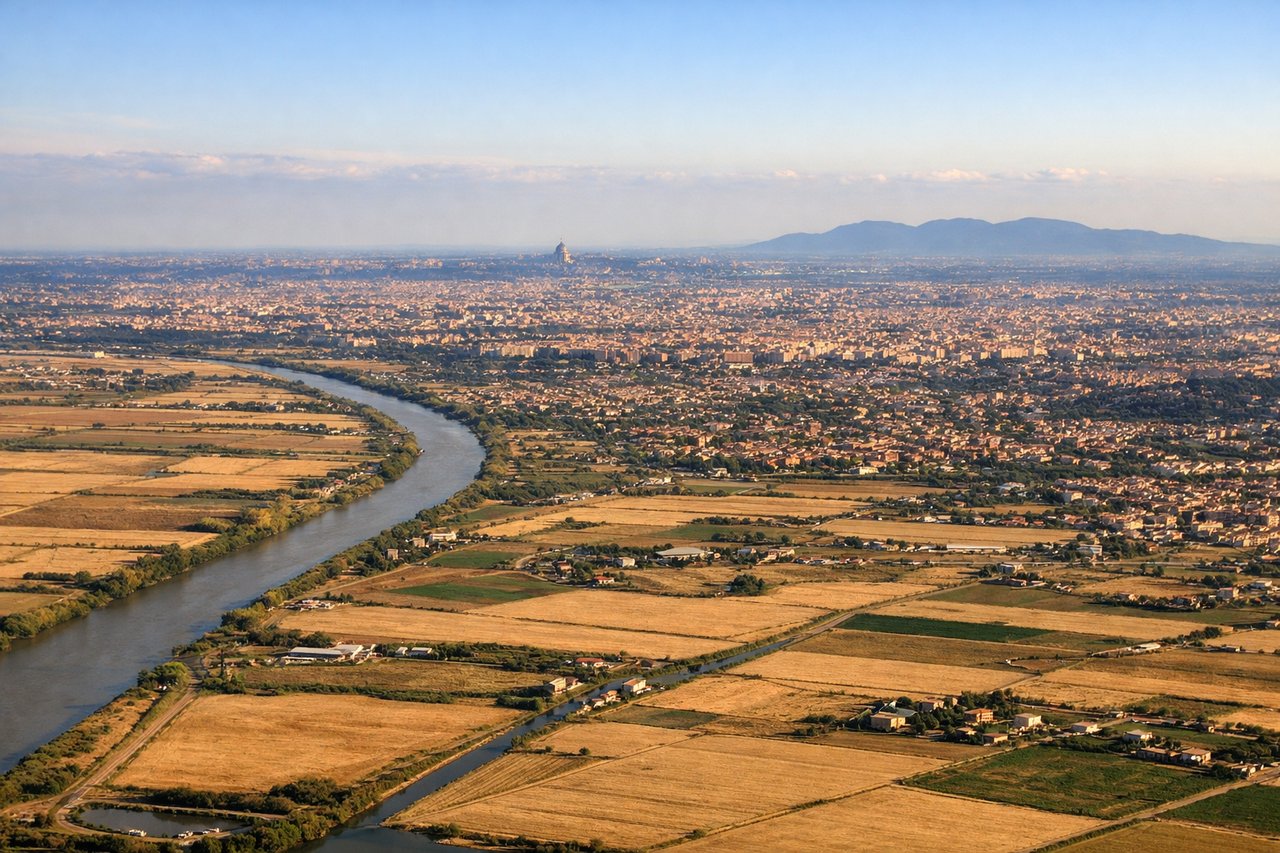
Landing at FCO
LEFTLeft-side seats offer the best views during the approach to Rome Fiumicino. The aircraft descends from the northwest, and left-side passengers see the Tiber River estuary, the Tyrrhenian Sea coastline, and the urban sprawl of Rome's western districts before final approach.
Landmarks on this routeAll landmarks →
Will your flight be in sunlight?
See exactly which side of the plane gets sun and shade at your departure time.
About This Route
Which side of the plane should I sit on flying from Austin Bergstrom International (AUS) to Fiumicino (FCO)?
Sit on the Left side of the plane for the best views on flights from Austin to Rome. While the takeoff offers good Texas Hill Country scenery on the right, the landing approach to Rome on the left provides more dramatic and iconic geography—the Tiber estuary, Mediterranean coastline, and the approach to one of Europe's most historic cities outweigh the Austin departure views.
What can I see during takeoff from Austin Bergstrom International in Austin?
During takeoff from Austin Bergstrom International (AUS), sit on the Right side for the best views. Right-side seats capture the Colorado River and the Texas Hill Country terrain as the aircraft climbs northeast out of Austin. The landscape features rolling hills, lake systems, and the river valley that are distinctive from this angle. Notable sights include: Colorado River, Lake Travis, Texas Hill Country ridgelines, Austin city grid (receding below).
What can I see when landing at Fiumicino in Rome?
When landing at Fiumicino (FCO), sit on the Left side for the best views. Left-side seats offer the best views during the approach to Rome Fiumicino. The aircraft descends from the northwest, and left-side passengers see the Tiber River estuary, the Tyrrhenian Sea coastline, and the urban sprawl of Rome's western districts before final approach. Notable sights include: Tiber River estuary and delta, Tyrrhenian Sea coastline, Rome's western urban districts, Fiumicino airport runways and surrounding reclaimed marshland.
How long is the flight from Austin to Rome?
The flight from Austin Bergstrom International (AUS) to Fiumicino (FCO) takes Approximately 10.5 to 11 hours.
What does the Austin to Rome flight path pass over?
The flight path crosses the Atlantic Ocean for roughly 6-7 hours. Notable features include: the Appalachian Mountains and Atlantic coastline during the initial eastbound climb over the eastern United States; the Mid-Atlantic Ridge (not visible but the aircraft passes over deep ocean); the Irish and British coastlines as the aircraft approaches European airspace; and the transition over France toward the Mediterranean approach corridor. The North Atlantic itself dominates the middle 6 hours of flight—open ocean with no visible landmarks except occasional cloud formations and the curvature of the horizon at cruising altitude.