Aviano to San Francisco is 6,018 miles (9,684 km), a flight of about 11 hours 30 minutes.
While takeoff from Aviano favors the right, the landing approach into SFO on the left side is more visually rewarding. The descent over the Sierra Nevada and approach across the Bay Area offers more dramatic and varied scenery than the relatively brief alpine views at departure.
Flight Path
The flight crosses the Atlantic Ocean (no visible landmarks for 6-7 hours), then approaches North America over Newfoundland and the Canadian Maritimes, crosses the Great Lakes region, and enters the continental interior over the Great Plains and Rocky Mountains before descending into California. Notable visible features include the Rocky Mountain chain (Colorado/Wyoming), the Great Basin's desert terrain (Nevada/Utah), and the Sierra Nevada's eastern face before final approach to the Bay Area.
Great circle distance and headings ›


.jpg?width=600)

Phase by phase
Takeoff from AVB
RIGHTRight side offers immediate views of the Julian Alps and the Friuli-Venezia Giulia region's dramatic terrain. The northbound departure from Aviano climbs toward these mountains, making the right side the scenic advantage for the first 15-20 minutes of flight.
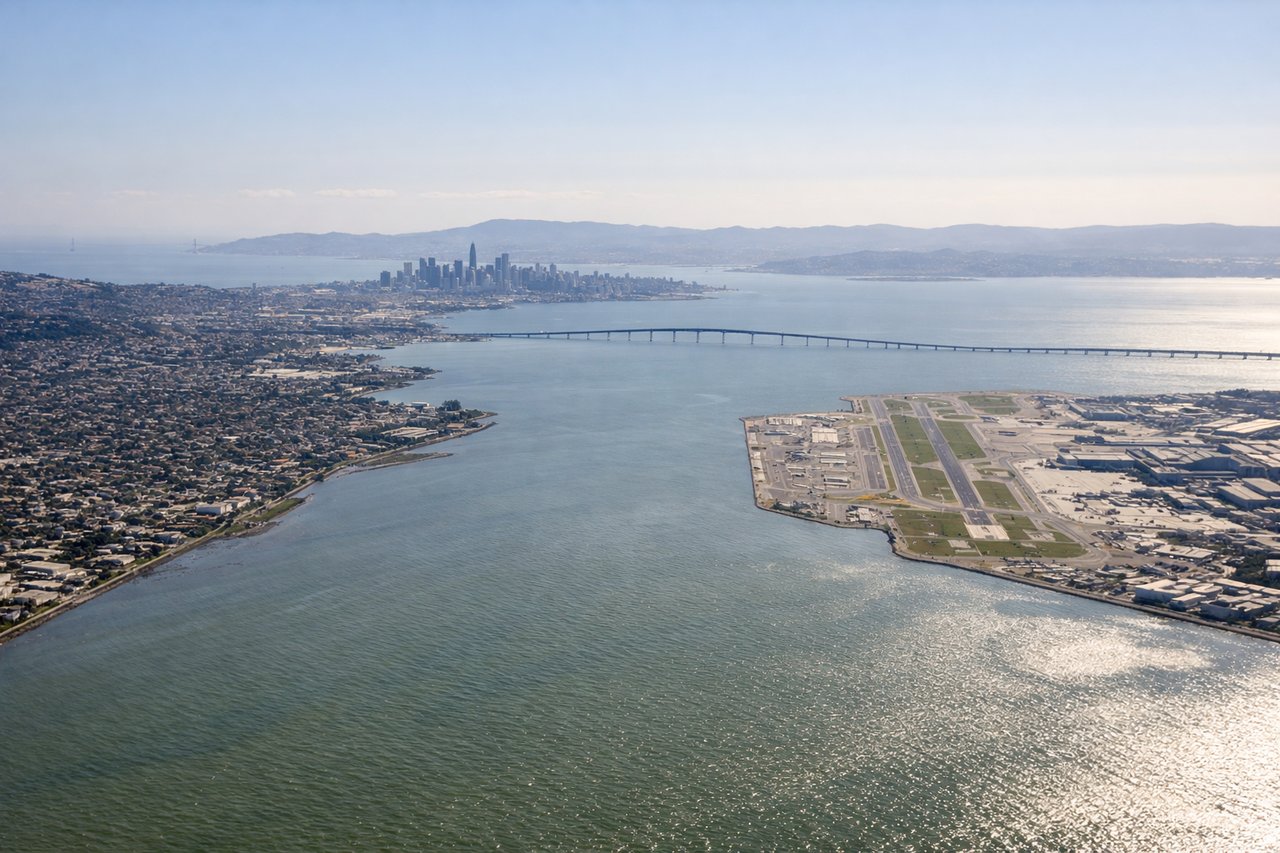
Landing at SFO
LEFTThe standard approach to SFO from the east brings the aircraft over the Sierra Nevada and Central Valley. Left side provides superior views of the Sierra crest, Lake Tahoe basin, and the transition into the Bay Area's coastal geography during descent.
Landmarks on this routeAll landmarks →
Will your flight be in sunlight?
Pick a date and time in the Sun Map to watch the sun move across your whole flight.
About This Route
Which side of the plane should I sit on flying from Aviano Ab (AVB) to San Francisco International (SFO)?
Sit on the Left side of the plane for the best views on flights from Aviano to San Francisco. While takeoff from Aviano favors the right, the landing approach into SFO on the left side is more visually rewarding. The descent over the Sierra Nevada and approach across the Bay Area offers more dramatic and varied scenery than the relatively brief alpine views at departure.
What can I see during takeoff from Aviano Ab in Aviano?
During takeoff from Aviano Ab (AVB), sit on the Right side for the best views. Right side offers immediate views of the Julian Alps and the Friuli-Venezia Giulia region's dramatic terrain. The northbound departure from Aviano climbs toward these mountains, making the right side the scenic advantage for the first 15-20 minutes of flight. Notable sights include: Julian Alps (north), Tagliamento River valley (east), Pordenone plains (south), Adriatic Sea coastline (southeast).
What can I see when landing at San Francisco International in San Francisco?
When landing at San Francisco International (SFO), sit on the Left side for the best views. The standard approach to SFO from the east brings the aircraft over the Sierra Nevada and Central Valley. Left side provides superior views of the Sierra crest, Lake Tahoe basin, and the transition into the Bay Area's coastal geography during descent. Notable sights include: Sierra Nevada mountain range (east), Lake Tahoe (if visible at altitude), San Francisco Bay (west), Golden Gate Strait and Marin Headlands (final approach).
How long is the flight from Aviano to San Francisco?
The flight from Aviano Ab (AVB) to San Francisco International (SFO) takes about 11 hours 30 minutes. The shortest flight path between them is 6,018 miles (9,684 km); winds and air traffic control usually add a few percent.
What does the Aviano to San Francisco flight path pass over?
The flight crosses the Atlantic Ocean (no visible landmarks for 6-7 hours), then approaches North America over Newfoundland and the Canadian Maritimes, crosses the Great Lakes region, and enters the continental interior over the Great Plains and Rocky Mountains before descending into California. Notable visible features include the Rocky Mountain chain (Colorado/Wyoming), the Great Basin's desert terrain (Nevada/Utah), and the Sierra Nevada's eastern face before final approach to the Bay Area.