San Francisco to Aviano is 6,018 miles (9,684 km), a flight of about 12 hours.
The Dolomites arrival on the right side is one of the most visually striking approaches in Europe. While the left-side San Francisco Bay departure is excellent, the Dolomites view on descent into Aviano is rarer and more dramatic, and right-side seats also get views of the Sierra Nevada and Rocky Mountains during the early transcontinental portion of the flight.
Flight Path
The route tracks northeast across the Sierra Nevada and Great Basin, then over the Rockies and Great Plains, crosses the North Atlantic near Greenland or Iceland depending on the jet stream, passes over the British Isles or northern France, crosses the Alps, and descends into the Po Valley. The Greenland ice sheet and Icelandic volcanic terrain are visible mid-Atlantic, and the Alps crossing offers views of Mont Blanc and the Swiss Alps on the southern approach to Italy.
Great circle distance and headings ›
.jpg?width=600)


Phase by phase
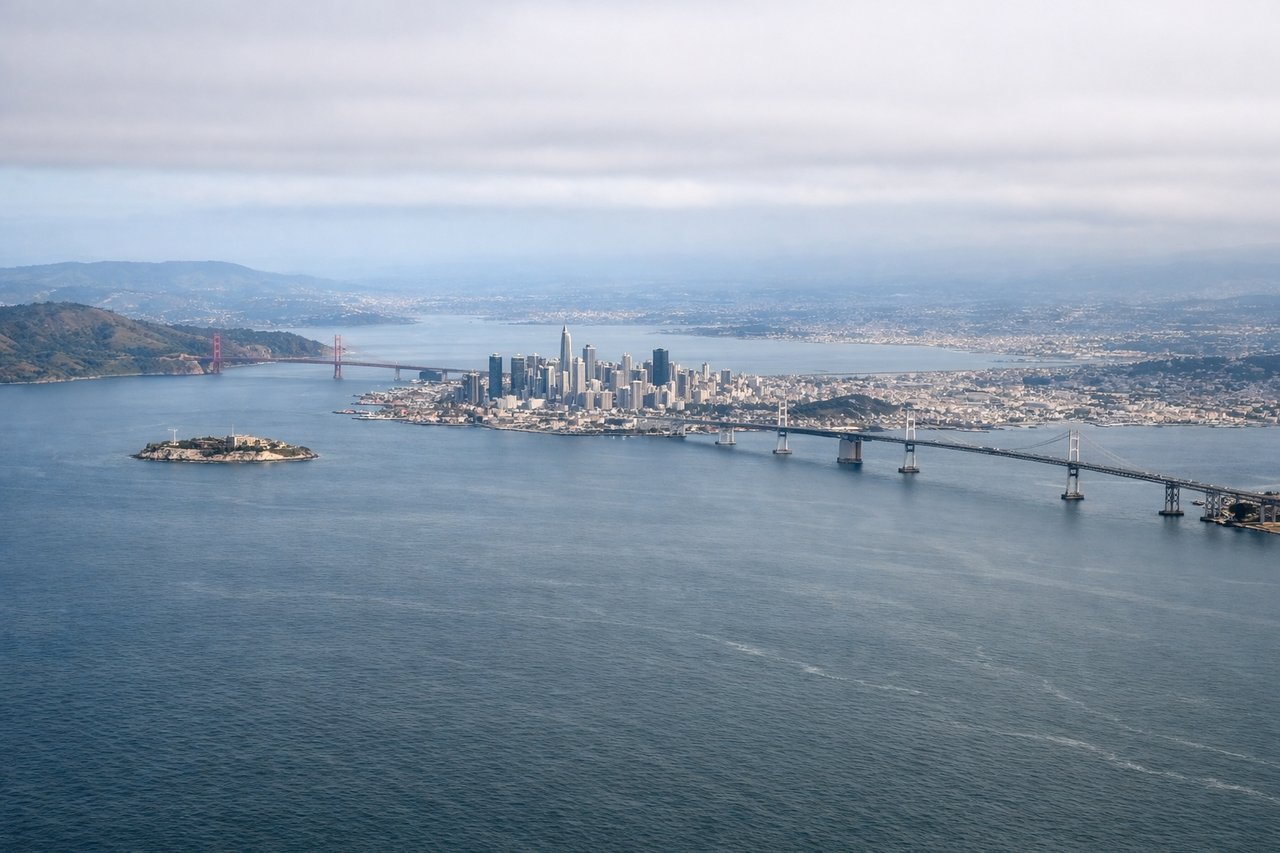
Takeoff from SFO
LEFTSFO's primary departure runways (28L/28R) head west over the Bay then turn northwest or north. A left-side seat gives you San Francisco Bay, the city skyline, and the Bay Bridge as you climb out. The right side faces the peninsula and suburban sprawl.
Landing at AVB
RIGHTAviano AB's runway 09/27 orientation means approaches from the west put you over the Po Valley flatlands. A right-side seat on approach from the west gives views of the Dolomites and the Friuli foothills rising sharply to the north, which is the dominant visual feature of this arrival. The left side faces south toward the flat agricultural Po Plain.
Landmarks on this routeAll landmarks →
Will your flight be in sunlight?
Pick a date and time in the Sun Map to watch the sun move across your whole flight.
About This Route
Which side of the plane should I sit on flying from San Francisco International (SFO) to Aviano Ab (AVB)?
Sit on the Right side of the plane for the best views on flights from San Francisco to Aviano. The Dolomites arrival on the right side is one of the most visually striking approaches in Europe. While the left-side San Francisco Bay departure is excellent, the Dolomites view on descent into Aviano is rarer and more dramatic, and right-side seats also get views of the Sierra Nevada and Rocky Mountains during the early transcontinental portion of the flight.
What can I see during takeoff from San Francisco International in San Francisco?
During takeoff from San Francisco International (SFO), sit on the Left side for the best views. SFO's primary departure runways (28L/28R) head west over the Bay then turn northwest or north. A left-side seat gives you San Francisco Bay, the city skyline, and the Bay Bridge as you climb out. The right side faces the peninsula and suburban sprawl. Notable sights include: San Francisco Bay, Bay Bridge, San Francisco city skyline, Alcatraz Island.
What can I see when landing at Aviano Ab in Aviano?
When landing at Aviano Ab (AVB), sit on the Right side for the best views. Aviano AB's runway 09/27 orientation means approaches from the west put you over the Po Valley flatlands. A right-side seat on approach from the west gives views of the Dolomites and the Friuli foothills rising sharply to the north, which is the dominant visual feature of this arrival. The left side faces south toward the flat agricultural Po Plain. Notable sights include: Dolomites mountain range, Friuli-Venezia Giulia foothills, Po Valley agricultural plain, Tagliamento River valley.
How long is the flight from San Francisco to Aviano?
The flight from San Francisco International (SFO) to Aviano Ab (AVB) takes about 12 hours. The shortest flight path between them is 6,018 miles (9,684 km); winds and air traffic control usually add a few percent.
What does the San Francisco to Aviano flight path pass over?
The route tracks northeast across the Sierra Nevada and Great Basin, then over the Rockies and Great Plains, crosses the North Atlantic near Greenland or Iceland depending on the jet stream, passes over the British Isles or northern France, crosses the Alps, and descends into the Po Valley. The Greenland ice sheet and Icelandic volcanic terrain are visible mid-Atlantic, and the Alps crossing offers views of Mont Blanc and the Swiss Alps on the southern approach to Italy.