The takeoff from Barcelona offers more dramatic and distinctive scenery (Mediterranean coast and Montserrat's unique geology), while the landing approach, though visually interesting, is more urban-focused. Left seats capture the most geographically striking moment of the flight.
Flown BCN to BOM? Did we get it right?
Flight Path
Barcelona to Bombay is 4,373 miles (7,038 km), a flight of about 8 hours 45 minutes.
The flight path crosses the Alps (visible from cruising altitude as a snow-capped ridge running east-west), then traverses the Adriatic Sea, the Balkans, Greece, and the eastern Mediterranean. Over southern Europe and the Middle East, the Nile Delta appears as a bright green fan-shaped feature against the desert. The Persian Gulf and Oman Sea are crossed before reaching the Arabian Sea approach to Mumbai. The Hindu Kush and Pamir ranges lie to the north of the typical routing but may be visible on the horizon during portions of the flight over Central Asia.
Great circle distance and headings ›


Phase by phase
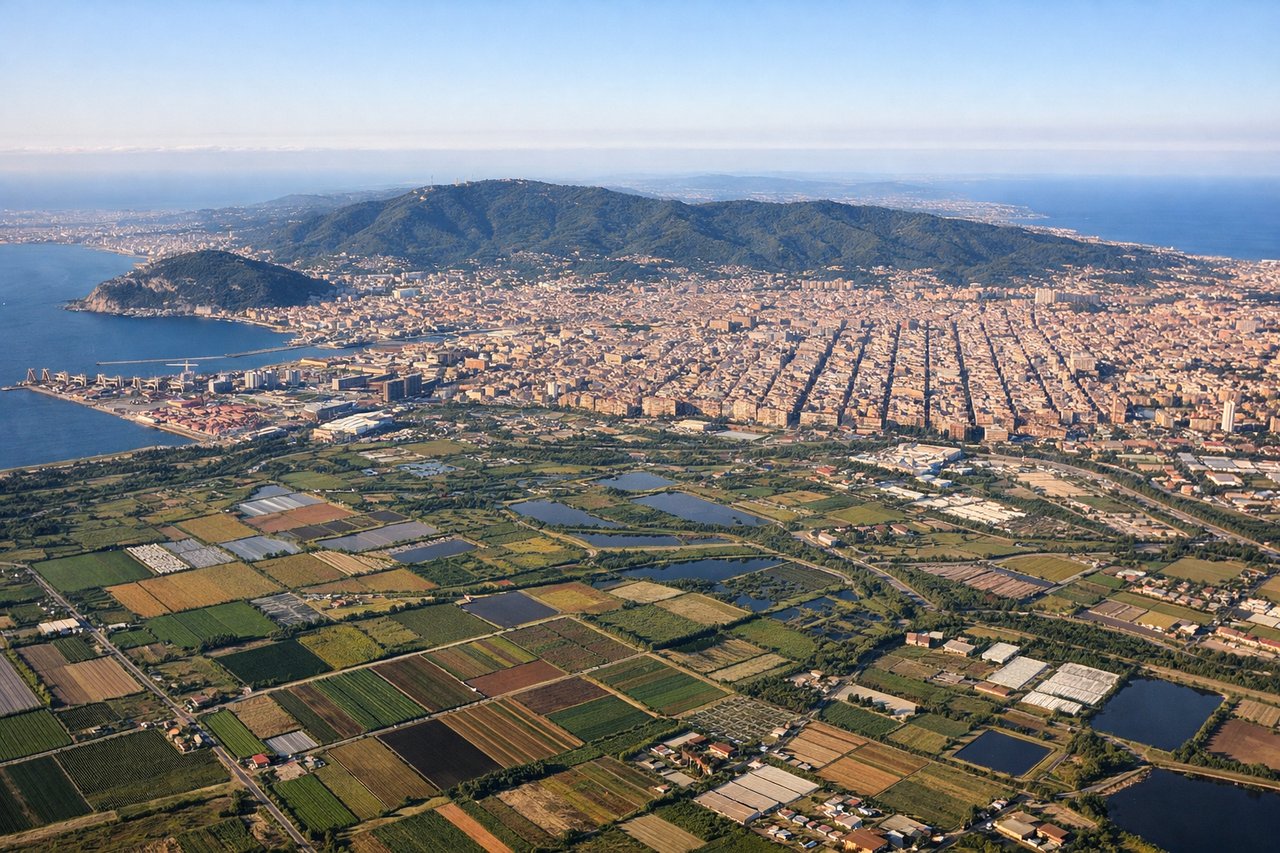
Takeoff from BCN
LEFTLeft seats offer views of the Mediterranean coastline and the Montserrat massif inland. Right seats face northwest toward the Pyrenees, which are typically obscured by haze or distance during northbound climbs from Barcelona.
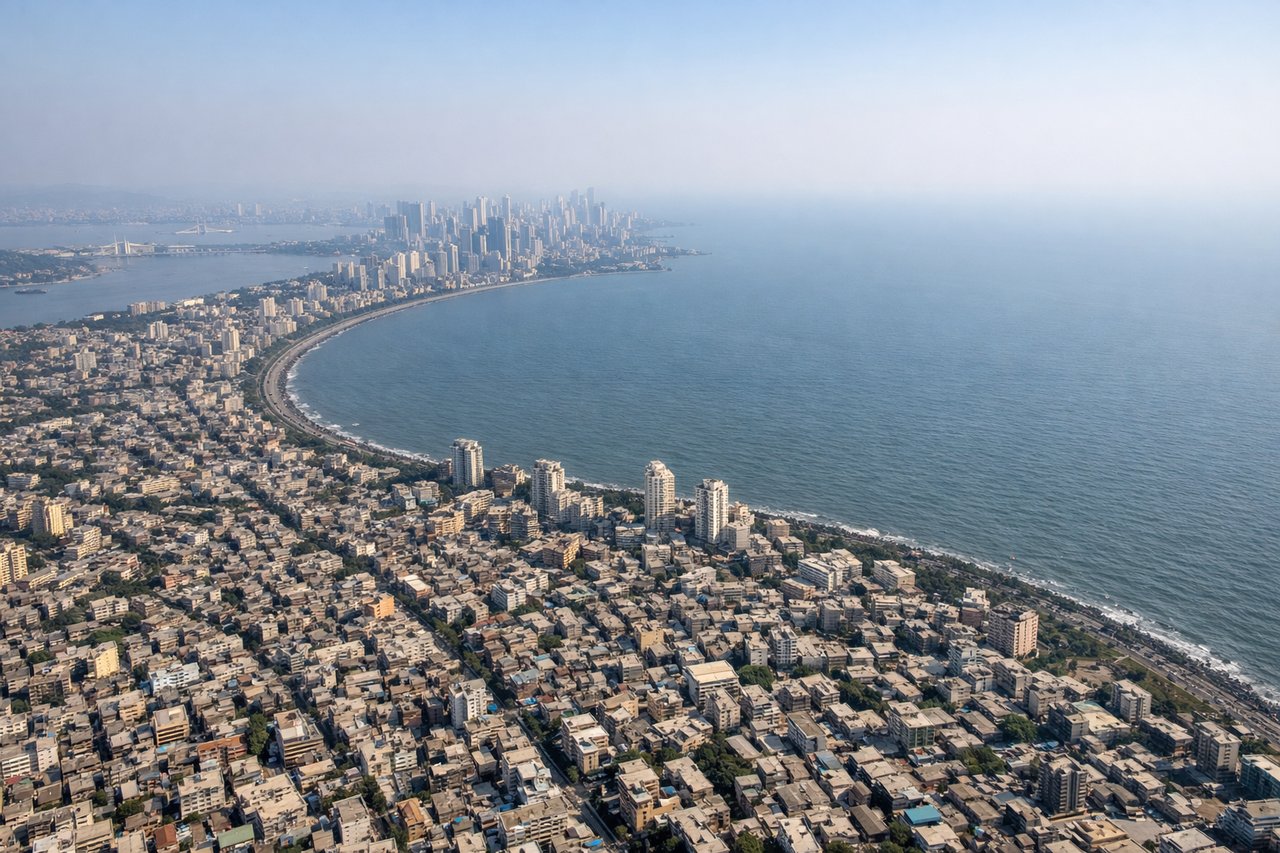
Landing at BOM
RIGHTRight seats provide views of the Arabian Sea approach and Mumbai's coastal geography. The aircraft descends from the northeast over the sea, then banks right toward Chhatrapati Shivaji International, offering clear views of the harbor, islands, and the city's western waterfront.
Will your flight be in sunlight?
Pick a date and time in the Sun Map to watch the sun move across your whole flight.
About This Route
Which side of the plane should I sit on flying from Barcelona (BCN) to Chhatrapati Shivaji International (BOM)?
Sit on the Left side of the plane for the best views on flights from Barcelona to Bombay. The takeoff from Barcelona offers more dramatic and distinctive scenery (Mediterranean coast and Montserrat's unique geology), while the landing approach, though visually interesting, is more urban-focused. Left seats capture the most geographically striking moment of the flight.
What can I see during takeoff from Barcelona in Barcelona?
During takeoff from Barcelona (BCN), sit on the Left side for the best views. Left seats offer views of the Mediterranean coastline and the Montserrat massif inland. Right seats face northwest toward the Pyrenees, which are typically obscured by haze or distance during northbound climbs from Barcelona. Notable sights include: Mediterranean Sea (immediate coastline), Montserrat mountain range (30 miles inland, distinctive jagged peaks), Llobregat River delta, Barcelona urban sprawl.
What can I see when landing at Chhatrapati Shivaji International in Bombay?
When landing at Chhatrapati Shivaji International (BOM), sit on the Right side for the best views. Right seats provide views of the Arabian Sea approach and Mumbai's coastal geography. The aircraft descends from the northeast over the sea, then banks right toward Chhatrapati Shivaji International, offering clear views of the harbor, islands, and the city's western waterfront. Notable sights include: Arabian Sea, Elephanta Island (in the harbor), Mumbai's coastal skyline and harbor islands, Western Ghats ridge (distant inland).
How long is the flight from Barcelona to Bombay?
The flight from Barcelona (BCN) to Chhatrapati Shivaji International (BOM) takes about 8 hours 45 minutes. The shortest flight path between them is 4,373 miles (7,038 km); winds and air traffic control usually add a few percent.
What does the Barcelona to Bombay flight path pass over?
The flight path crosses the Alps (visible from cruising altitude as a snow-capped ridge running east-west), then traverses the Adriatic Sea, the Balkans, Greece, and the eastern Mediterranean. Over southern Europe and the Middle East, the Nile Delta appears as a bright green fan-shaped feature against the desert. The Persian Gulf and Oman Sea are crossed before reaching the Arabian Sea approach to Mumbai. The Hindu Kush and Pamir ranges lie to the north of the typical routing but may be visible on the horizon during portions of the flight over Central Asia.