While takeoff favors the right for Barcelona's coastal views, the landing approach to Catania with Mount Etna's dramatic presence from the left side is the more memorable and geographically significant segment of this route. Etna's visibility from cruise altitude makes the left side the overall winner.
Flight Path
The flight path crosses the Balearic Sea southwest of the Balearic Islands (typically passed 40-50 miles to the south), then continues southeast over open Mediterranean toward Sardinia's eastern coast (visible as a distant landmass if flying at optimal altitude), before turning toward the Tyrrhenian Sea and Sicily. The Strait of Messina between Sicily and Calabria (Italy) becomes visible in the final 30 minutes of flight. Mount Etna becomes visible from the left side approximately 80-100 miles out on approach.
Great circle distance and headings ›


Phase by phase
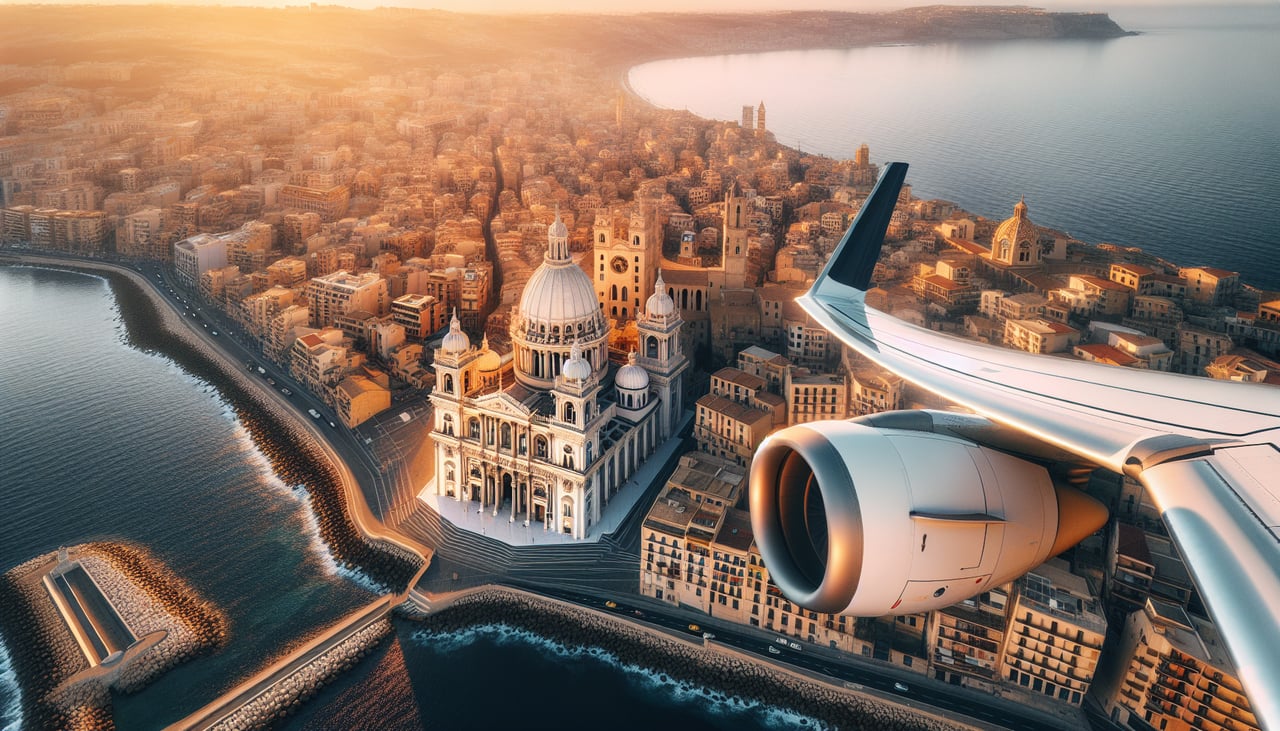
Takeoff from BCN
RIGHTBarcelona typically departs runway 07L/R heading northeast. Right-side seats offer immediate views of the Mediterranean coastline and the city's northeastern sprawl toward Badalona and Mataró. Left seats face inland toward the Collserola hills.
Landing at CTA
LEFTCatania typically lands runway 04 heading northeast or runway 10 heading east. Left-side seats provide the best views during descent over the Ionian Sea and the approach to Mount Etna's western slopes. Right seats face away from the volcano toward the interior.
Landmarks on this routeAll landmarks →
Will your flight be in sunlight?
See exactly which side of the plane gets sun and shade at your departure time.
About This Route
Which side of the plane should I sit on flying from Barcelona (BCN) to Catania Fontanarossa (CTA)?
Sit on the Left side of the plane for the best views on flights from Barcelona to Catania. While takeoff favors the right for Barcelona's coastal views, the landing approach to Catania with Mount Etna's dramatic presence from the left side is the more memorable and geographically significant segment of this route. Etna's visibility from cruise altitude makes the left side the overall winner.
What can I see during takeoff from Barcelona in Barcelona?
During takeoff from Barcelona (BCN), sit on the Right side for the best views. Barcelona typically departs runway 07L/R heading northeast. Right-side seats offer immediate views of the Mediterranean coastline and the city's northeastern sprawl toward Badalona and Mataró. Left seats face inland toward the Collserola hills. Notable sights include: Mediterranean Sea (immediate offshore), Montjuïc hill (southwest, visible as you climb), Collserola mountain range (inland to the west), coastal towns of Badalona and Mataró (northeast along the coast).
What can I see when landing at Catania Fontanarossa in Catania?
When landing at Catania Fontanarossa (CTA), sit on the Left side for the best views. Catania typically lands runway 04 heading northeast or runway 10 heading east. Left-side seats provide the best views during descent over the Ionian Sea and the approach to Mount Etna's western slopes. Right seats face away from the volcano toward the interior. Notable sights include: Mount Etna (dominant snow-capped volcano, visible from 80+ miles away), Ionian Sea (approach path), Catania city and harbor (immediate landing area), Simeto River valley (agricultural plain west of the city).
How long is the flight from Barcelona to Catania?
The flight from Barcelona (BCN) to Catania Fontanarossa (CTA) takes Approximately 2 hours 15 minutes.
What does the Barcelona to Catania flight path pass over?
The flight path crosses the Balearic Sea southwest of the Balearic Islands (typically passed 40-50 miles to the south), then continues southeast over open Mediterranean toward Sardinia's eastern coast (visible as a distant landmass if flying at optimal altitude), before turning toward the Tyrrhenian Sea and Sicily. The Strait of Messina between Sicily and Calabria (Italy) becomes visible in the final 30 minutes of flight. Mount Etna becomes visible from the left side approximately 80-100 miles out on approach.