Right side scores higher (3.5 vs 2.5) because it captures both the Mediterranean departure scenery from Barcelona and the more dramatic arrival experience into Tokyo Bay with Mount Fuji visible. The left side faces inland toward the Pyrenees during departure but offers limited views during the long cruise phase over Central Asia and the approach into Tokyo, where it faces away from the airport's typical arrival corridors. Right side provides better bookend scenery at both ends of the flight.
Flown BCN to HND? Did we get it right?
Flight Path
Barcelona to Tokyo is 6,490 miles (10,444 km), a flight of about 11 hours 45 minutes.
The flight path crosses the Alps (visible during early cruise if flying over Switzerland/Austria), the Carpathian Mountains in Romania, the Black Sea coast, the Caucasus Mountains, the Caspian Sea, the Tian Shan range on the Kazakhstan-Kyrgyzstan border, and the Gobi Desert in Mongolia before descending into Japan. The most dramatic midpoint feature is the Tian Shan mountain range, which creates a visible ridge of peaks along the flight corridor. The Gobi Desert's tan and brown terrain provides stark contrast to surrounding regions during the final approach to Japanese airspace.
Great circle distance and headings ›Phase by phase

Takeoff from BCN
RIGHTRight side captures Barcelona's Mediterranean coastline and the city's harbor during initial climb. The left side faces inland toward the Pyrenees but at a steeper angle away from the airport, offering less immediate visual interest during the critical takeoff and early climb phase.
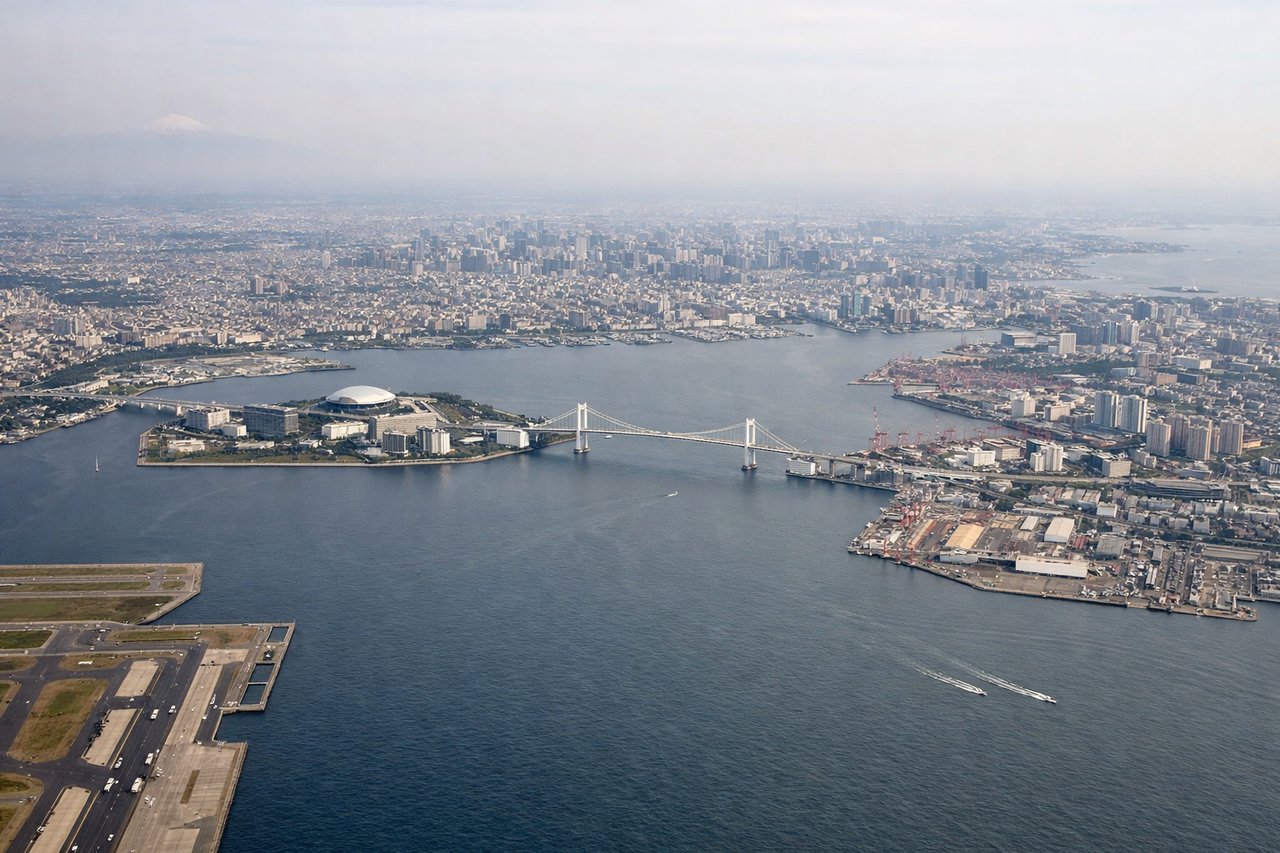
Landing at HND
RIGHTRight side offers superior approach views into Tokyo. Depending on wind conditions, arrivals typically use runways 34L/34R (south-wind daytime setup), which means the aircraft descends over Tokyo Bay from the south. Right-side passengers see Mount Fuji on the distant horizon during descent, the bay's islands and shipping traffic, and Tokyo's sprawling urban landscape. Left side faces away from the approach corridor and sees primarily open ocean or the bay's western edge.
Will your flight be in sunlight?
Pick a date and time in the Sun Map to watch the sun move across your whole flight.
About This Route
Which side of the plane should I sit on flying from Barcelona (BCN) to Tokyo International (HND)?
Sit on the Right side of the plane for the best views on flights from Barcelona to Tokyo. Right side scores higher (3.5 vs 2.5) because it captures both the Mediterranean departure scenery from Barcelona and the more dramatic arrival experience into Tokyo Bay with Mount Fuji visible. The left side faces inland toward the Pyrenees during departure but offers limited views during the long cruise phase over Central Asia and the approach into Tokyo, where it faces away from the airport's typical arrival corridors. Right side provides better bookend scenery at both ends of the flight.
What can I see during takeoff from Barcelona in Barcelona?
During takeoff from Barcelona (BCN), sit on the Right side for the best views. Right side captures Barcelona's Mediterranean coastline and the city's harbor during initial climb. The left side faces inland toward the Pyrenees but at a steeper angle away from the airport, offering less immediate visual interest during the critical takeoff and early climb phase. Notable sights include: Barcelona harbor and breakwaters, Mediterranean Sea coastline, Montjuïc hill with its distinctive profile, Tibidabo church visible on the northern ridge.
What can I see when landing at Tokyo International in Tokyo?
When landing at Tokyo International (HND), sit on the Right side for the best views. Right side offers superior approach views into Tokyo. Depending on wind conditions, arrivals typically use runways 34L/34R (south-wind daytime setup), which means the aircraft descends over Tokyo Bay from the south. Right-side passengers see Mount Fuji on the distant horizon during descent, the bay's islands and shipping traffic, and Tokyo's sprawling urban landscape. Left side faces away from the approach corridor and sees primarily open ocean or the bay's western edge. Notable sights include: Mount Fuji (visible as a distant snow-capped peak on the horizon during clear descents), Tokyo Bay with its artificial islands and port facilities, Haneda Airport's runway complex and taxiways, Tokyo's urban sprawl extending to the horizon.
How long is the flight from Barcelona to Tokyo?
The flight from Barcelona (BCN) to Tokyo International (HND) takes about 11 hours 45 minutes. The shortest flight path between them is 6,490 miles (10,444 km); winds and air traffic control usually add a few percent.
What does the Barcelona to Tokyo flight path pass over?
The flight path crosses the Alps (visible during early cruise if flying over Switzerland/Austria), the Carpathian Mountains in Romania, the Black Sea coast, the Caucasus Mountains, the Caspian Sea, the Tian Shan range on the Kazakhstan-Kyrgyzstan border, and the Gobi Desert in Mongolia before descending into Japan. The most dramatic midpoint feature is the Tian Shan mountain range, which creates a visible ridge of peaks along the flight corridor. The Gobi Desert's tan and brown terrain provides stark contrast to surrounding regions during the final approach to Japanese airspace.