While takeoff favors the right for Connecticut geography, the landing view from the left—featuring the Cumberland River's dramatic meanders and Nashville's urban layout—is more visually rewarding and memorable. The left side captures the destination city's defining geographic features.
Flown BDL to BNA? Did we get it right?
Flight Path
Windsor Locks to Nashville is 850 miles (1,368 km), a flight of about 2 hours 20 minutes.
The flight path crosses the Appalachian foothills (visible as increasing terrain elevation around the Virginia-West Virginia border), the New River valley in southern West Virginia, and transitions into the Cumberland Plateau region of Tennessee. The Appalachian ridge-and-valley topography becomes increasingly pronounced in the midpoint, with parallel ridges running northeast-southwest. By the time you approach Tennessee, the terrain flattens into the Nashville Basin's rolling landscape.
Great circle distance and headings ›

Phase by phase

Takeoff from BDL
RIGHTRight-side seats capture the Connecticut River valley and the Metacomet Ridge escarpment as you climb southwest. These features are prominent and distinctive during the initial climb-out from BDL's primary runways (06/24).
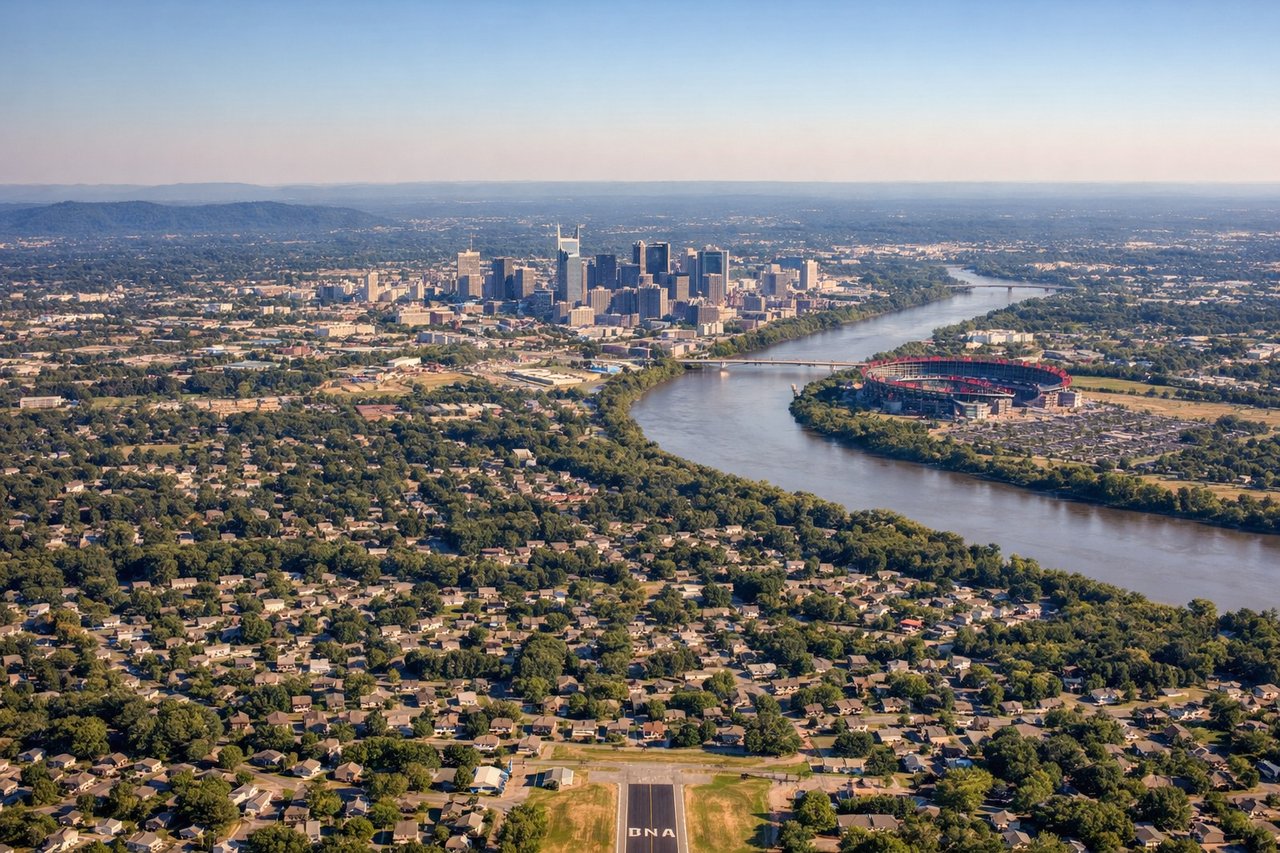
Landing at BNA
LEFTLeft-side seats offer the best views during descent into BNA. You'll see the Cumberland River's distinctive meanders and the Nashville metropolitan area sprawl across the landscape. Depending on approach runway (typically 02L/02R or 20L/20R), the left side captures the river and downtown Nashville's position relative to the airport.
Will your flight be in sunlight?
Pick a date and time in the Sun Map to watch the sun move across your whole flight.
About This Route
Which side of the plane should I sit on flying from Bradley International (BDL) to Nashville International (BNA)?
Sit on the Left side of the plane for the best views on flights from Windsor Locks to Nashville. While takeoff favors the right for Connecticut geography, the landing view from the left—featuring the Cumberland River's dramatic meanders and Nashville's urban layout—is more visually rewarding and memorable. The left side captures the destination city's defining geographic features.
What can I see during takeoff from Bradley International in Windsor Locks?
During takeoff from Bradley International (BDL), sit on the Right side for the best views. Right-side seats capture the Connecticut River valley and the Metacomet Ridge escarpment as you climb southwest. These features are prominent and distinctive during the initial climb-out from BDL's primary runways (06/24). Notable sights include: Connecticut River (flowing south below), Metacomet Ridge (linear ridge running north-south to the west), Hartford skyline (visible to the south-southwest), and the broad Connecticut River floodplain.
What can I see when landing at Nashville International in Nashville?
When landing at Nashville International (BNA), sit on the Left side for the best views. Left-side seats offer the best views during descent into BNA. You'll see the Cumberland River's distinctive meanders and the Nashville metropolitan area sprawl across the landscape. Depending on approach runway (typically 02L/02R or 20L/20R), the left side captures the river and downtown Nashville's position relative to the airport. Notable sights include: Cumberland River with its characteristic S-curve meanders, Nashville downtown skyline (visible as a cluster on the horizon), the Percy Priest Lake reservoir (to the east), and the rolling terrain of Middle Tennessee.
How long is the flight from Windsor Locks to Nashville?
The flight from Bradley International (BDL) to Nashville International (BNA) takes about 2 hours 20 minutes. The shortest flight path between them is 850 miles (1,368 km); winds and air traffic control usually add a few percent.
What does the Windsor Locks to Nashville flight path pass over?
The flight path crosses the Appalachian foothills (visible as increasing terrain elevation around the Virginia-West Virginia border), the New River valley in southern West Virginia, and transitions into the Cumberland Plateau region of Tennessee. The Appalachian ridge-and-valley topography becomes increasingly pronounced in the midpoint, with parallel ridges running northeast-southwest. By the time you approach Tennessee, the terrain flattens into the Nashville Basin's rolling landscape.