Seattle to Paris is 4,997 miles (8,042 km), a flight of about 9 hours 15 minutes.
While the Seattle departure offers immediate dramatic scenery, the right side wins overall because the Paris approach provides sustained visual interest over the Seine valley and Île-de-France landscape during the critical final descent phase. The BFI-CDG route is predominantly ocean (5+ hours of North Atlantic), which caps both sides at 2.0 maximum for cruise. The right side's landing approach (3.5) significantly outweighs the left side's takeoff advantage (2.5), making right the better choice for the full flight experience.
Flight Path
North Atlantic Ocean dominates the cruise phase with no visible landmarks for approximately 7 hours. The flight path crosses the Atlantic at high latitude, passing south of Greenland and Iceland (not visible at cruise altitude). Upon approaching European airspace, the right side may glimpse the Irish coast and Celtic Sea during descent, while the left side sees open ocean. The final approach into CDG crosses the Seine River valley and Île-de-France agricultural region.
Great circle distance and headings ›
.jpg?width=600)


.jpeg?width=600)
.jpg?width=600)
Phase by phase

Takeoff from BFI
LEFTSeattle departure offers immediate urban scenery and Puget Sound waterfront. Left side captures Elliott Bay, downtown Seattle skyline, and the initial climb over the Cascade Range foothills.
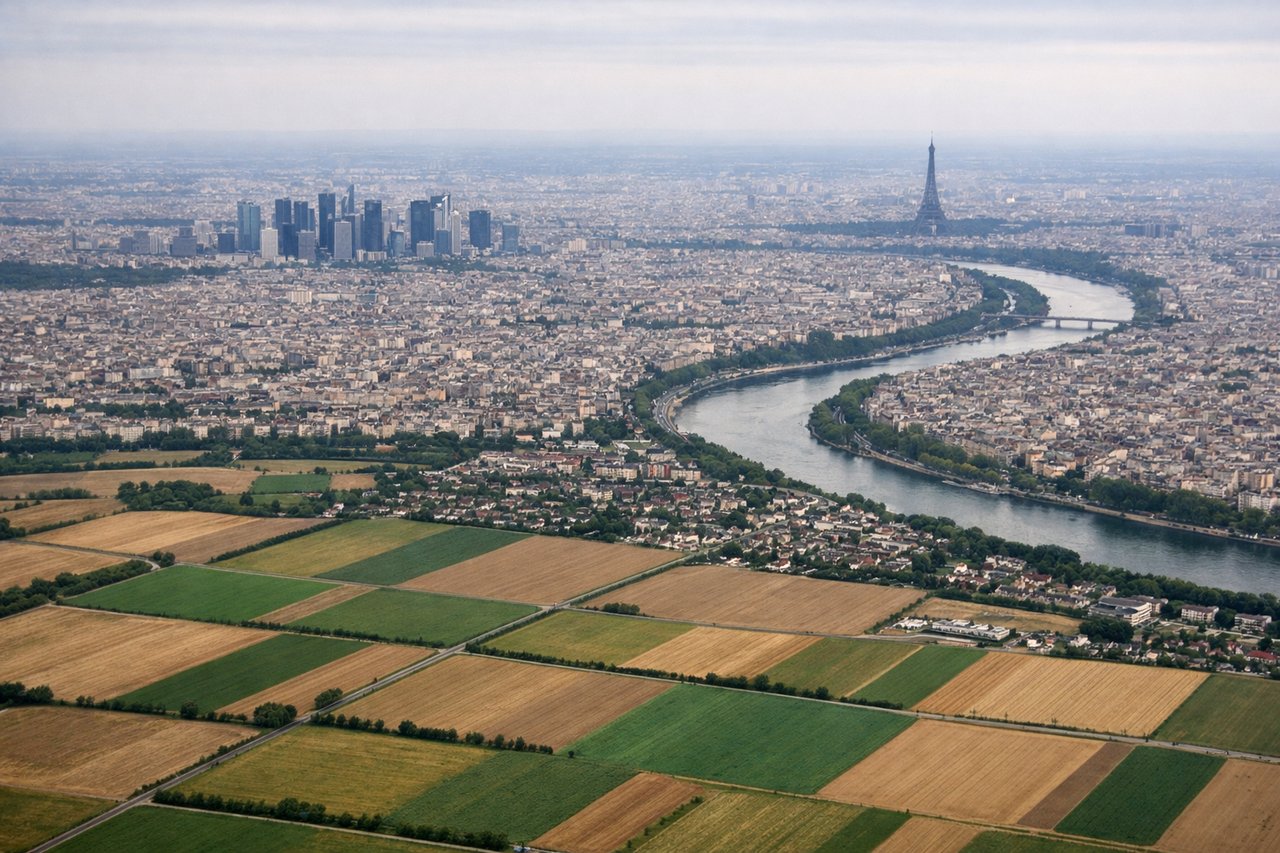
Landing at CDG
RIGHTThe right side during approach to CDG captures the Seine River valley, the Île-de-France agricultural landscape, and the distinctive geometry of Paris's urban sprawl. The approach path typically descends over the Seine's meanders and suburban rings before reaching the airport northeast of the city.
Landmarks on this routeAll landmarks →
Will your flight be in sunlight?
Pick a date and time in the Sun Map to watch the sun move across your whole flight.
About This Route
Which side of the plane should I sit on flying from Boeing Fld King Co International (BFI) to Charles De Gaulle (CDG)?
Sit on the Right side of the plane for the best views on flights from Seattle to Paris. While the Seattle departure offers immediate dramatic scenery, the right side wins overall because the Paris approach provides sustained visual interest over the Seine valley and Île-de-France landscape during the critical final descent phase. The BFI-CDG route is predominantly ocean (5+ hours of North Atlantic), which caps both sides at 2.0 maximum for cruise. The right side's landing approach (3.5) significantly outweighs the left side's takeoff advantage (2.5), making right the better choice for the full flight experience.
What can I see during takeoff from Boeing Fld King Co International in Seattle?
During takeoff from Boeing Fld King Co International (BFI), sit on the Left side for the best views. Seattle departure offers immediate urban scenery and Puget Sound waterfront. Left side captures Elliott Bay, downtown Seattle skyline, and the initial climb over the Cascade Range foothills. Notable sights include: Elliott Bay and Seattle waterfront, Cascade Range foothills, Mount Rainier (visible on clear days during climb-out to the southeast).
What can I see when landing at Charles De Gaulle in Paris?
When landing at Charles De Gaulle (CDG), sit on the Right side for the best views. The right side during approach to CDG captures the Seine River valley, the Île-de-France agricultural landscape, and the distinctive geometry of Paris's urban sprawl. The approach path typically descends over the Seine's meanders and suburban rings before reaching the airport northeast of the city. Notable sights include: Seine River with its characteristic meanders, Île-de-France patchwork farmland, Paris metropolitan area sprawl and street grid, Charles de Gaulle Airport runways.
How long is the flight from Seattle to Paris?
The flight from Boeing Fld King Co International (BFI) to Charles De Gaulle (CDG) takes about 9 hours 15 minutes. The shortest flight path between them is 4,997 miles (8,042 km); winds and air traffic control usually add a few percent.
What does the Seattle to Paris flight path pass over?
North Atlantic Ocean dominates the cruise phase with no visible landmarks for approximately 7 hours. The flight path crosses the Atlantic at high latitude, passing south of Greenland and Iceland (not visible at cruise altitude). Upon approaching European airspace, the right side may glimpse the Irish coast and Celtic Sea during descent, while the left side sees open ocean. The final approach into CDG crosses the Seine River valley and Île-de-France agricultural region.