The right side wins overall. The takeoff views of Mount Rainier, Lake Washington, and the Cascades are among the most dramatic departure views in the continental US. Across the Pacific, the right side also captures the Aleutian Island chain as distant landmasses during the great circle route north, and the Japanese coastline on descent. The left side at landing over Tokyo is compelling but shorter in duration.
Flown BFI to HND? Did we get it right?
Flight Path
Seattle to Tokyo is 4,789 miles (7,708 km), a flight of about 9 hours 30 minutes.
The great circle route from Seattle to Tokyo arcs northward over British Columbia, the Gulf of Alaska, and the Aleutian Island chain — expect to see the volcanic peaks of the Alaska Peninsula and scattered Aleutian Islands as distant landmasses. The mid-Pacific portion is open ocean. Approaching Japan, the Tohoku coastline of Honshu becomes visible, with mountainous interior terrain and the Pacific coastal plain before descending into the Kanto region.
Great circle distance and headings ›


Phase by phase
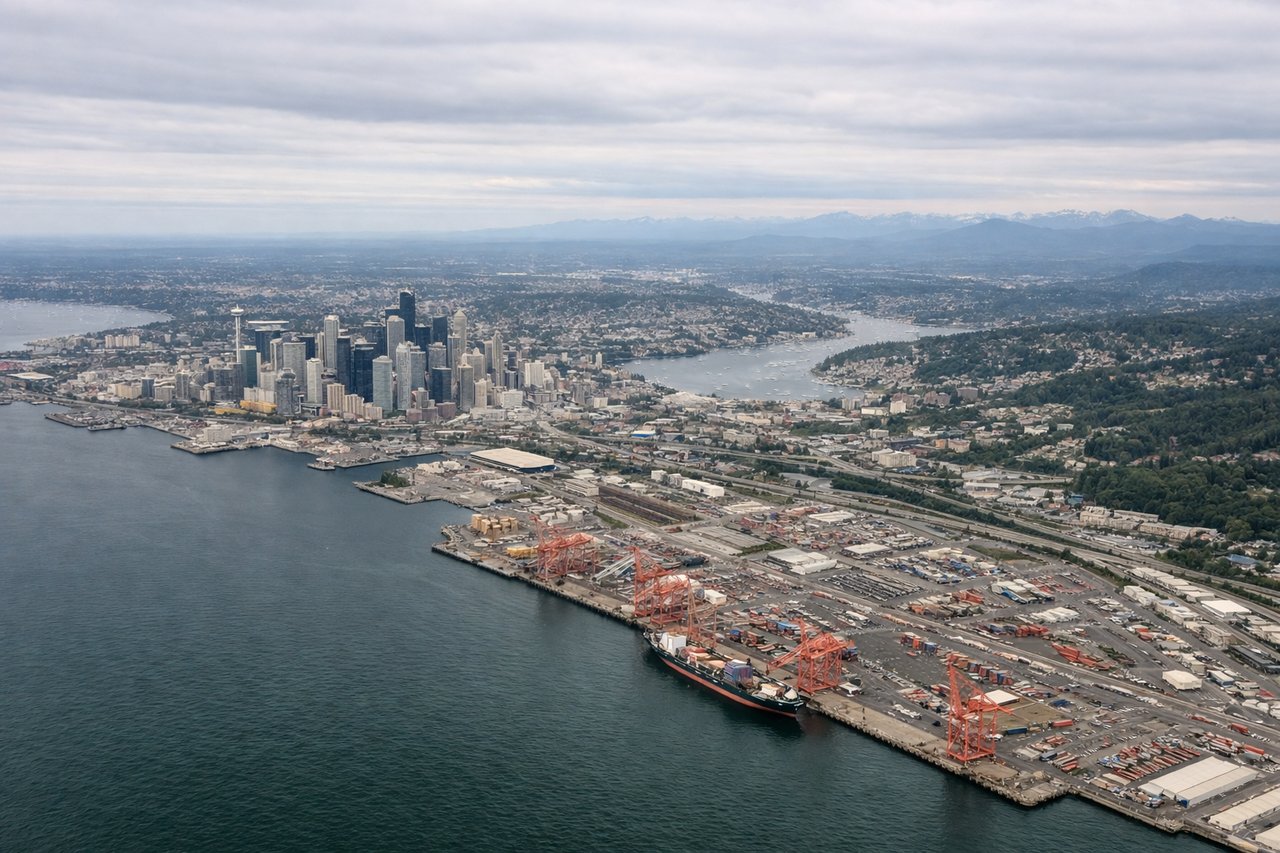
Takeoff from BFI
RIGHTBFI's primary departure runway is 13R/31L. Departing on runway 13 (southeast), a right-side seat gives you Elliott Bay, downtown Seattle's skyline, and the Olympic Peninsula across Puget Sound. Departing on runway 31 (northwest), the right side faces east toward Lake Washington and the Cascade Range with Mount Rainier dominating the horizon.
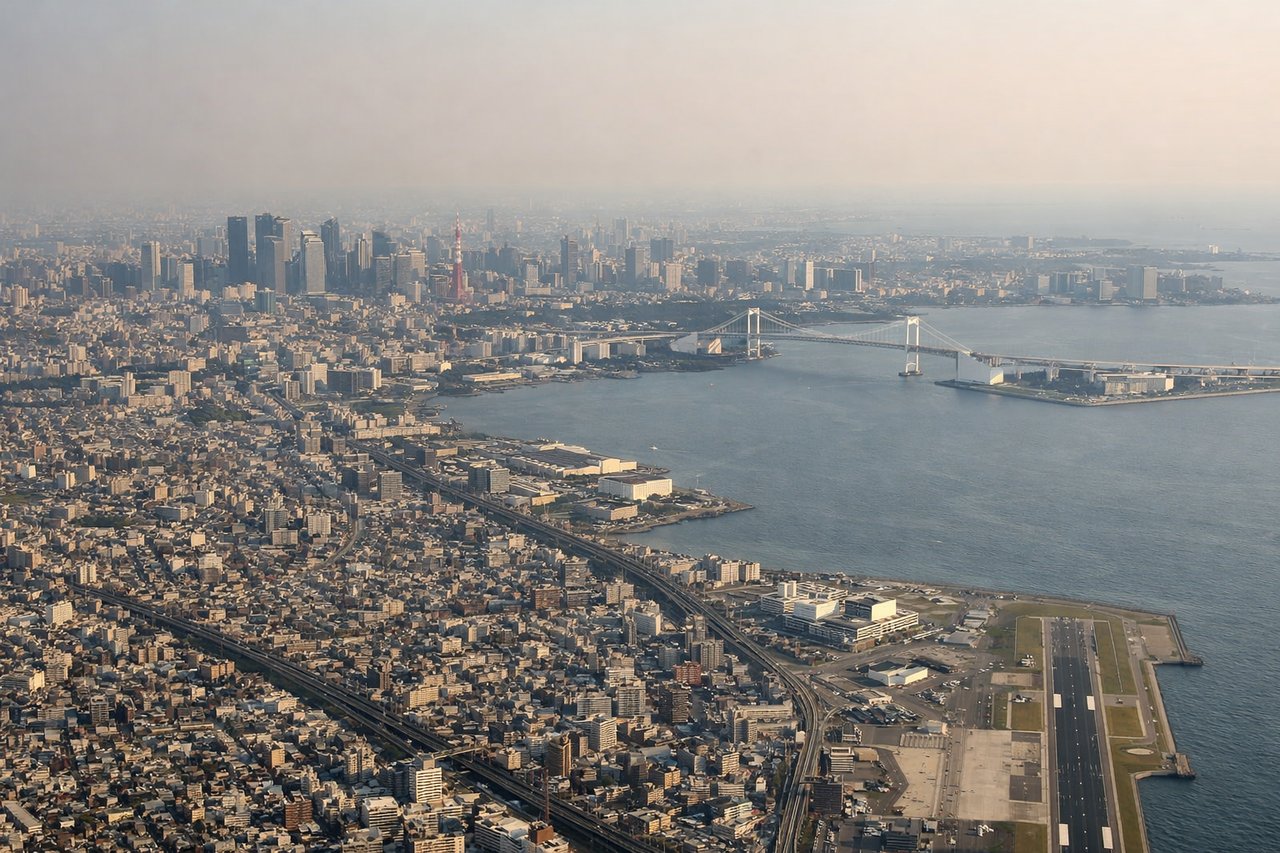
Landing at HND
LEFTHND primarily uses runways 34L/R for northerly arrivals and 16L/R for southerly approaches. On the common approach over Tokyo Bay from the south (runway 34), the left side faces west over the city of Tokyo, giving views of the dense urban grid, Tokyo Bay's western shore, and the distinctive urban sprawl of Kawasaki and Yokohama. The right side faces east over open Tokyo Bay water.
Will your flight be in sunlight?
Pick a date and time in the Sun Map to watch the sun move across your whole flight.
About This Route
Which side of the plane should I sit on flying from Boeing Fld King Co International (BFI) to Tokyo International (HND)?
Sit on the Right side of the plane for the best views on flights from Seattle to Tokyo. The right side wins overall. The takeoff views of Mount Rainier, Lake Washington, and the Cascades are among the most dramatic departure views in the continental US. Across the Pacific, the right side also captures the Aleutian Island chain as distant landmasses during the great circle route north, and the Japanese coastline on descent. The left side at landing over Tokyo is compelling but shorter in duration.
What can I see during takeoff from Boeing Fld King Co International in Seattle?
During takeoff from Boeing Fld King Co International (BFI), sit on the Right side for the best views. BFI's primary departure runway is 13R/31L. Departing on runway 13 (southeast), a right-side seat gives you Elliott Bay, downtown Seattle's skyline, and the Olympic Peninsula across Puget Sound. Departing on runway 31 (northwest), the right side faces east toward Lake Washington and the Cascade Range with Mount Rainier dominating the horizon. Notable sights include: Mount Rainier (14,411 ft), Lake Washington, Elliott Bay and downtown Seattle skyline, Cascade Range foothills.
What can I see when landing at Tokyo International in Tokyo?
When landing at Tokyo International (HND), sit on the Left side for the best views. HND primarily uses runways 34L/R for northerly arrivals and 16L/R for southerly approaches. On the common approach over Tokyo Bay from the south (runway 34), the left side faces west over the city of Tokyo, giving views of the dense urban grid, Tokyo Bay's western shore, and the distinctive urban sprawl of Kawasaki and Yokohama. The right side faces east over open Tokyo Bay water. Notable sights include: Tokyo Bay western shoreline, Yokohama urban area, Tokyo metropolitan grid, Kawasaki industrial waterfront.
How long is the flight from Seattle to Tokyo?
The flight from Boeing Fld King Co International (BFI) to Tokyo International (HND) takes about 9 hours 30 minutes. The shortest flight path between them is 4,789 miles (7,708 km); winds and air traffic control usually add a few percent.
What does the Seattle to Tokyo flight path pass over?
The great circle route from Seattle to Tokyo arcs northward over British Columbia, the Gulf of Alaska, and the Aleutian Island chain — expect to see the volcanic peaks of the Alaska Peninsula and scattered Aleutian Islands as distant landmasses. The mid-Pacific portion is open ocean. Approaching Japan, the Tohoku coastline of Honshu becomes visible, with mountainous interior terrain and the Pacific coastal plain before descending into the Kanto region.