While takeoff from Barbados favors the right side, the landing approach into Washington Dulles from the southwest provides more dramatic and varied scenery on the left. The Potomac River, Appalachian geography, and DC metropolitan area views outweigh the takeoff advantage.
Flown BGI to IAD? Did we get it right?
Flight Path
Bridgetown to Washington is 2,098 miles (3,376 km), a flight of about 5 hours.
The flight path crosses the Atlantic Ocean for roughly 3.5 hours with minimal visible landmarks. Around the midpoint (near 30°N, 50°W), you may see scattered clouds and open ocean. As the aircraft approaches the US coast near the Carolinas (around 2 hours before landing), the continental shelf becomes visible as a color change in the water. The Appalachian mountain chain becomes increasingly visible during the final 90 minutes of descent, with the Blue Ridge and Shenandoah Valley becoming prominent features 30-45 minutes before landing at Dulles.
Great circle distance and headings ›

Phase by phase
Takeoff from BGI
RIGHTRight-side seats offer views of Barbados' southern and eastern coastlines as the aircraft climbs northwestward. You'll see the island's Atlantic-facing shores and the deeper blue water of the open ocean, which contrasts sharply with the shallow turquoise lagoons on the western side.
Landing at IAD
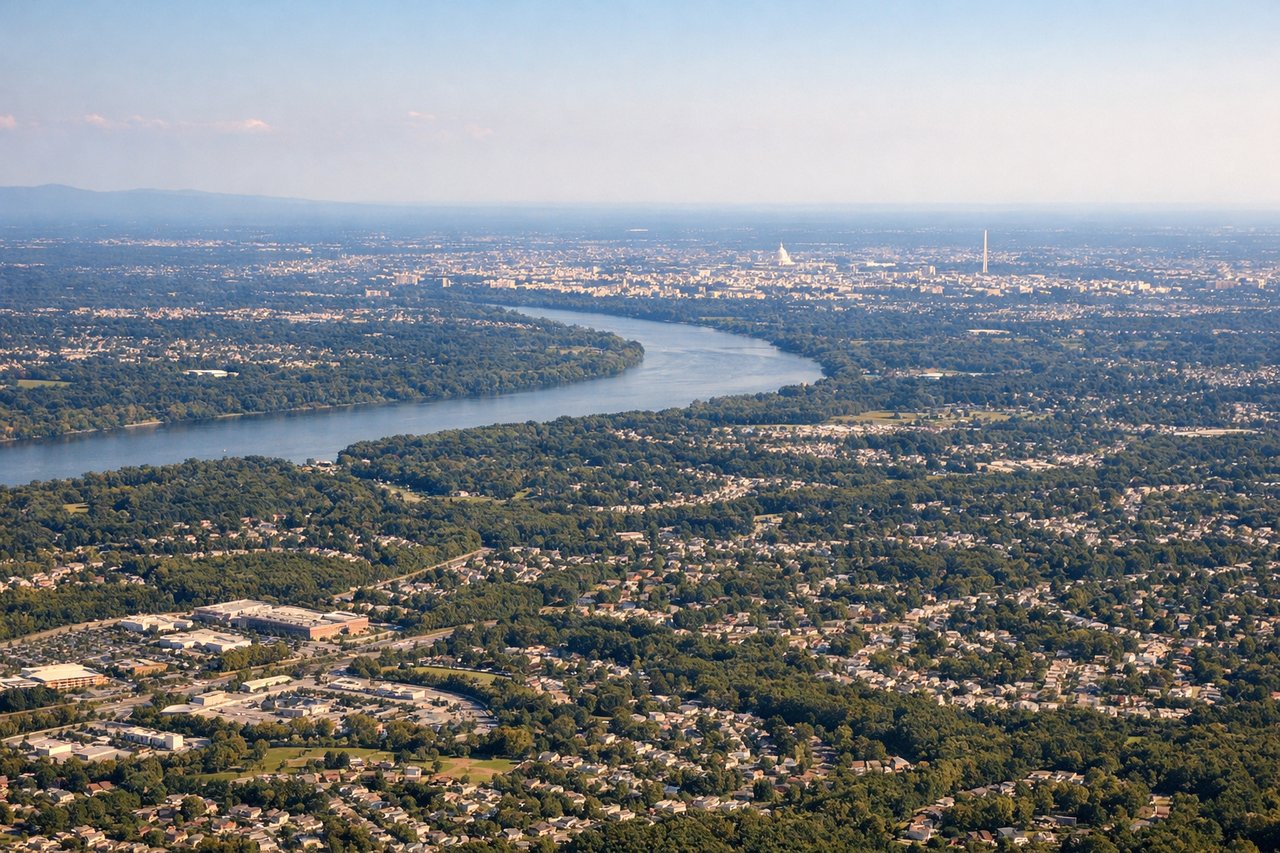
LEFTLeft-side seats provide excellent views during the descent into Washington Dulles. You'll see the Appalachian foothills, the Potomac River valley, and the Washington metropolitan area sprawl as you approach from the southwest. The Blue Ridge Mountains are visible on the distant western horizon during final approach.
Will your flight be in sunlight?
Pick a date and time in the Sun Map to watch the sun move across your whole flight.
About This Route
Which side of the plane should I sit on flying from Grantley Adams International (BGI) to Washington Dulles International (IAD)?
Sit on the Left side of the plane for the best views on flights from Bridgetown to Washington. While takeoff from Barbados favors the right side, the landing approach into Washington Dulles from the southwest provides more dramatic and varied scenery on the left. The Potomac River, Appalachian geography, and DC metropolitan area views outweigh the takeoff advantage.
What can I see during takeoff from Grantley Adams International in Bridgetown?
During takeoff from Grantley Adams International (BGI), sit on the Right side for the best views. Right-side seats offer views of Barbados' southern and eastern coastlines as the aircraft climbs northwestward. You'll see the island's Atlantic-facing shores and the deeper blue water of the open ocean, which contrasts sharply with the shallow turquoise lagoons on the western side. Notable sights include: Barbados eastern coastline, Atlantic Ocean, Bridgetown harbor area (receding below), Caribbean Sea shelf transition.
What can I see when landing at Washington Dulles International in Washington?
When landing at Washington Dulles International (IAD), sit on the Left side for the best views. Left-side seats provide excellent views during the descent into Washington Dulles. You'll see the Appalachian foothills, the Potomac River valley, and the Washington metropolitan area sprawl as you approach from the southwest. The Blue Ridge Mountains are visible on the distant western horizon during final approach. Notable sights include: Blue Ridge Mountains (western horizon), Potomac River valley, Washington DC metropolitan area, Appalachian foothills.
How long is the flight from Bridgetown to Washington?
The flight from Grantley Adams International (BGI) to Washington Dulles International (IAD) takes about 5 hours. The shortest flight path between them is 2,098 miles (3,376 km); winds and air traffic control usually add a few percent.
What does the Bridgetown to Washington flight path pass over?
The flight path crosses the Atlantic Ocean for roughly 3.5 hours with minimal visible landmarks. Around the midpoint (near 30°N, 50°W), you may see scattered clouds and open ocean. As the aircraft approaches the US coast near the Carolinas (around 2 hours before landing), the continental shelf becomes visible as a color change in the water. The Appalachian mountain chain becomes increasingly visible during the final 90 minutes of descent, with the Blue Ridge and Shenandoah Valley becoming prominent features 30-45 minutes before landing at Dulles.