The left side wins overall because the cruise phase passes along the Colombian and Venezuelan Caribbean coastline, including the Sierra Nevada de Santa Marta mountains near Cartagena, and the approach into PTY reveals Panama City and the canal — far more varied scenery than the largely open-ocean right side.
Flight Path
Southern Caribbean Sea with distant views of the Colombian coastline near Santa Marta and the Sierra Nevada de Santa Marta mountains, followed by the approach to the Gulf of Panama
Great circle distance and headings ›Phase by phase
Takeoff from BGI
RIGHTDeparting BGI to the east then banking south and west toward Panama, the right side offers a last look at Bridgetown's harbor and the west coast of Barbados before the island slips away over open water.
Landing at PTY
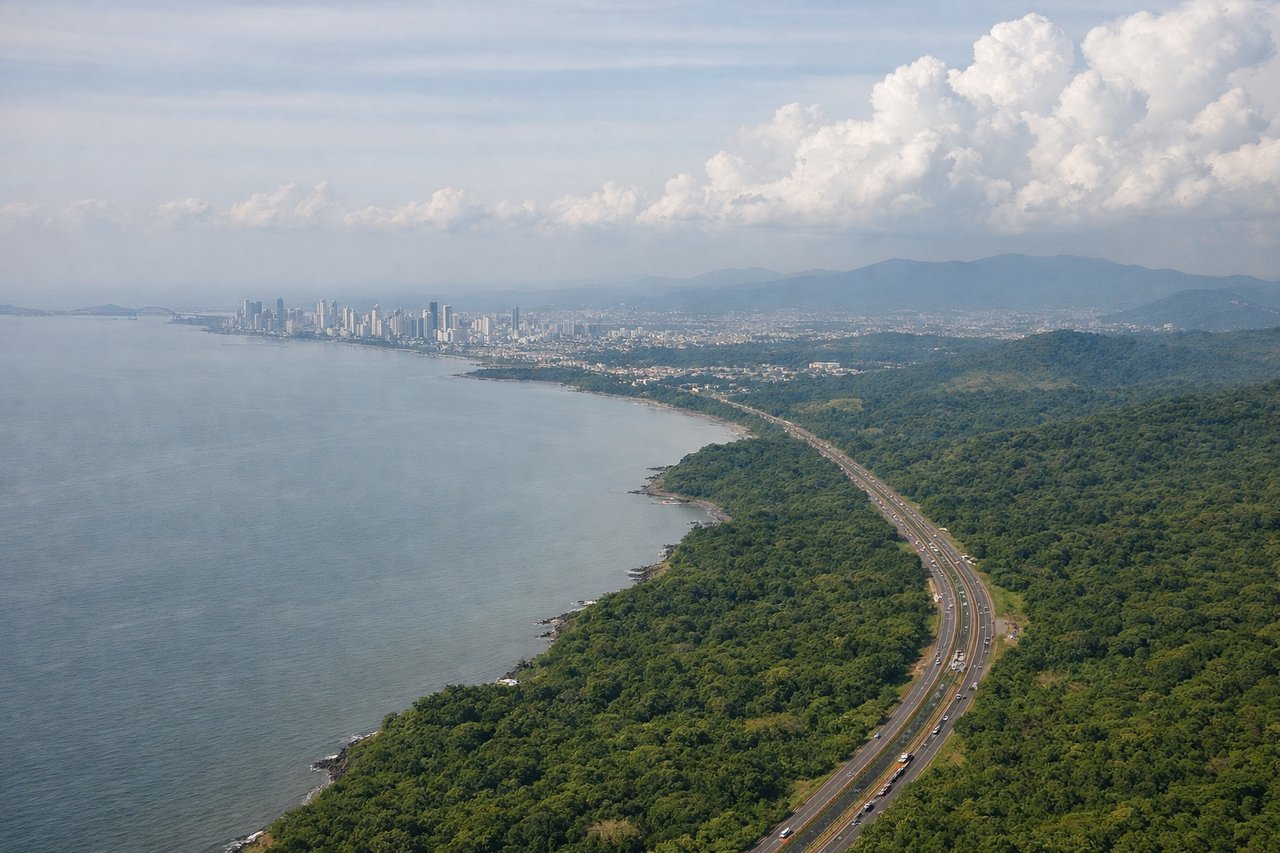
LEFTOn approach into PTY from the northeast, the left side faces south toward Panama City's skyline, the Pacific entrance to the Panama Canal, and the Bridge of the Americas spanning the canal mouth.
Landmarks on this routeAll landmarks →
Will your flight be in sunlight?
See exactly which side of the plane gets sun and shade at your departure time.
About This Route
Which side of the plane should I sit on flying from Grantley Adams International (BGI) to Tocumen International (PTY)?
Sit on the Left side of the plane for the best views on flights from Bridgetown to Panama City. The left side wins overall because the cruise phase passes along the Colombian and Venezuelan Caribbean coastline, including the Sierra Nevada de Santa Marta mountains near Cartagena, and the approach into PTY reveals Panama City and the canal — far more varied scenery than the largely open-ocean right side.
What can I see during takeoff from Grantley Adams International in Bridgetown?
During takeoff from Grantley Adams International (BGI), sit on the Right side for the best views. Departing BGI to the east then banking south and west toward Panama, the right side offers a last look at Bridgetown's harbor and the west coast of Barbados before the island slips away over open water. Notable sights include: Bridgetown harbor, Carlisle Bay, Barbados west coast.
What can I see when landing at Tocumen International in Panama City?
When landing at Tocumen International (PTY), sit on the Left side for the best views. On approach into PTY from the northeast, the left side faces south toward Panama City's skyline, the Pacific entrance to the Panama Canal, and the Bridge of the Americas spanning the canal mouth. Notable sights include: Panama City skyline, Panama Canal Pacific entrance, Bridge of the Americas, Bay of Panama.
How long is the flight from Bridgetown to Panama City?
The flight from Grantley Adams International (BGI) to Tocumen International (PTY) takes 3h 15m.
What does the Bridgetown to Panama City flight path pass over?
Southern Caribbean Sea with distant views of the Colombian coastline near Santa Marta and the Sierra Nevada de Santa Marta mountains, followed by the approach to the Gulf of Panama