The left side misses the best of the Belfast departure but wins decisively on arrival with the iconic Boston skyline and harbor approach. Over the Atlantic the left side also faces slightly more southward, giving better light angles on the Greenland ice sheet and Labrador coast if the routing passes near those features.
Flown BHD to BOS? Did we get it right?
Flight Path
Belfast to Boston is 2,983 miles (4,801 km), a flight of about 7 hours 30 minutes.
The flight typically tracks northwest over the Scottish coast, then across the North Atlantic on a great circle route passing south of Iceland, over the southern tip of Greenland or the Labrador Sea, then across Nova Scotia and the Gulf of Maine into Boston. Visible features can include the rugged Greenland ice cap edge near Narsarsuaq, the deeply fjorded Labrador coastline, and the broad grey expanse of the North Atlantic with occasional iceberg fields at lower latitudes in spring.
Great circle distance and headings ›Phase by phase
Takeoff from BHD
RIGHTBHD's main runway 04/22 means departures heading northeast give the right side a clear view over Belfast Lough opening into the Irish Sea, with the city centre and Cave Hill visible. Departures on runway 22 heading southwest give the right side views across County Down and Strangford Lough.
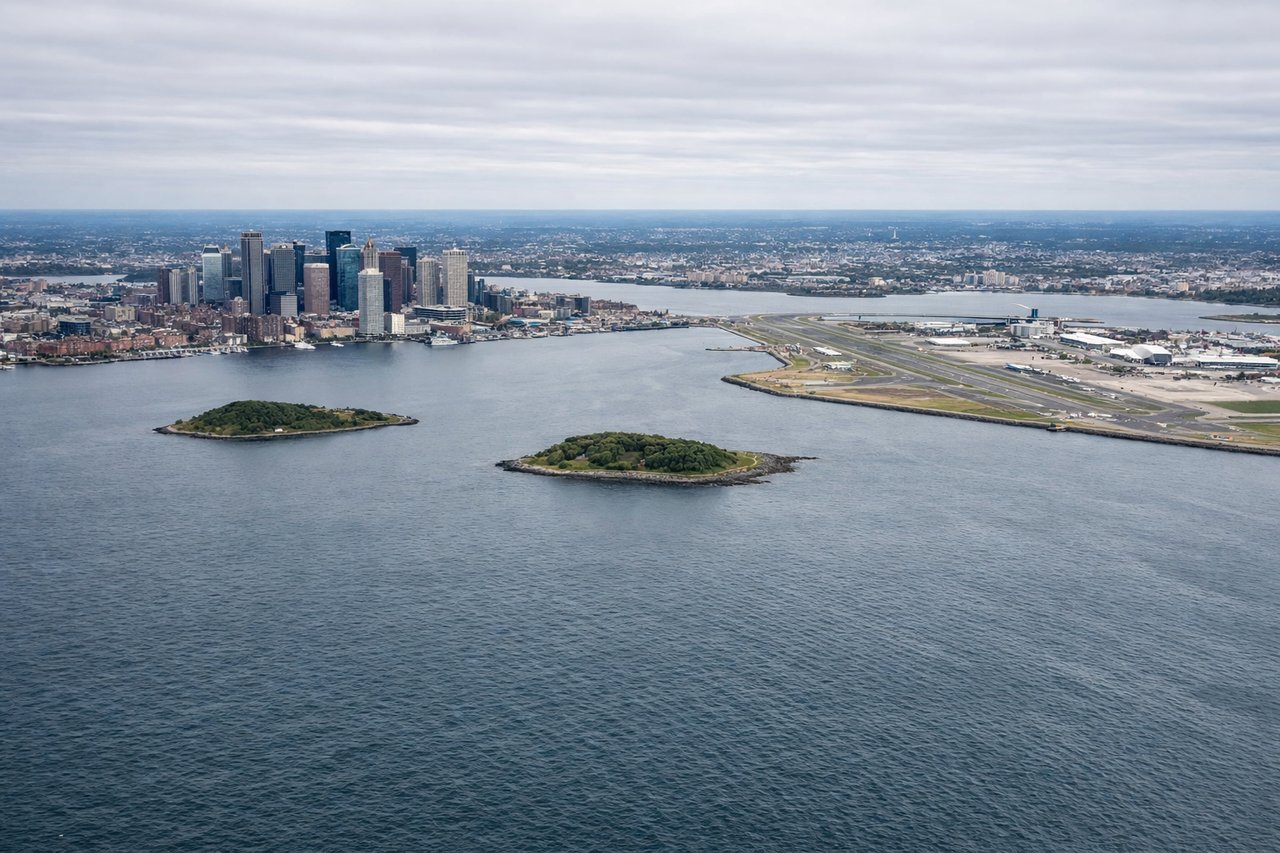
Landing at BOS
LEFTLogan Airport sits on a peninsula in Boston Harbor, and most approaches from the east or northeast put the left side facing the city skyline, the harbor islands, and the Charles River basin. The standard ILS approach to runway 04R/22L or 33L gives left-seat passengers a direct view of downtown Boston and Back Bay.
Will your flight be in sunlight?
Pick a date and time in the Sun Map to watch the sun move across your whole flight.
About This Route
Which side of the plane should I sit on flying from City (BHD) to General Edward Lawrence Logan International (BOS)?
Sit on the Left side of the plane for the best views on flights from Belfast to Boston. The left side misses the best of the Belfast departure but wins decisively on arrival with the iconic Boston skyline and harbor approach. Over the Atlantic the left side also faces slightly more southward, giving better light angles on the Greenland ice sheet and Labrador coast if the routing passes near those features.
What can I see during takeoff from City in Belfast?
During takeoff from City (BHD), sit on the Right side for the best views. BHD's main runway 04/22 means departures heading northeast give the right side a clear view over Belfast Lough opening into the Irish Sea, with the city centre and Cave Hill visible. Departures on runway 22 heading southwest give the right side views across County Down and Strangford Lough. Notable sights include: Belfast Lough, Cave Hill and Belfast Castle, Strangford Lough, the Harland & Wolff yellow cranes (Samson and Goliath) in the shipyard.
What can I see when landing at General Edward Lawrence Logan International in Boston?
When landing at General Edward Lawrence Logan International (BOS), sit on the Left side for the best views. Logan Airport sits on a peninsula in Boston Harbor, and most approaches from the east or northeast put the left side facing the city skyline, the harbor islands, and the Charles River basin. The standard ILS approach to runway 04R/22L or 33L gives left-seat passengers a direct view of downtown Boston and Back Bay. Notable sights include: Boston city skyline and Back Bay, Boston Harbor and its islands, the Charles River and Cambridge, Cape Cod Bay visible to the south on approach.
How long is the flight from Belfast to Boston?
The flight from City (BHD) to General Edward Lawrence Logan International (BOS) takes about 7 hours 30 minutes. The shortest flight path between them is 2,983 miles (4,801 km); winds and air traffic control usually add a few percent.
What does the Belfast to Boston flight path pass over?
The flight typically tracks northwest over the Scottish coast, then across the North Atlantic on a great circle route passing south of Iceland, over the southern tip of Greenland or the Labrador Sea, then across Nova Scotia and the Gulf of Maine into Boston. Visible features can include the rugged Greenland ice cap edge near Narsarsuaq, the deeply fjorded Labrador coastline, and the broad grey expanse of the North Atlantic with occasional iceberg fields at lower latitudes in spring.