Brisbane to Perth is 2,246 miles (3,615 km), a flight of about 4 hours 55 minutes.
The right side captures Brisbane's coastal and city scenery on departure and Perth's river, skyline, and coastline on arrival, while the long cruise over flat, arid central Australia offers little variation on either side.
Flight Path
Simpson Desert dunes, Lake Eyre salt flats, and the arid plains of northern South Australia along the direct route
Great circle distance and headings ›Phase by phase
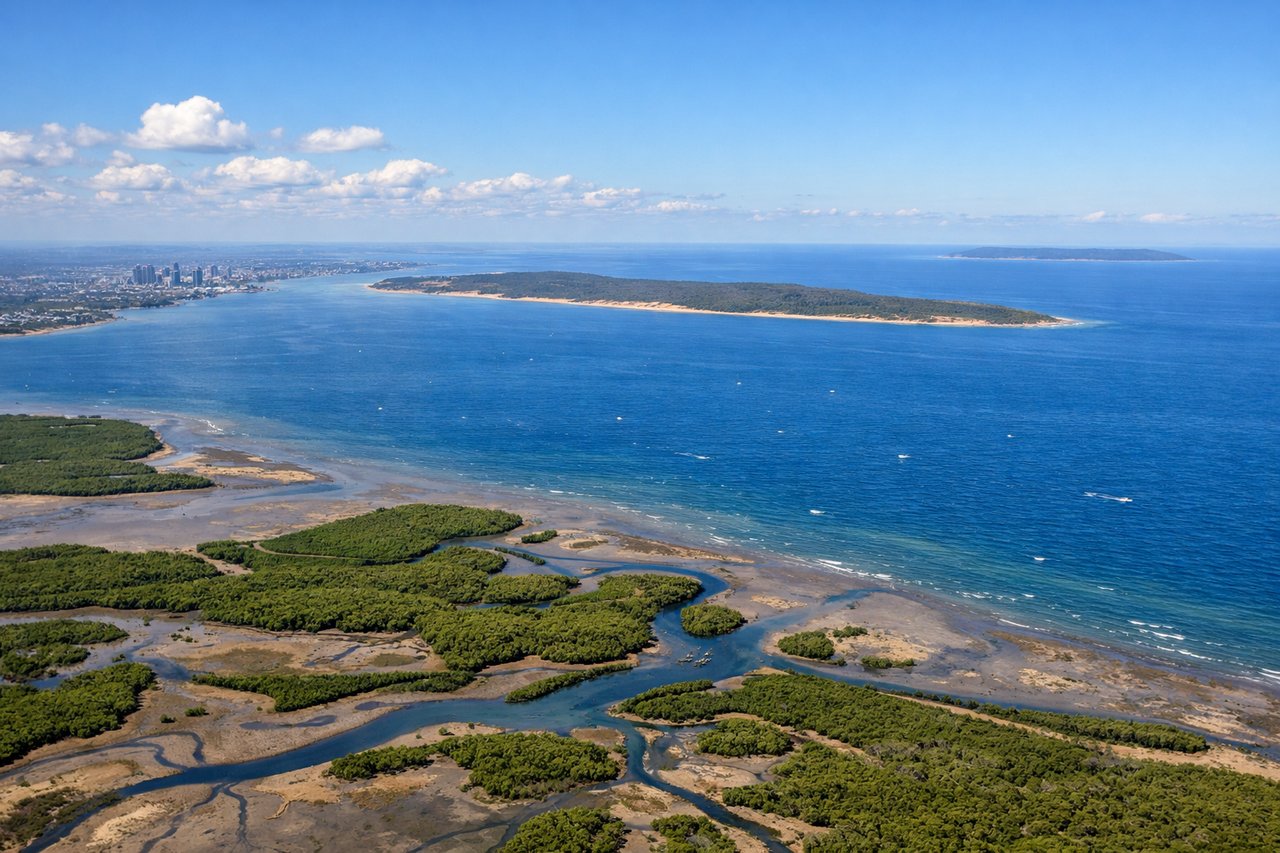
Takeoff from BNE
RIGHTDeparting Brisbane and turning west toward Perth, the northern side offers views of the Brisbane CBD skyline, Moreton Bay's islands, and the forested D'Aguilar Range foothills before the aircraft settles onto its westward track over the outback.
Landing at JAD
RIGHTOn approach into Jandakot from the east, the descent path crosses the Darling Range escarpment and gives a clear view north toward Perth's CBD skyline, the Swan River, and the Indian Ocean coastline before touchdown.
Will your flight be in sunlight?
Pick a date and time in the Sun Map to watch the sun move across your whole flight.
About This Route
Which side of the plane should I sit on flying from Brisbane International (BNE) to Perth Jandakot (JAD)?
Sit on the Right side of the plane for the best views on flights from Brisbane to Perth. The right side captures Brisbane's coastal and city scenery on departure and Perth's river, skyline, and coastline on arrival, while the long cruise over flat, arid central Australia offers little variation on either side.
What can I see during takeoff from Brisbane International in Brisbane?
During takeoff from Brisbane International (BNE), sit on the Right side for the best views. Departing Brisbane and turning west toward Perth, the northern side offers views of the Brisbane CBD skyline, Moreton Bay's islands, and the forested D'Aguilar Range foothills before the aircraft settles onto its westward track over the outback. Notable sights include: Brisbane CBD skyline, Moreton Bay and North Stradbroke Island, D'Aguilar Range foothills.
What can I see when landing at Perth Jandakot in Perth?
When landing at Perth Jandakot (JAD), sit on the Right side for the best views. On approach into Jandakot from the east, the descent path crosses the Darling Range escarpment and gives a clear view north toward Perth's CBD skyline, the Swan River, and the Indian Ocean coastline before touchdown. Notable sights include: Darling Range escarpment, Swan River, Perth CBD skyline, Indian Ocean coastline.
How long is the flight from Brisbane to Perth?
The flight from Brisbane International (BNE) to Perth Jandakot (JAD) takes about 4 hours 55 minutes. The shortest flight path between them is 2,246 miles (3,615 km); winds and air traffic control usually add a few percent.
What does the Brisbane to Perth flight path pass over?
Simpson Desert dunes, Lake Eyre salt flats, and the arid plains of northern South Australia along the direct route