Right-side seats capture the superior takeoff scenery (Moreton Bay and islands) and still provide reasonable landing views of the Fiji archipelago. The outbound leg offers more distinctive visual interest than the landing approach.
Flight Path
The flight path crosses the Coral Sea, a deep blue-water expanse with minimal surface features. Around the midpoint (roughly 400 nautical miles northeast of Brisbane), the water transitions from Australian continental shelf waters to open ocean. Small cumulus clouds typically develop over the Coral Sea. The approach to Fiji brings scattered island peaks into view, with the volcanic topography of Viti Levu becoming visible approximately 50 nautical miles before Nadi. The Fiji island chain's reef systems create distinctive turquoise-colored shallow water patterns visible from 15,000 feet and below.
Great circle distance and headings ›

Phase by phase
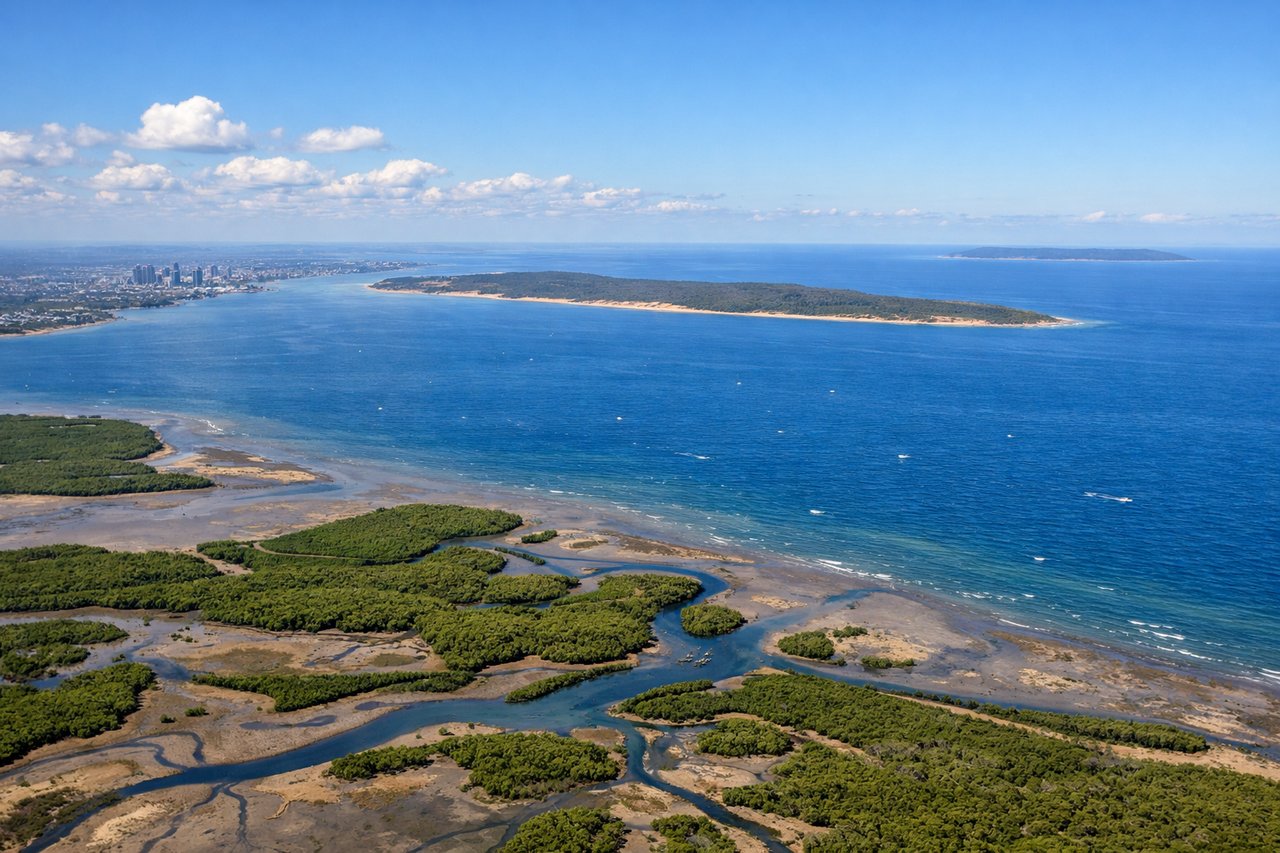
Takeoff from BNE
RIGHTBrisbane typically departs to the north or northeast. Right-side seats offer views of Moreton Bay's islands and the coastal geography as the aircraft climbs. Left side faces inland toward the western suburbs with less distinctive visual features.
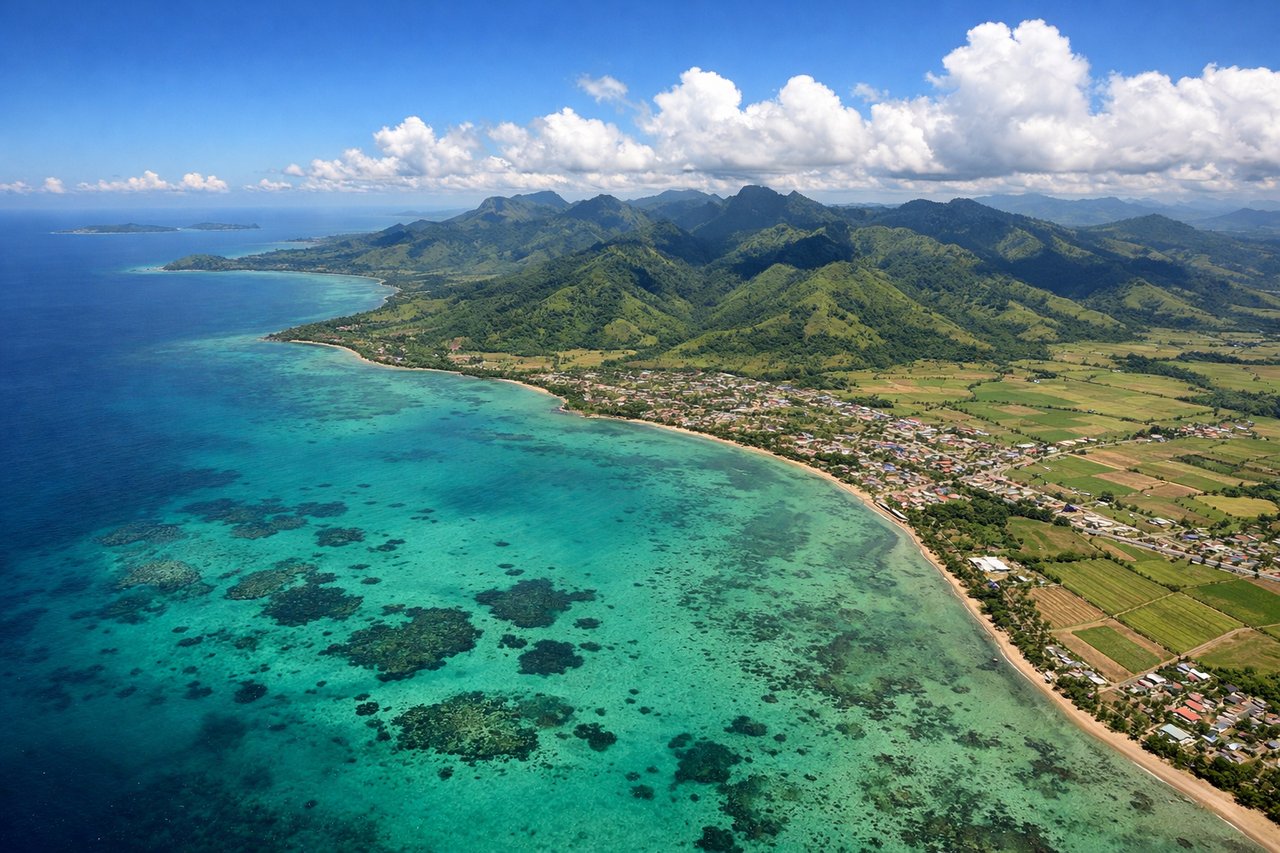
Landing at NAN
LEFTNadi typically uses runways aligned roughly east-west. Left-side seats during descent offer views of the Fiji island chain, the Coral Coast, and the approach over the Fiji waters. Right side faces the interior of Viti Levu with less dramatic scenery.
Landmarks on this routeAll landmarks →
Will your flight be in sunlight?
See exactly which side of the plane gets sun and shade at your departure time.
About This Route
Which side of the plane should I sit on flying from Brisbane International (BNE) to Nadi International (NAN)?
Sit on the Right side of the plane for the best views on flights from Brisbane to Nandi. Right-side seats capture the superior takeoff scenery (Moreton Bay and islands) and still provide reasonable landing views of the Fiji archipelago. The outbound leg offers more distinctive visual interest than the landing approach.
What can I see during takeoff from Brisbane International in Brisbane?
During takeoff from Brisbane International (BNE), sit on the Right side for the best views. Brisbane typically departs to the north or northeast. Right-side seats offer views of Moreton Bay's islands and the coastal geography as the aircraft climbs. Left side faces inland toward the western suburbs with less distinctive visual features. Notable sights include: Moreton Bay (extensive shallow bay with visible sandbars), North Stradbroke Island (large island forming the bay's eastern boundary), Brisbane River (winding through the city below), Redcliffe Peninsula (northern headland).
What can I see when landing at Nadi International in Nandi?
When landing at Nadi International (NAN), sit on the Left side for the best views. Nadi typically uses runways aligned roughly east-west. Left-side seats during descent offer views of the Fiji island chain, the Coral Coast, and the approach over the Fiji waters. Right side faces the interior of Viti Levu with less dramatic scenery. Notable sights include: Fiji island chain (scattered volcanic islands with visible reef systems), Viti Levu's western coast (main island's shoreline), Nadi Bay (shallow turquoise waters), Coral reefs (visible as darker patches in shallow water).
How long is the flight from Brisbane to Nandi?
The flight from Brisbane International (BNE) to Nadi International (NAN) takes Approximately 3 hours 15 minutes.
What does the Brisbane to Nandi flight path pass over?
The flight path crosses the Coral Sea, a deep blue-water expanse with minimal surface features. Around the midpoint (roughly 400 nautical miles northeast of Brisbane), the water transitions from Australian continental shelf waters to open ocean. Small cumulus clouds typically develop over the Coral Sea. The approach to Fiji brings scattered island peaks into view, with the volcanic topography of Viti Levu becoming visible approximately 50 nautical miles before Nadi. The Fiji island chain's reef systems create distinctive turquoise-colored shallow water patterns visible from 15,000 feet and below.