Brisbane to Perth is 2,242 miles (3,608 km), a flight of about 4 hours 55 minutes.
While the left side wins the Brisbane departure with Moreton Bay's coastline, the right side picks up Lake Eyre's distinctive white salt pan during cruise and then delivers a strong finish with Perth's skyline, river, and ocean on approach — giving it the more consistently rewarding view across the whole flight.
Flight Path
Channel Country floodplains of western Queensland, the white salt pan of Lake Eyre, red sand dune fields of the Simpson Desert fringe, and the vast flat scrubland of the Great Victoria Desert leading into the Western Australian Goldfields
Great circle distance and headings ›Phase by phase
Takeoff from BNE
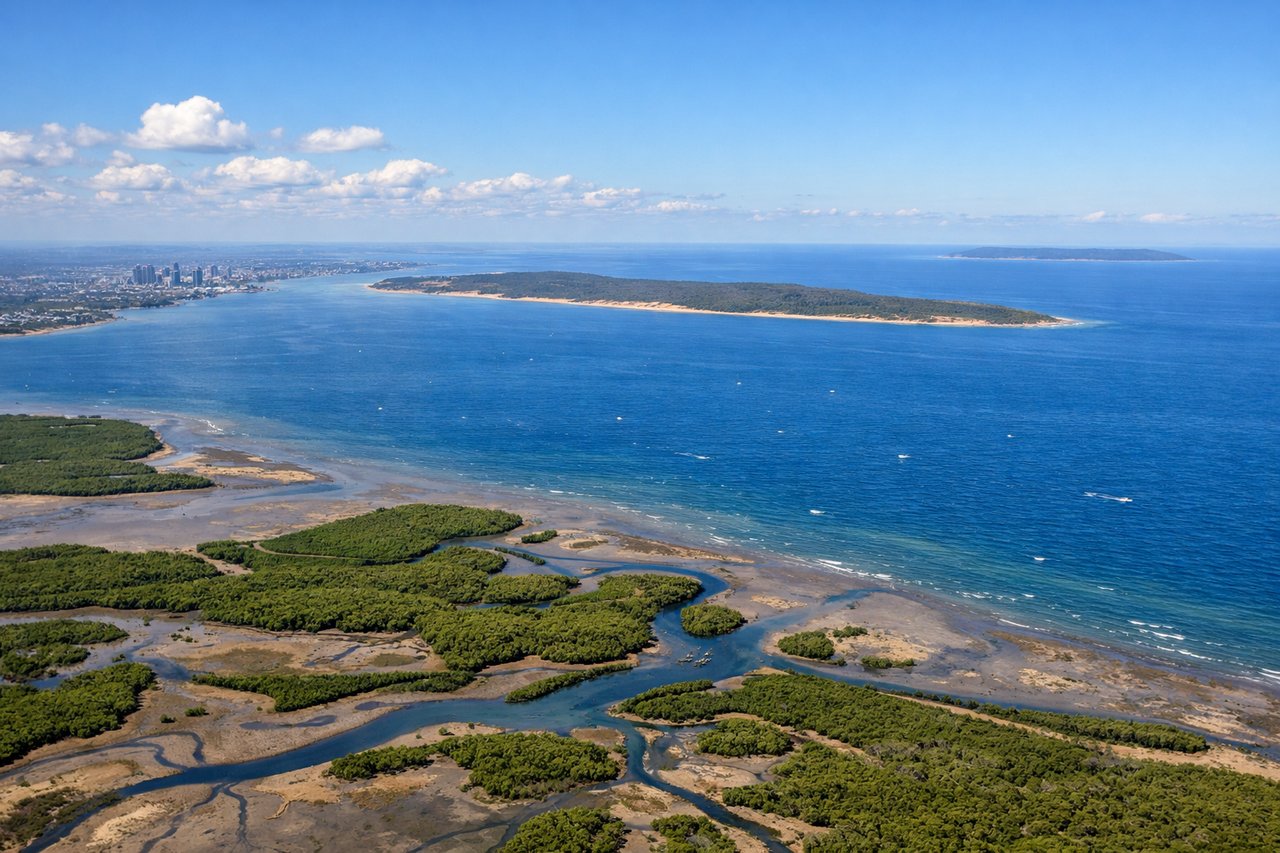
LEFTBrisbane's runways run north-south, and on a typical southbound departure (common with the afternoon sea breeze) the initial climb tracks over the city before turning west toward the outback. The left side faces east during this climb, giving a clear view of Moreton Bay and its sand islands before the aircraft banks away toward the interior.
Landing at PER
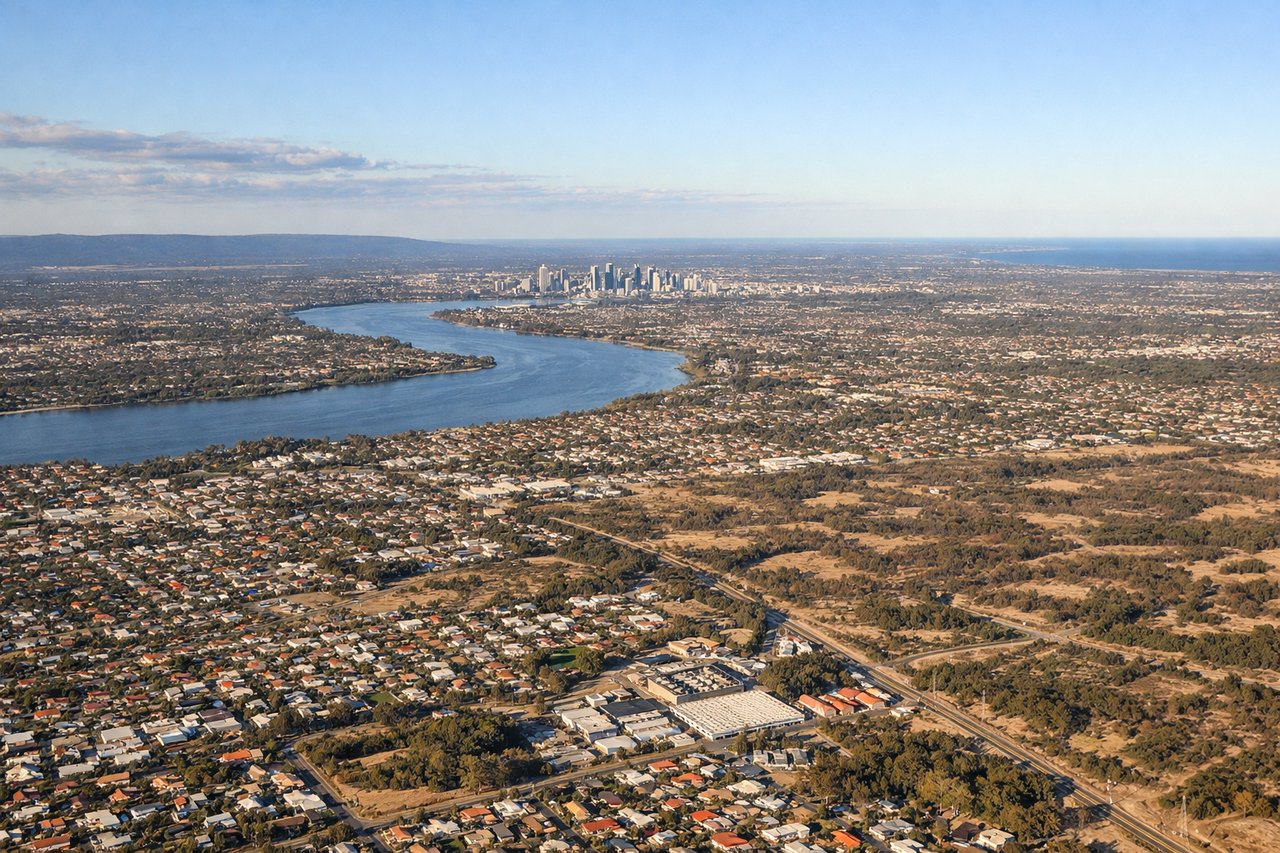
RIGHTOn approach into Perth from the east, a southbound landing on runway 21 puts Perth's CBD, the Swan River, and the Indian Ocean coastline on the right side of the aircraft. Passengers get a sweeping view of the city skyline against the river before the final turn onto the runway, a much more dynamic scene than the Perth Hills scrub on the opposite side.
Landmarks on this routeAll landmarks →
Will your flight be in sunlight?
Pick a date and time in the Sun Map to watch the sun move across your whole flight.
About This Route
Which side of the plane should I sit on flying from Brisbane International (BNE) to Perth International (PER)?
Sit on the Right side of the plane for the best views on flights from Brisbane to Perth. While the left side wins the Brisbane departure with Moreton Bay's coastline, the right side picks up Lake Eyre's distinctive white salt pan during cruise and then delivers a strong finish with Perth's skyline, river, and ocean on approach — giving it the more consistently rewarding view across the whole flight.
What can I see during takeoff from Brisbane International in Brisbane?
During takeoff from Brisbane International (BNE), sit on the Left side for the best views. Brisbane's runways run north-south, and on a typical southbound departure (common with the afternoon sea breeze) the initial climb tracks over the city before turning west toward the outback. The left side faces east during this climb, giving a clear view of Moreton Bay and its sand islands before the aircraft banks away toward the interior. Notable sights include: Moreton Bay, Moreton Island, North Stradbroke Island, Brisbane River mouth.
What can I see when landing at Perth International in Perth?
When landing at Perth International (PER), sit on the Right side for the best views. On approach into Perth from the east, a southbound landing on runway 21 puts Perth's CBD, the Swan River, and the Indian Ocean coastline on the right side of the aircraft. Passengers get a sweeping view of the city skyline against the river before the final turn onto the runway, a much more dynamic scene than the Perth Hills scrub on the opposite side. Notable sights include: Perth CBD skyline, Swan River, Kings Park, Indian Ocean coastline.
How long is the flight from Brisbane to Perth?
The flight from Brisbane International (BNE) to Perth International (PER) takes about 4 hours 55 minutes. The shortest flight path between them is 2,242 miles (3,608 km); winds and air traffic control usually add a few percent.
What does the Brisbane to Perth flight path pass over?
Channel Country floodplains of western Queensland, the white salt pan of Lake Eyre, red sand dune fields of the Simpson Desert fringe, and the vast flat scrubland of the Great Victoria Desert leading into the Western Australian Goldfields