Right-side seats dominate both takeoff and landing. The departure offers the Arabian Sea and Mumbai's coastal geography, while the arrival showcases Kerala's iconic Vembanad Lake and backwater system—one of India's most visually distinctive geographic features. The entire flight path down the western coast favors right-side views of the Arabian Sea and coastal features.
Flown BOM to COK? Did we get it right?
Flight Path
Bombay to Kochi is 661 miles (1,064 km), a flight of about 1 hour 25 minutes.
The flight path follows the western coast of India southward. Notable features visible from altitude include the Konkan coastline (rocky, forested terrain meeting the Arabian Sea), the Ghat mountain range running parallel to the coast 20-40 miles inland (visible as a distant ridge on clear days), and the transition from Maharashtra's coastal districts into Karnataka and then Kerala. The Arabian Sea remains visible to the west throughout most of the flight. Around the midpoint near Goa/Karnataka border, the coastline becomes more rugged with deeper inlets. As the flight approaches Kerala, the landscape transitions to lower elevation with more visible backwater systems and lagoons. Right-side views consistently show the sea; left-side views show the Western Ghats foothills and inland plateau terrain.
Great circle distance and headings ›

Phase by phase
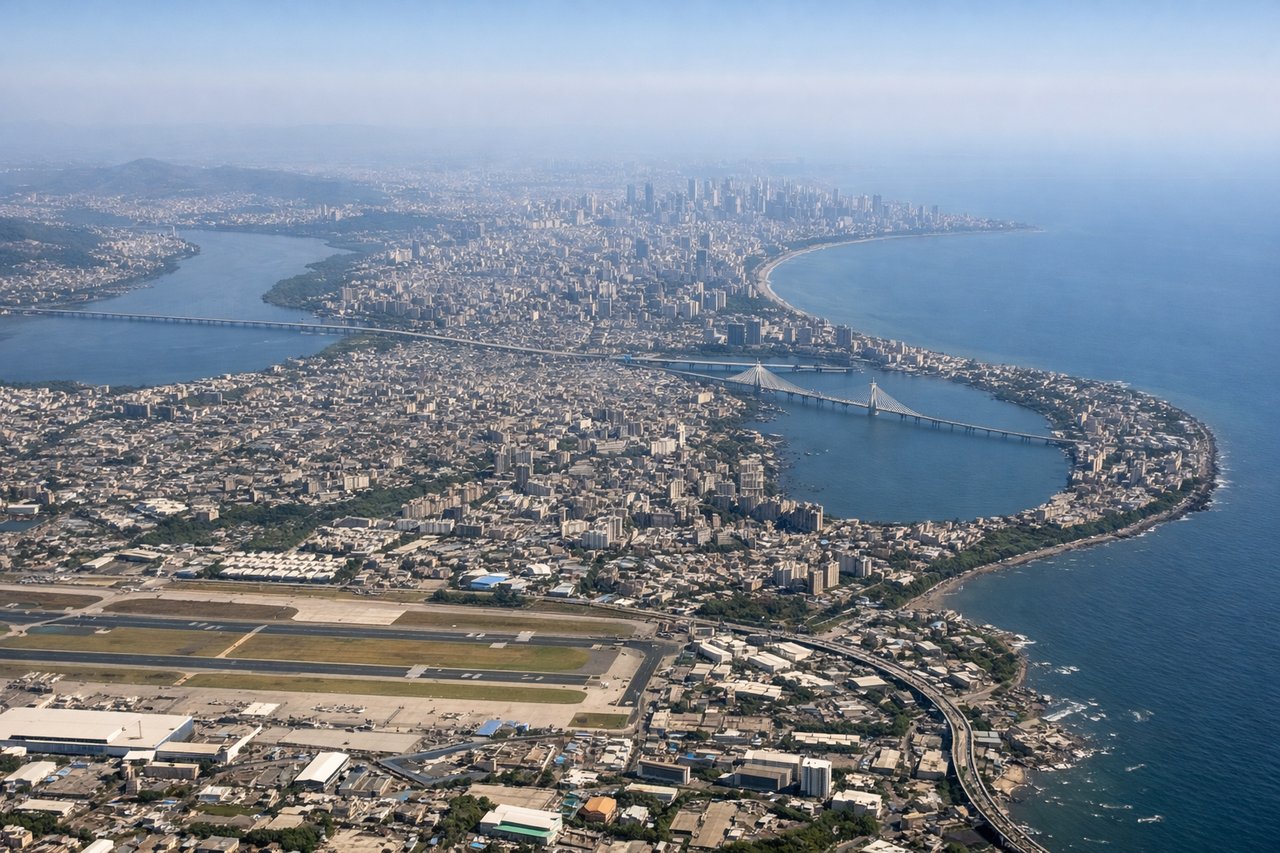
Takeoff from BOM
RIGHTBOM typically departs runway 09L/27R (east-west) or 09R/27L. Right-side seats offer views of the Arabian Sea immediately west of the airport and the Mumbai coastline including the Colaba district and Back Bay. Left seats face inland toward the congested urban sprawl of greater Mumbai with minimal geographic interest.
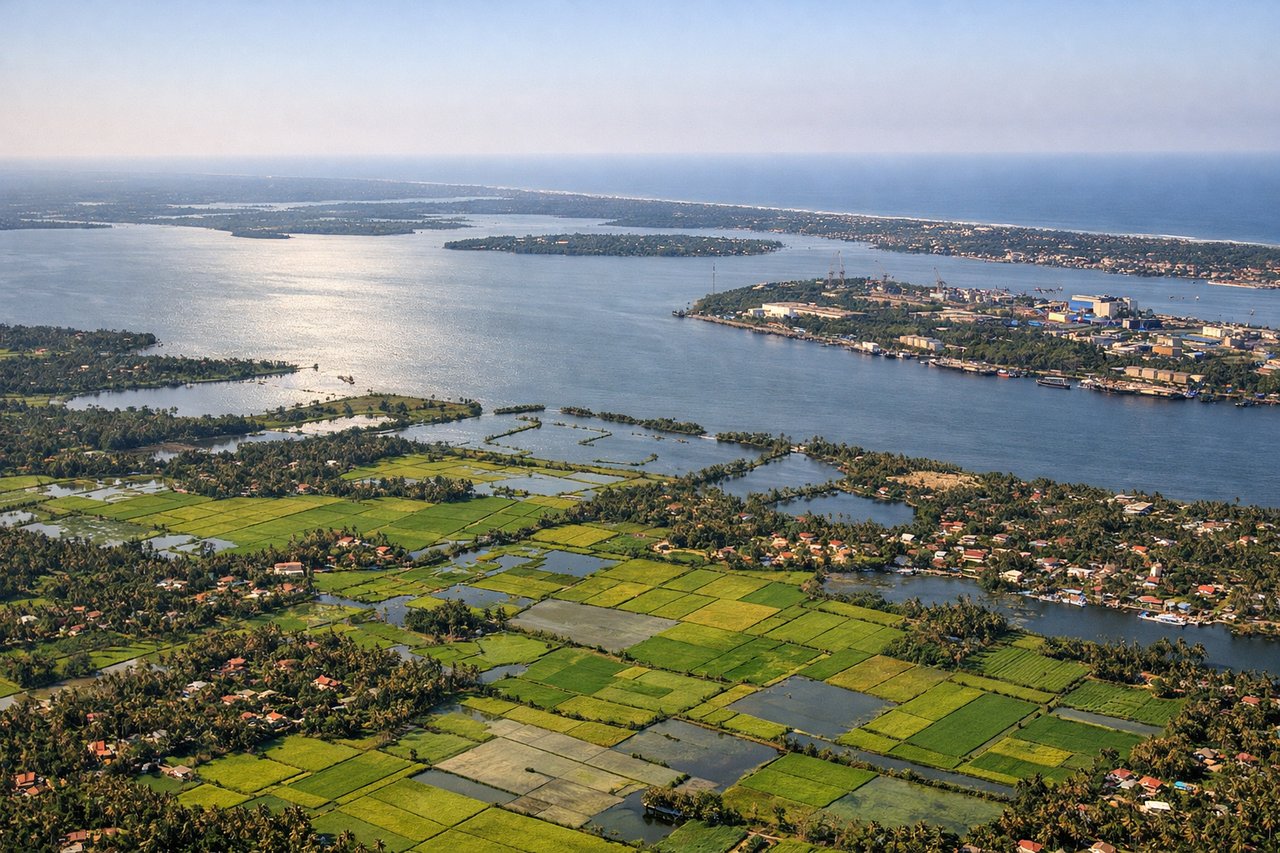
Landing at COK
RIGHTCOK approaches from the northeast typically using runway 08/26. Right-side seats during descent offer views of the Vembanad Lake—a massive brackish lagoon system that dominates the landscape—and the Kerala backwaters network. Left seats see only inland agricultural plains and palm groves without distinctive geographic markers.
Will your flight be in sunlight?
Pick a date and time in the Sun Map to watch the sun move across your whole flight.
About This Route
Which side of the plane should I sit on flying from Chhatrapati Shivaji International (BOM) to Cochin International Airport (COK)?
Sit on the Right side of the plane for the best views on flights from Bombay to Kochi. Right-side seats dominate both takeoff and landing. The departure offers the Arabian Sea and Mumbai's coastal geography, while the arrival showcases Kerala's iconic Vembanad Lake and backwater system—one of India's most visually distinctive geographic features. The entire flight path down the western coast favors right-side views of the Arabian Sea and coastal features.
What can I see during takeoff from Chhatrapati Shivaji International in Bombay?
During takeoff from Chhatrapati Shivaji International (BOM), sit on the Right side for the best views. BOM typically departs runway 09L/27R (east-west) or 09R/27L. Right-side seats offer views of the Arabian Sea immediately west of the airport and the Mumbai coastline including the Colaba district and Back Bay. Left seats face inland toward the congested urban sprawl of greater Mumbai with minimal geographic interest. Notable sights include: Arabian Sea (immediate western horizon), Colaba Peninsula and southern Mumbai waterfront, Back Bay inlet, Salsette Island shoreline.
What can I see when landing at Cochin International Airport in Kochi?
When landing at Cochin International Airport (COK), sit on the Right side for the best views. COK approaches from the northeast typically using runway 08/26. Right-side seats during descent offer views of the Vembanad Lake—a massive brackish lagoon system that dominates the landscape—and the Kerala backwaters network. Left seats see only inland agricultural plains and palm groves without distinctive geographic markers. Notable sights include: Vembanad Lake (largest lagoon in Kerala), backwater channels and islands, Arabian Sea to the west, palm and coconut plantation landscape.
How long is the flight from Bombay to Kochi?
The flight from Chhatrapati Shivaji International (BOM) to Cochin International Airport (COK) takes about 1 hour 25 minutes. The shortest flight path between them is 661 miles (1,064 km); winds and air traffic control usually add a few percent.
What does the Bombay to Kochi flight path pass over?
The flight path follows the western coast of India southward. Notable features visible from altitude include the Konkan coastline (rocky, forested terrain meeting the Arabian Sea), the Ghat mountain range running parallel to the coast 20-40 miles inland (visible as a distant ridge on clear days), and the transition from Maharashtra's coastal districts into Karnataka and then Kerala. The Arabian Sea remains visible to the west throughout most of the flight. Around the midpoint near Goa/Karnataka border, the coastline becomes more rugged with deeper inlets. As the flight approaches Kerala, the landscape transitions to lower elevation with more visible backwater systems and lagoons. Right-side views consistently show the sea; left-side views show the Western Ghats foothills and inland plateau terrain.