Right side scores higher due to superior takeoff scenery from Mumbai's dramatic Arabian Sea coastline and harbor, which outweighs the left side's advantage during landing. The Mumbai departure provides iconic urban-maritime views that are more visually distinctive than the Rhine approach, and the cruise phase over the Arabian Sea and Middle East offers more varied terrain than the flat North European Plain visible on the left during descent.
Flown BOM to DUS? Did we get it right?
Flight Path
Bombay to Duesseldorf is 4,170 miles (6,711 km), a flight of about 8 hours 15 minutes.
Arabian Sea coastline, Persian Gulf and Strait of Hormuz, Zagros Mountains (Iran), Mesopotamian plains (Iraq/Syria), Taurus Mountains (Turkey), Anatolian plateau, Balkans, Danube River valley, North European Plain
Great circle distance and headings ›Phase by phase
Takeoff from BOM
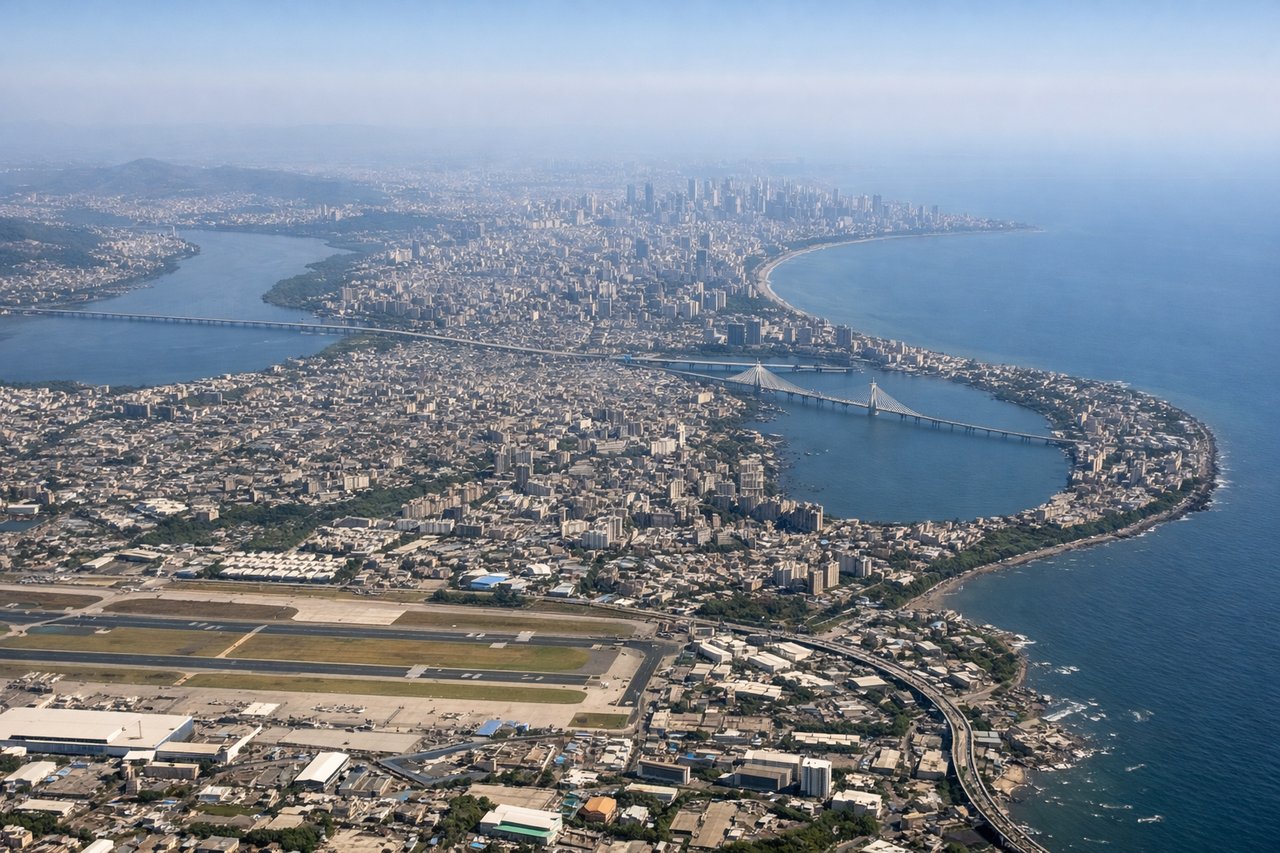
RIGHTRight side captures Mumbai's Arabian Sea coastline and harbor during departure. Aircraft typically depart runway 27 or 09 with initial turns that expose the right side to the city's waterfront, including the Gateway of India area and the curve of Back Bay. Left side faces inland toward the flat Deccan Plateau.
Landing at DUS
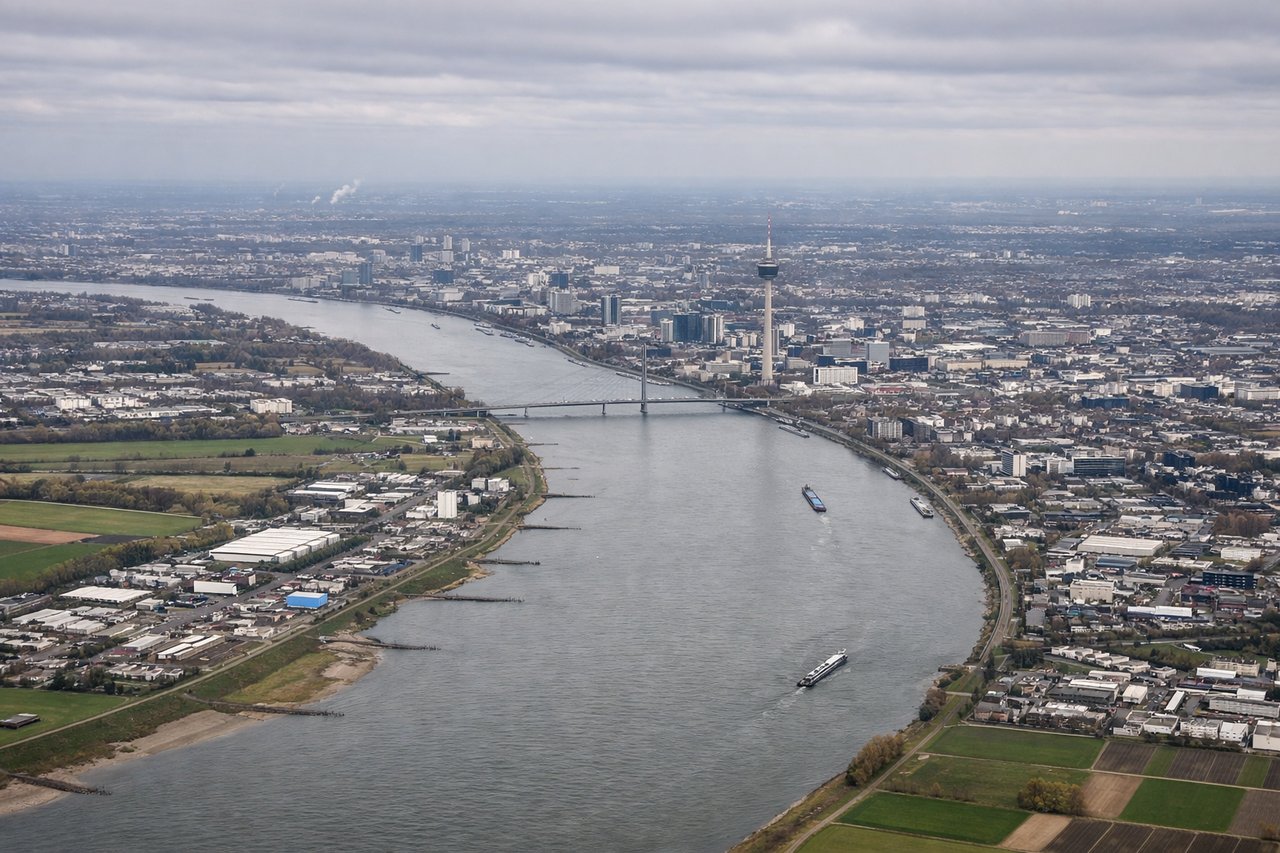
LEFTLeft side offers superior approach scenery into Düsseldorf. Aircraft descend from the northeast and typically approach runways 23L/23R from that direction, placing the left side toward the Rhine River valley and the industrial Ruhr region. Passengers see the Rhine's meandering course, the river's distinctive loops near Düsseldorf, and the transition from rural North Rhine-Westphalia to urban development.
Will your flight be in sunlight?
Pick a date and time in the Sun Map to watch the sun move across your whole flight.
About This Route
Which side of the plane should I sit on flying from Chhatrapati Shivaji International (BOM) to Dusseldorf (DUS)?
Sit on the Right side of the plane for the best views on flights from Bombay to Duesseldorf. Right side scores higher due to superior takeoff scenery from Mumbai's dramatic Arabian Sea coastline and harbor, which outweighs the left side's advantage during landing. The Mumbai departure provides iconic urban-maritime views that are more visually distinctive than the Rhine approach, and the cruise phase over the Arabian Sea and Middle East offers more varied terrain than the flat North European Plain visible on the left during descent.
What can I see during takeoff from Chhatrapati Shivaji International in Bombay?
During takeoff from Chhatrapati Shivaji International (BOM), sit on the Right side for the best views. Right side captures Mumbai's Arabian Sea coastline and harbor during departure. Aircraft typically depart runway 27 or 09 with initial turns that expose the right side to the city's waterfront, including the Gateway of India area and the curve of Back Bay. Left side faces inland toward the flat Deccan Plateau. Notable sights include: Arabian Sea coastline, Mumbai harbor and shipping lanes, Gateway of India waterfront district, Back Bay curve.
What can I see when landing at Dusseldorf in Duesseldorf?
When landing at Dusseldorf (DUS), sit on the Left side for the best views. Left side offers superior approach scenery into Düsseldorf. Aircraft descend from the northeast and typically approach runways 23L/23R from that direction, placing the left side toward the Rhine River valley and the industrial Ruhr region. Passengers see the Rhine's meandering course, the river's distinctive loops near Düsseldorf, and the transition from rural North Rhine-Westphalia to urban development. Notable sights include: Rhine River with characteristic meanders, Ruhr industrial valley, North Rhine-Westphalia lowlands, Düsseldorf city center and airport approach corridor.
How long is the flight from Bombay to Duesseldorf?
The flight from Chhatrapati Shivaji International (BOM) to Dusseldorf (DUS) takes about 8 hours 15 minutes. The shortest flight path between them is 4,170 miles (6,711 km); winds and air traffic control usually add a few percent.
What does the Bombay to Duesseldorf flight path pass over?
Arabian Sea coastline, Persian Gulf and Strait of Hormuz, Zagros Mountains (Iran), Mesopotamian plains (Iraq/Syria), Taurus Mountains (Turkey), Anatolian plateau, Balkans, Danube River valley, North European Plain