Bristol to Dublin is 206 miles (331 km), a flight of about 1 hour 15 minutes.
While takeoff favors the left for Severn Estuary views, the landing approach on runway 28 is the dominant visual event on this route, and right-side seats provide superior views of Dublin Bay, Howth Head, and the city approach. The landing experience outweighs the takeoff advantage.
Flight Path
The flight crosses the Celtic Sea at roughly 10,000-15,000 feet. The Irish coast becomes visible around midpoint—the Wexford coastline and Hook Peninsula appear first, followed by the Waterford coast. The Wicklow Mountains become visible on the left (south) side as the aircraft descends toward Dublin. No major mountain ranges or dramatic terrain features are visible at cruise altitude; the route is primarily over water and low-lying coastal terrain.
Great circle distance and headings ›Phase by phase
Takeoff from BRS
LEFTBristol typically departs runway 27 (westbound). Left-side seats face north during climb-out, giving direct views of the Severn Estuary, Welsh coastline, and the Cotswolds inland. Right seats would see only inland farmland and the Forest of Dean.
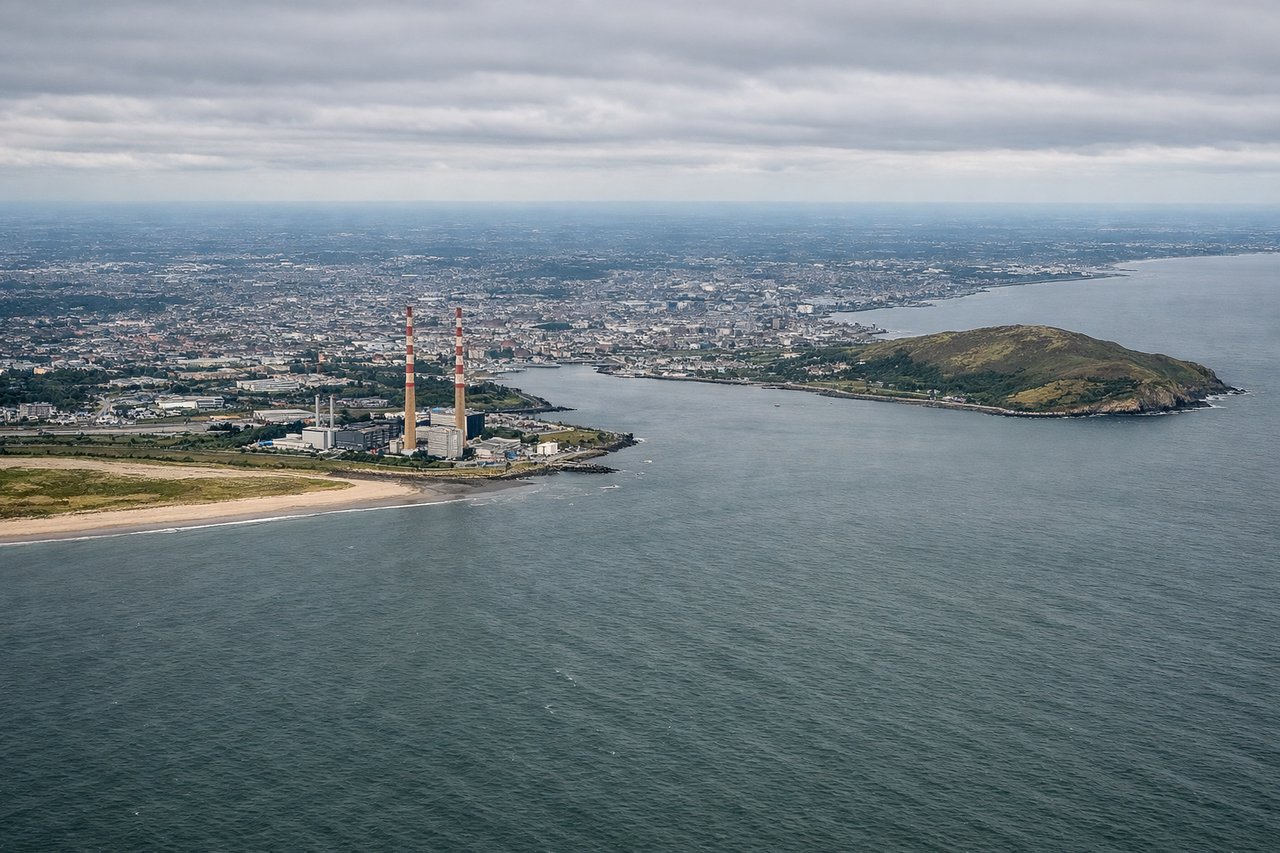
Landing at DUB
RIGHTDublin typically lands runway 28 (westbound approach from the east). Right-side seats face south during descent, offering views of the Irish coastline, Dublin Bay, and the city itself. Left seats would see only inland Irish countryside.
Will your flight be in sunlight?
Pick a date and time in the Sun Map to watch the sun move across your whole flight.
About This Route
Which side of the plane should I sit on flying from Bristol (BRS) to Dublin (DUB)?
Sit on the Right side of the plane for the best views on flights from Bristol to Dublin. While takeoff favors the left for Severn Estuary views, the landing approach on runway 28 is the dominant visual event on this route, and right-side seats provide superior views of Dublin Bay, Howth Head, and the city approach. The landing experience outweighs the takeoff advantage.
What can I see during takeoff from Bristol in Bristol?
During takeoff from Bristol (BRS), sit on the Left side for the best views. Bristol typically departs runway 27 (westbound). Left-side seats face north during climb-out, giving direct views of the Severn Estuary, Welsh coastline, and the Cotswolds inland. Right seats would see only inland farmland and the Forest of Dean. Notable sights include: Severn Estuary (wide tidal waterway immediately below), Welsh coast near Monmouth (distinct shoreline to the north), Forest of Dean (dark forested plateau to the northeast), Cotswold Hills (rolling terrain inland to the east).
What can I see when landing at Dublin in Dublin?
When landing at Dublin (DUB), sit on the Right side for the best views. Dublin typically lands runway 28 (westbound approach from the east). Right-side seats face south during descent, offering views of the Irish coastline, Dublin Bay, and the city itself. Left seats would see only inland Irish countryside. Notable sights include: Dublin Bay (distinctive coastal inlet with Howth Head peninsula on the north side), Howth Head (rocky headland jutting into the bay), Dublin city center (urban sprawl visible along the Liffey), Wicklow Mountains (low mountains visible to the south on the horizon).
How long is the flight from Bristol to Dublin?
The flight from Bristol (BRS) to Dublin (DUB) takes about 1 hour 15 minutes. The shortest flight path between them is 206 miles (331 km); winds and air traffic control usually add a few percent.
What does the Bristol to Dublin flight path pass over?
The flight crosses the Celtic Sea at roughly 10,000-15,000 feet. The Irish coast becomes visible around midpoint—the Wexford coastline and Hook Peninsula appear first, followed by the Waterford coast. The Wicklow Mountains become visible on the left (south) side as the aircraft descends toward Dublin. No major mountain ranges or dramatic terrain features are visible at cruise altitude; the route is primarily over water and low-lying coastal terrain.