Bristol to Madrid is 753 miles (1,213 km), a flight of about 2 hours 20 minutes.
The right side offers the Bristol Channel and Welsh coast on departure, the Bay of Biscay and Cantabrian mountain foothills during cruise, and the Guadarrama range near Madrid on arrival — a more varied and dramatic set of views than the interior French plains visible from the left.
Flight Path
Bay of Biscay coastline near Brittany and northern Spain, with the Cantabrian Mountains and Picos de Europa visible inland along the route before the flight continues south over the Spanish plateau.
Great circle distance and headings ›Phase by phase
Takeoff from BRS
RIGHTDeparting Bristol on runway 27, the climb-out heads west before turning south, giving right-side passengers a view across the Bristol Channel toward the Welsh coastline and Exmoor's hills, while the left side only sees the city and flatter Somerset countryside.
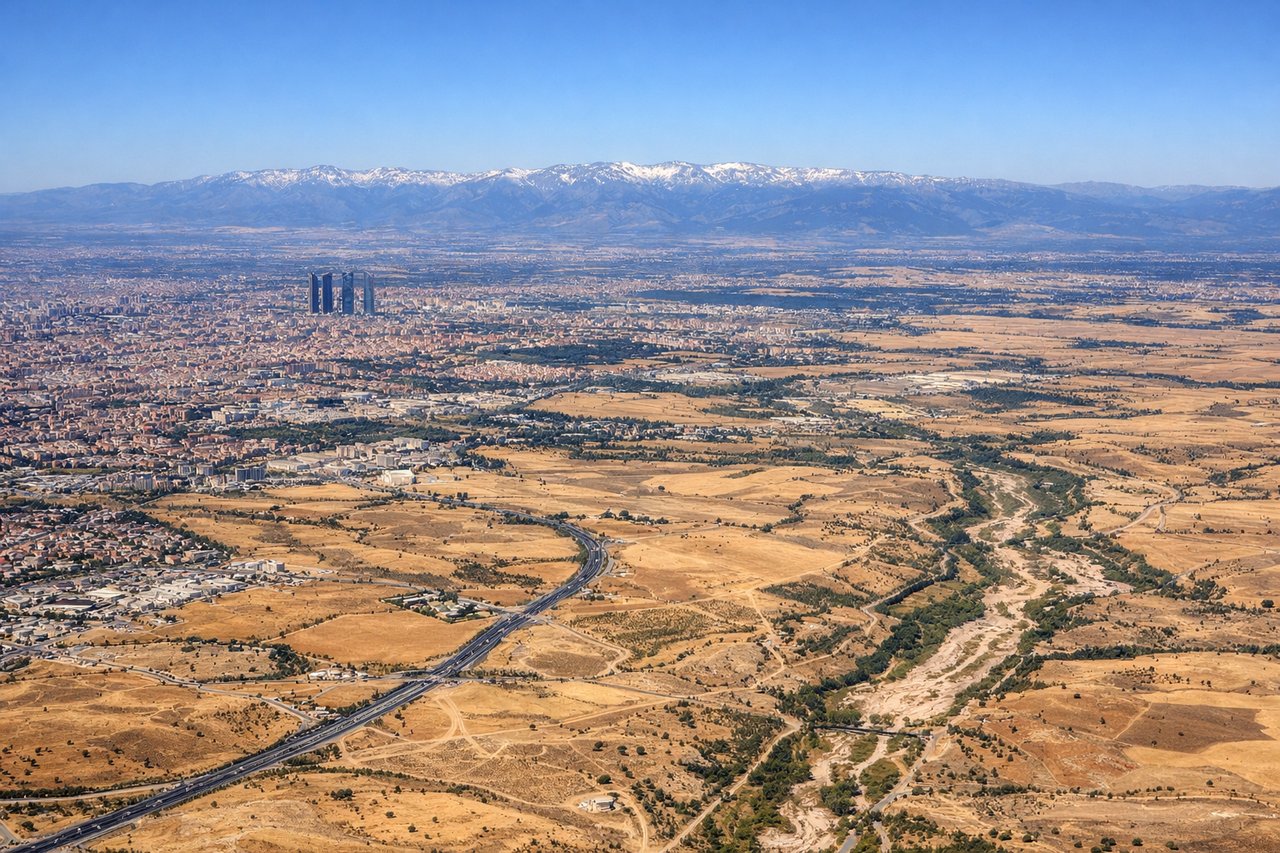
Landing at MAD
RIGHTOn the north-configuration approach into Madrid, aircraft arriving from the north typically swing around to the south before turning back for final approach, giving right-side views of the Sierra de Guadarrama foothills and glimpses of Madrid's skyline before touchdown.
Landmarks on this routeAll landmarks →
Will your flight be in sunlight?
Pick a date and time in the Sun Map to watch the sun move across your whole flight.
About This Route
Which side of the plane should I sit on flying from Bristol (BRS) to Barajas (MAD)?
Sit on the Right side of the plane for the best views on flights from Bristol to Madrid. The right side offers the Bristol Channel and Welsh coast on departure, the Bay of Biscay and Cantabrian mountain foothills during cruise, and the Guadarrama range near Madrid on arrival — a more varied and dramatic set of views than the interior French plains visible from the left.
What can I see during takeoff from Bristol in Bristol?
During takeoff from Bristol (BRS), sit on the Right side for the best views. Departing Bristol on runway 27, the climb-out heads west before turning south, giving right-side passengers a view across the Bristol Channel toward the Welsh coastline and Exmoor's hills, while the left side only sees the city and flatter Somerset countryside. Notable sights include: Bristol Channel, Welsh coastline, Exmoor National Park, Mendip Hills (left, secondary).
What can I see when landing at Barajas in Madrid?
When landing at Barajas (MAD), sit on the Right side for the best views. On the north-configuration approach into Madrid, aircraft arriving from the north typically swing around to the south before turning back for final approach, giving right-side views of the Sierra de Guadarrama foothills and glimpses of Madrid's skyline before touchdown. Notable sights include: Sierra de Guadarrama, Madrid skyline, Manzanares River, Barajas terminal complex.
How long is the flight from Bristol to Madrid?
The flight from Bristol (BRS) to Barajas (MAD) takes about 2 hours 20 minutes. The shortest flight path between them is 753 miles (1,213 km); winds and air traffic control usually add a few percent.
What does the Bristol to Madrid flight path pass over?
Bay of Biscay coastline near Brittany and northern Spain, with the Cantabrian Mountains and Picos de Europa visible inland along the route before the flight continues south over the Spanish plateau.