Brasilia to Campina Grande is 1,007 miles (1,621 km), a flight of about 2 hours 40 minutes.
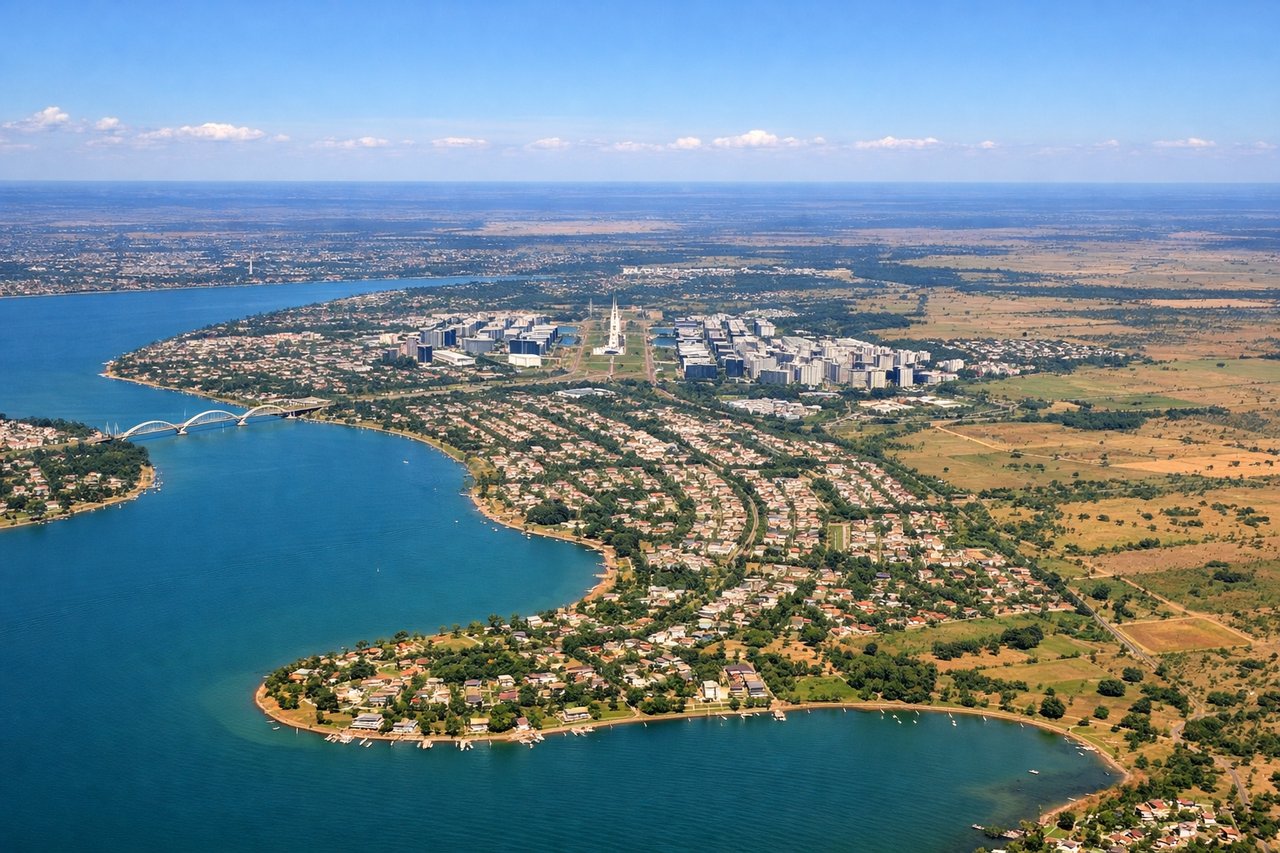
Right-side seats capture the more dramatic scenery: Brasília's planned urban landscape and lakes during departure, plus views of the cerrado-to-caatinga transition across the central Brazilian plateau during cruise. Left seats offer the Borborema Plateau approach but miss the takeoff highlights.
Flight Path
The flight path crosses the flat cerrado plateau of central Goiás and northern Bahia, with scattered vegetation patterns and occasional small towns visible. The terrain gradually transitions from the higher central plateau toward the Borborema Plateau's eastern edge. No major rivers or dramatic topographic features dominate the midpoint, but the subtle elevation changes and vegetation shifts from cerrado to caatinga scrubland are visible at cruise altitude.
Great circle distance and headings ›Phase by phase
Takeoff from BSB
RIGHTRight-side seats offer views of Brasília's distinctive modernist urban layout and the surrounding cerrado landscape as you climb northeast toward Campina Grande. The city's geometric street plan and artificial lakes are visible during the initial climb.
Landing at CPV
LEFTLeft-side seats provide views of the Borborema Plateau and the approach into Campina Grande from the west. You'll see the terrain transition from flat cerrado to the more elevated, dissected plateau landscape characteristic of the Agreste region.
Will your flight be in sunlight?
Pick a date and time in the Sun Map to watch the sun move across your whole flight.
About This Route
Which side of the plane should I sit on flying from Presidente Juscelino Kubitschek (BSB) to Presidente João Suassuna Airport (CPV)?
Sit on the Right side of the plane for the best views on flights from Brasilia to Campina Grande. Right-side seats capture the more dramatic scenery: Brasília's planned urban landscape and lakes during departure, plus views of the cerrado-to-caatinga transition across the central Brazilian plateau during cruise. Left seats offer the Borborema Plateau approach but miss the takeoff highlights.
What can I see during takeoff from Presidente Juscelino Kubitschek in Brasilia?
During takeoff from Presidente Juscelino Kubitschek (BSB), sit on the Right side for the best views. Right-side seats offer views of Brasília's distinctive modernist urban layout and the surrounding cerrado landscape as you climb northeast toward Campina Grande. The city's geometric street plan and artificial lakes are visible during the initial climb. Notable sights include: Lake Paranoá (artificial reservoir south of downtown), Brasília's central planalto plateau terrain, cerrado vegetation patterns, and the city's radial street grid.
What can I see when landing at Presidente João Suassuna Airport in Campina Grande?
When landing at Presidente João Suassuna Airport (CPV), sit on the Left side for the best views. Left-side seats provide views of the Borborema Plateau and the approach into Campina Grande from the west. You'll see the terrain transition from flat cerrado to the more elevated, dissected plateau landscape characteristic of the Agreste region. Notable sights include: Borborema Plateau escarpment, Campina Grande's urban sprawl on elevated terrain, semi-arid caatinga vegetation, and the Paraíba River valley system.
How long is the flight from Brasilia to Campina Grande?
The flight from Presidente Juscelino Kubitschek (BSB) to Presidente João Suassuna Airport (CPV) takes about 2 hours 40 minutes. The shortest flight path between them is 1,007 miles (1,621 km); winds and air traffic control usually add a few percent.
What does the Brasilia to Campina Grande flight path pass over?
The flight path crosses the flat cerrado plateau of central Goiás and northern Bahia, with scattered vegetation patterns and occasional small towns visible. The terrain gradually transitions from the higher central plateau toward the Borborema Plateau's eastern edge. No major rivers or dramatic topographic features dominate the midpoint, but the subtle elevation changes and vegetation shifts from cerrado to caatinga scrubland are visible at cruise altitude.