Right side scores 3.5 vs left's 2.5 due to superior scenery on both ends of the flight. Takeoff showcases Brasília's unique modernist urban design and artificial lake, while landing delivers the dramatic Everglades-to-Miami transition with wetland patterns, Biscayne Bay, and the city skyline. Left side offers only plateau terrain at departure and open Atlantic Ocean during cruise and approach—minimal visual interest for a 4+ hour flight.
Flight Path
The flight path crosses the Caribbean Sea and passes over or near the Yucatan Peninsula (depending on exact routing), then continues over the Gulf of Mexico. Notable features include the Bahamas' shallow turquoise banks and islands (visible from altitude), the Florida Keys archipelago, and the transition from open ocean to the Everglades wetlands as the aircraft descends toward Miami. The entire cruise phase is ocean-dominated with minimal land features—this is a trans-Caribbean route with limited scenic variety in the middle 2-3 hours.
Great circle distance and headings ›Phase by phase
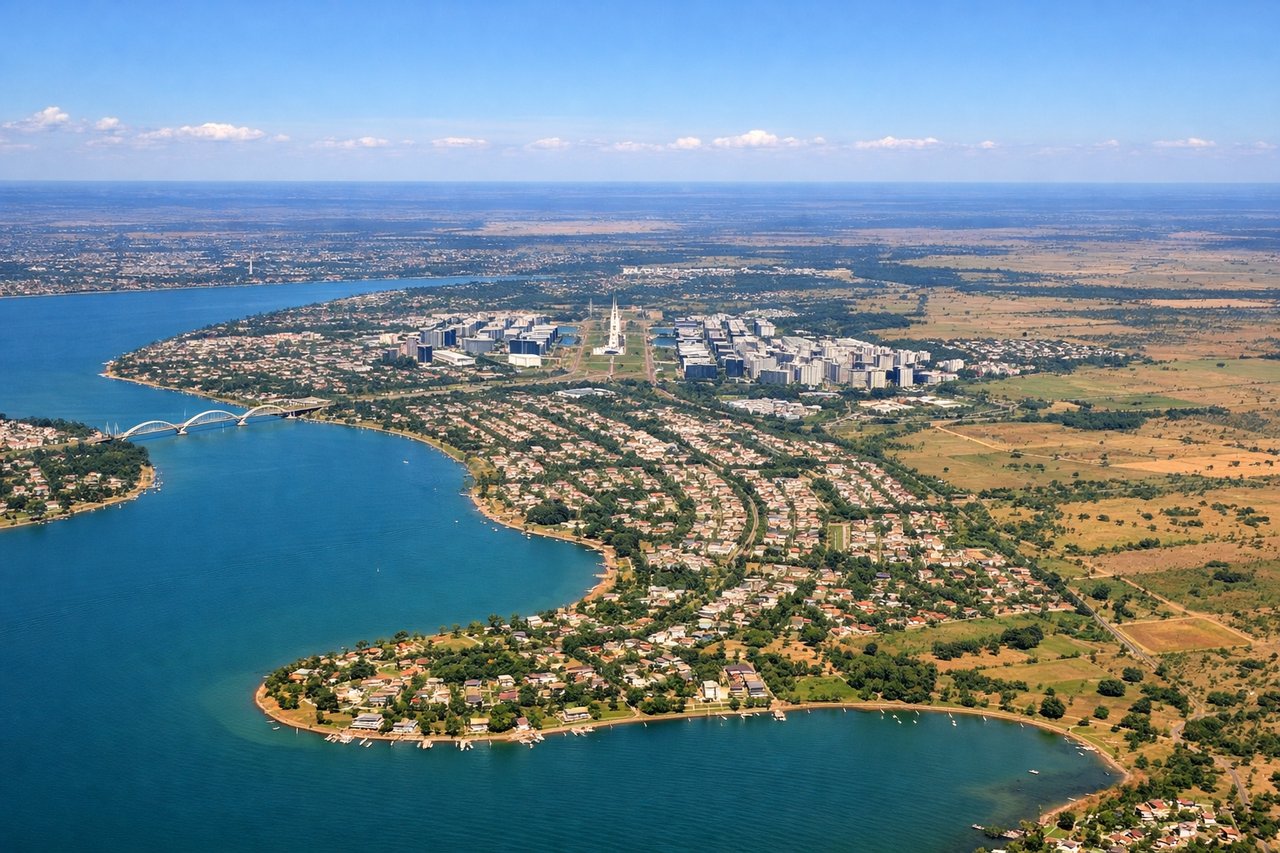
Takeoff from BSB
RIGHTRight side captures Brasília's modernist urban layout during climb-out, with the distinctive artificial Lago Paranoá and the city's geometric street plan visible. Left side shows only the high plateau terrain with minimal distinguishing features.
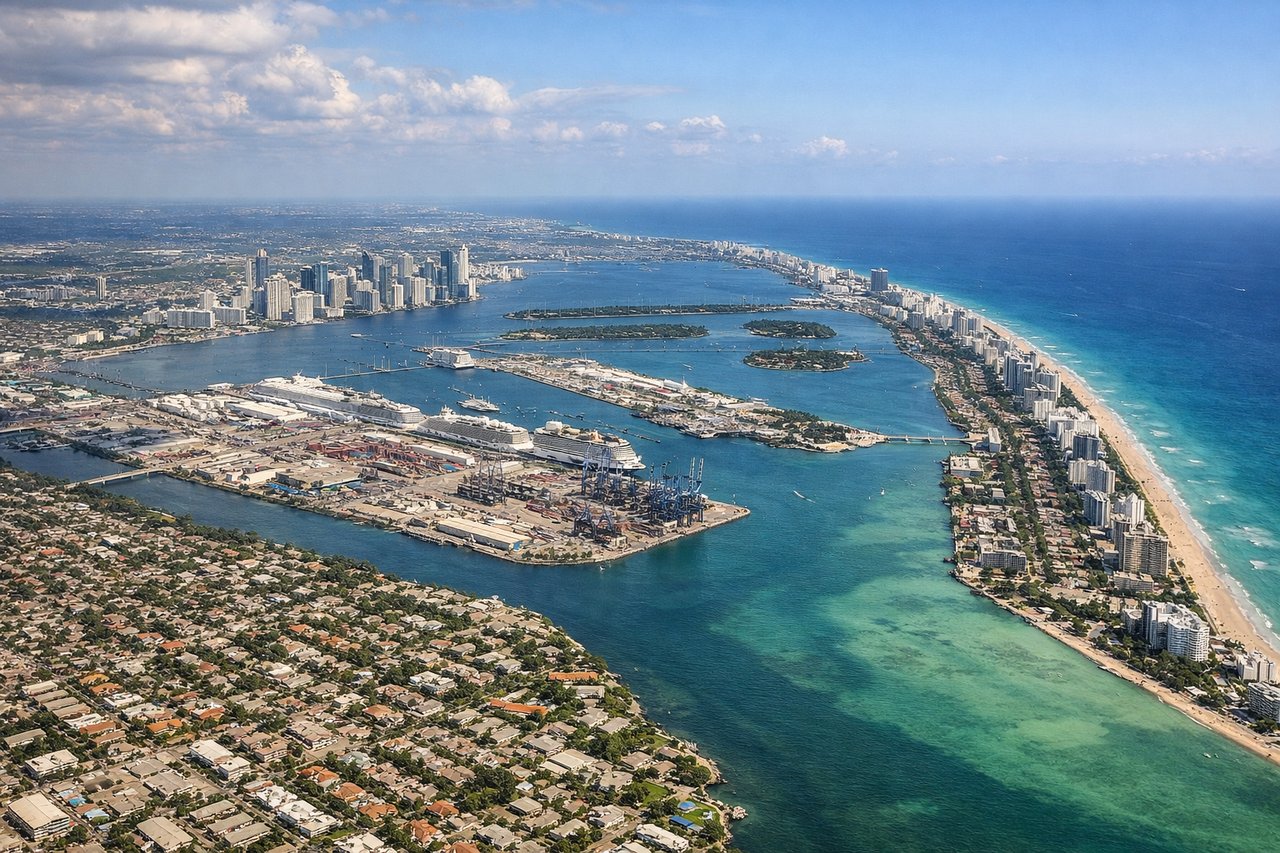
Landing at MIA
RIGHTRight side offers the most dramatic approach sequence: passengers descend over the Everglades' distinctive wetland patterns, then cross Biscayne Bay with Miami's downtown skyline and port facilities coming into sharp focus. Left side shows only open Atlantic Ocean for the final 30+ minutes.
Landmarks on this routeAll landmarks →
Will your flight be in sunlight?
See exactly which side of the plane gets sun and shade at your departure time.
About This Route
Which side of the plane should I sit on flying from Presidente Juscelino Kubitschek (BSB) to Miami International (MIA)?
Sit on the Right side of the plane for the best views on flights from Brasilia to Miami. Right side scores 3.5 vs left's 2.5 due to superior scenery on both ends of the flight. Takeoff showcases Brasília's unique modernist urban design and artificial lake, while landing delivers the dramatic Everglades-to-Miami transition with wetland patterns, Biscayne Bay, and the city skyline. Left side offers only plateau terrain at departure and open Atlantic Ocean during cruise and approach—minimal visual interest for a 4+ hour flight.
What can I see during takeoff from Presidente Juscelino Kubitschek in Brasilia?
During takeoff from Presidente Juscelino Kubitschek (BSB), sit on the Right side for the best views. Right side captures Brasília's modernist urban layout during climb-out, with the distinctive artificial Lago Paranoá and the city's geometric street plan visible. Left side shows only the high plateau terrain with minimal distinguishing features. Notable sights include: Lago Paranoá (artificial lake), Brasília's central axis and modernist government buildings, surrounding cerrado plateau.
What can I see when landing at Miami International in Miami?
When landing at Miami International (MIA), sit on the Right side for the best views. Right side offers the most dramatic approach sequence: passengers descend over the Everglades' distinctive wetland patterns, then cross Biscayne Bay with Miami's downtown skyline and port facilities coming into sharp focus. Left side shows only open Atlantic Ocean for the final 30+ minutes. Notable sights include: Everglades wetland patterns and sawgrass marshes, Biscayne Bay with its shallow turquoise waters, Miami downtown skyline and port, barrier islands and Miami Beach.
How long is the flight from Brasilia to Miami?
The flight from Presidente Juscelino Kubitschek (BSB) to Miami International (MIA) takes 4h 35m.
What does the Brasilia to Miami flight path pass over?
The flight path crosses the Caribbean Sea and passes over or near the Yucatan Peninsula (depending on exact routing), then continues over the Gulf of Mexico. Notable features include the Bahamas' shallow turquoise banks and islands (visible from altitude), the Florida Keys archipelago, and the transition from open ocean to the Everglades wetlands as the aircraft descends toward Miami. The entire cruise phase is ocean-dominated with minimal land features—this is a trans-Caribbean route with limited scenic variety in the middle 2-3 hours.