The left side captures the most dramatic departure scenery — Lake Erie and the Niagara Falls corridor — which outweighs the right side's Fort Worth arrival view. Over the mid-flight portion through Ohio, Kentucky, Tennessee, and into Texas, neither side offers dramatically superior views, so the departure experience tips the balance to the left.
Flown BUF to DFW? Did we get it right?
Flight Path
Buffalo to Dallas-Fort Worth is 1,211 miles (1,949 km), a flight of about 3 hours 30 minutes.
The route tracks southwest over western Pennsylvania and Ohio, crossing the Ohio River near Cincinnati, then over Kentucky and Tennessee hill country, clipping the northwestern corner of Mississippi or Arkansas depending on routing, before crossing into Texas over the Red River and descending across the flat North Texas plains toward DFW. The Ohio River valley and the Red River crossing are the most visually distinctive geographic markers along the way.
Great circle distance and headings ›Phase by phase
Takeoff from BUF
LEFTBuffalo Niagara typically departs southwest on runway 23, putting the left side facing southeast toward Lake Erie and the Niagara River corridor. You get a clear view of the lake shoreline and can often spot the Niagara Falls mist plume to the northeast as the aircraft banks south.
Landing at DFW
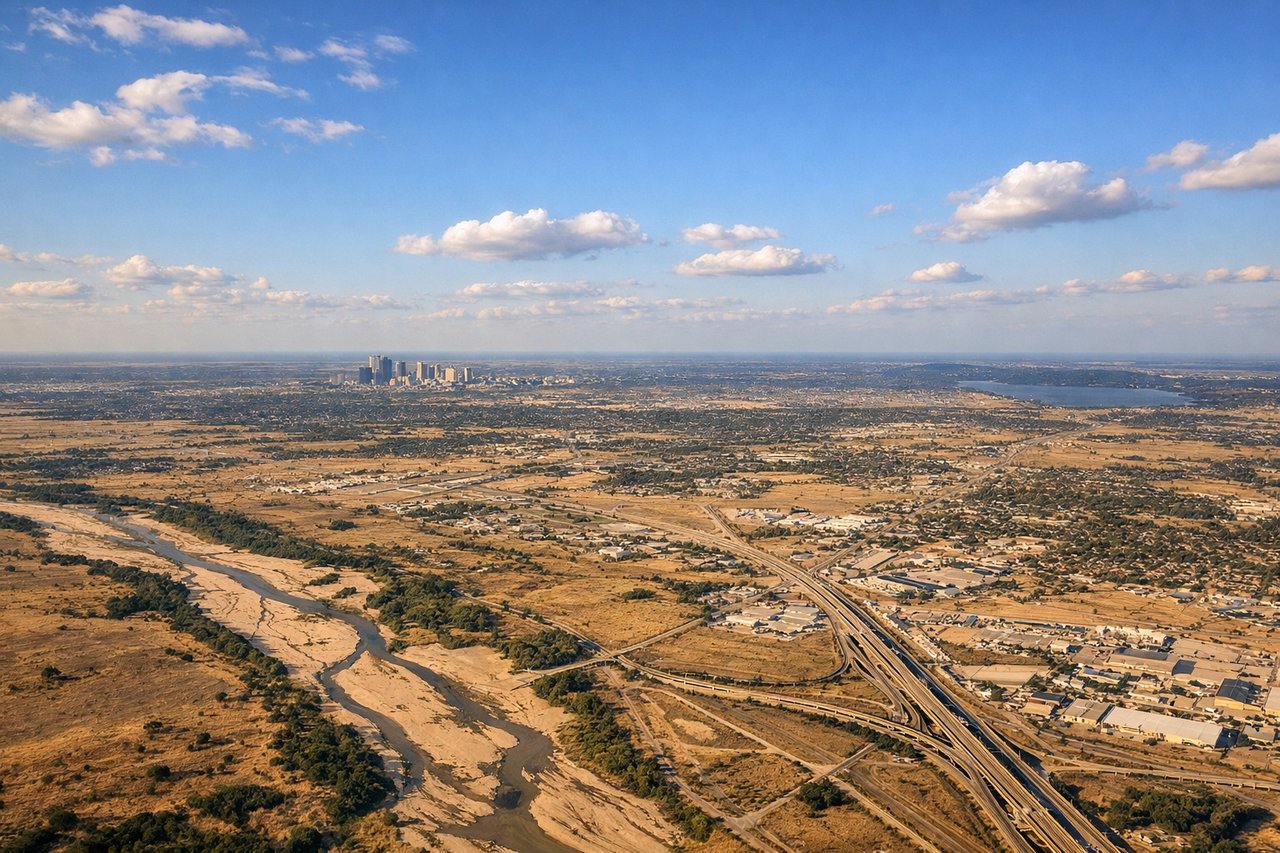
RIGHTDFW primarily uses north-facing runways (17L/17R) for southbound arrivals, meaning the aircraft approaches from the north. The right side faces west, giving views of Fort Worth's downtown skyline and the sprawling DFW metroplex grid. The left side gets the eastern suburbs with less visual interest.
Will your flight be in sunlight?
Pick a date and time in the Sun Map to watch the sun move across your whole flight.
About This Route
Which side of the plane should I sit on flying from Buffalo Niagara International (BUF) to Dallas Fort Worth International (DFW)?
Sit on the Left side of the plane for the best views on flights from Buffalo to Dallas-Fort Worth. The left side captures the most dramatic departure scenery — Lake Erie and the Niagara Falls corridor — which outweighs the right side's Fort Worth arrival view. Over the mid-flight portion through Ohio, Kentucky, Tennessee, and into Texas, neither side offers dramatically superior views, so the departure experience tips the balance to the left.
What can I see during takeoff from Buffalo Niagara International in Buffalo?
During takeoff from Buffalo Niagara International (BUF), sit on the Left side for the best views. Buffalo Niagara typically departs southwest on runway 23, putting the left side facing southeast toward Lake Erie and the Niagara River corridor. You get a clear view of the lake shoreline and can often spot the Niagara Falls mist plume to the northeast as the aircraft banks south. Notable sights include: Lake Erie shoreline, Niagara River, Niagara Falls mist plume (northeast), downtown Buffalo waterfront.
What can I see when landing at Dallas Fort Worth International in Dallas-Fort Worth?
When landing at Dallas Fort Worth International (DFW), sit on the Right side for the best views. DFW primarily uses north-facing runways (17L/17R) for southbound arrivals, meaning the aircraft approaches from the north. The right side faces west, giving views of Fort Worth's downtown skyline and the sprawling DFW metroplex grid. The left side gets the eastern suburbs with less visual interest. Notable sights include: Fort Worth downtown skyline, DFW airport complex, Lake Worth (northwest Fort Worth), Arlington urban grid.
How long is the flight from Buffalo to Dallas-Fort Worth?
The flight from Buffalo Niagara International (BUF) to Dallas Fort Worth International (DFW) takes about 3 hours 30 minutes. The shortest flight path between them is 1,211 miles (1,949 km); winds and air traffic control usually add a few percent.
What does the Buffalo to Dallas-Fort Worth flight path pass over?
The route tracks southwest over western Pennsylvania and Ohio, crossing the Ohio River near Cincinnati, then over Kentucky and Tennessee hill country, clipping the northwestern corner of Mississippi or Arkansas depending on routing, before crossing into Texas over the Red River and descending across the flat North Texas plains toward DFW. The Ohio River valley and the Red River crossing are the most visually distinctive geographic markers along the way.