Burbank to New York is 2,460 miles (3,958 km), a flight of about 5 hours 15 minutes.
The right side delivers the dramatic San Gabriel Mountains on departure, then tracks the southern Rockies and Great Plains across the mid-continent. On the transcontinental cruise, the right side also offers better views of the Colorado Plateau and Midwest river systems. The left side wins only on the JFK approach, but the departure scenery and en-route geography give the right side the edge overall.
Flight Path
After departing Southern California, the route crosses the Mojave Desert, then the Colorado River near Needles. Over Arizona and New Mexico the southern Rocky Mountain ranges are visible. Crossing into the Great Plains over Kansas and Missouri, the Missouri and Mississippi Rivers are prominent. Over Ohio and Pennsylvania, the Appalachian ridges run diagonally across the view before the descent into the New York metro area.
Great circle distance and headings ›.jpg?width=600)

.jpeg?width=600)
.jpg?width=600)

.jpg?width=600)

.jpeg?width=600)
.jpg?width=600)
Phase by phase
Takeoff from BUR
RIGHTBUR typically departs east on runway 08, so the right side faces north toward the San Gabriel Mountains including Mount Wilson and the front range above Pasadena. The left side looks south over the San Fernando Valley floor with less dramatic terrain.
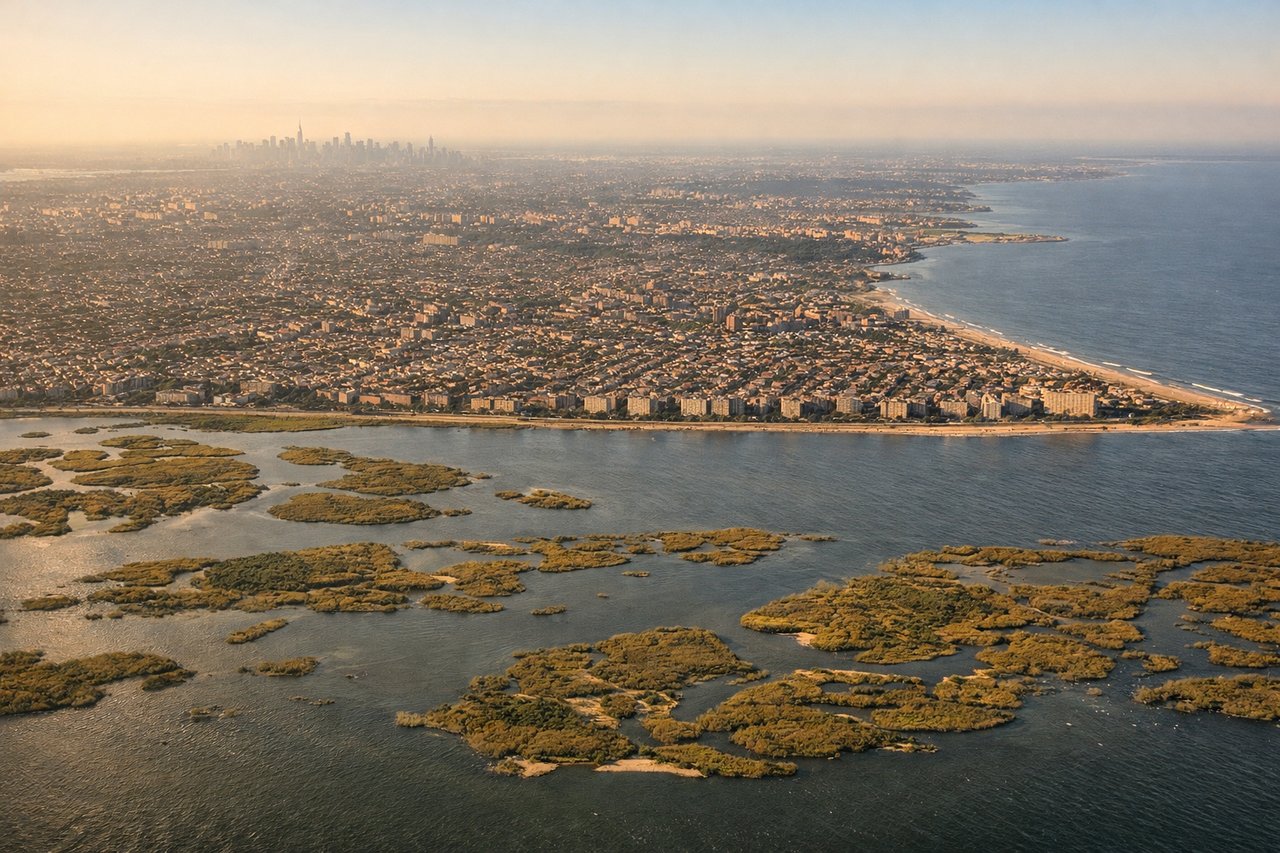
Landing at JFK
LEFTJFK primarily uses runways 31L/31R for arrivals from the east, meaning the aircraft approaches from the southeast over the Atlantic and turns over Jamaica Bay. The left side gets the Manhattan skyline, Upper Bay, and the Verrazano-Narrows Bridge during the approach, while the right side faces south over the Rockaways and open ocean.
Landmarks on this routeAll landmarks →
Will your flight be in sunlight?
Pick a date and time in the Sun Map to watch the sun move across your whole flight.
About This Route
Which side of the plane should I sit on flying from Burbank Glendale Pasadena (BUR) to John F Kennedy International (JFK)?
Sit on the Right side of the plane for the best views on flights from Burbank to New York. The right side delivers the dramatic San Gabriel Mountains on departure, then tracks the southern Rockies and Great Plains across the mid-continent. On the transcontinental cruise, the right side also offers better views of the Colorado Plateau and Midwest river systems. The left side wins only on the JFK approach, but the departure scenery and en-route geography give the right side the edge overall.
What can I see during takeoff from Burbank Glendale Pasadena in Burbank?
During takeoff from Burbank Glendale Pasadena (BUR), sit on the Right side for the best views. BUR typically departs east on runway 08, so the right side faces north toward the San Gabriel Mountains including Mount Wilson and the front range above Pasadena. The left side looks south over the San Fernando Valley floor with less dramatic terrain. Notable sights include: San Gabriel Mountains front range, Mount Wilson (with visible observatory), Verdugo Mountains, Glendale and Pasadena urban grid below.
What can I see when landing at John F Kennedy International in New York?
When landing at John F Kennedy International (JFK), sit on the Left side for the best views. JFK primarily uses runways 31L/31R for arrivals from the east, meaning the aircraft approaches from the southeast over the Atlantic and turns over Jamaica Bay. The left side gets the Manhattan skyline, Upper Bay, and the Verrazano-Narrows Bridge during the approach, while the right side faces south over the Rockaways and open ocean. Notable sights include: Manhattan skyline, Jamaica Bay, Verrazano-Narrows Bridge, Brooklyn waterfront.
How long is the flight from Burbank to New York?
The flight from Burbank Glendale Pasadena (BUR) to John F Kennedy International (JFK) takes about 5 hours 15 minutes. The shortest flight path between them is 2,460 miles (3,958 km); winds and air traffic control usually add a few percent.
What does the Burbank to New York flight path pass over?
After departing Southern California, the route crosses the Mojave Desert, then the Colorado River near Needles. Over Arizona and New Mexico the southern Rocky Mountain ranges are visible. Crossing into the Great Plains over Kansas and Missouri, the Missouri and Mississippi Rivers are prominent. Over Ohio and Pennsylvania, the Appalachian ridges run diagonally across the view before the descent into the New York metro area.