New York to Burbank is 2,460 miles (3,958 km), a flight of about 5 hours 15 minutes.
While the takeoff offers good East Coast views, the landing approach into Burbank on the right side provides more dramatic and sustained scenery: the San Gabriel Mountains, the Hollywood Hills, and the Los Angeles basin create a visually richer descent than the relatively flat Queens/Brooklyn departure.
Flight Path
The flight path crosses the Appalachian Mountains (visible around 1 hour out, appearing as a series of parallel ridges running northeast-southwest across Pennsylvania and West Virginia), then transitions over the flat Great Plains. Around the 2.5-hour mark, you'll see the Mississippi River valley. As you approach the Rockies (around 3.5 hours), the terrain becomes increasingly mountainous. The Continental Divide and high desert plateaus of Colorado and Utah are visible in the final 1.5 hours before descent into Southern California.
Great circle distance and headings ›.jpg?width=600)
.jpeg?width=600)

.jpg?width=600)

.jpg?width=600)
.jpeg?width=600)

.jpg?width=600)
Phase by phase
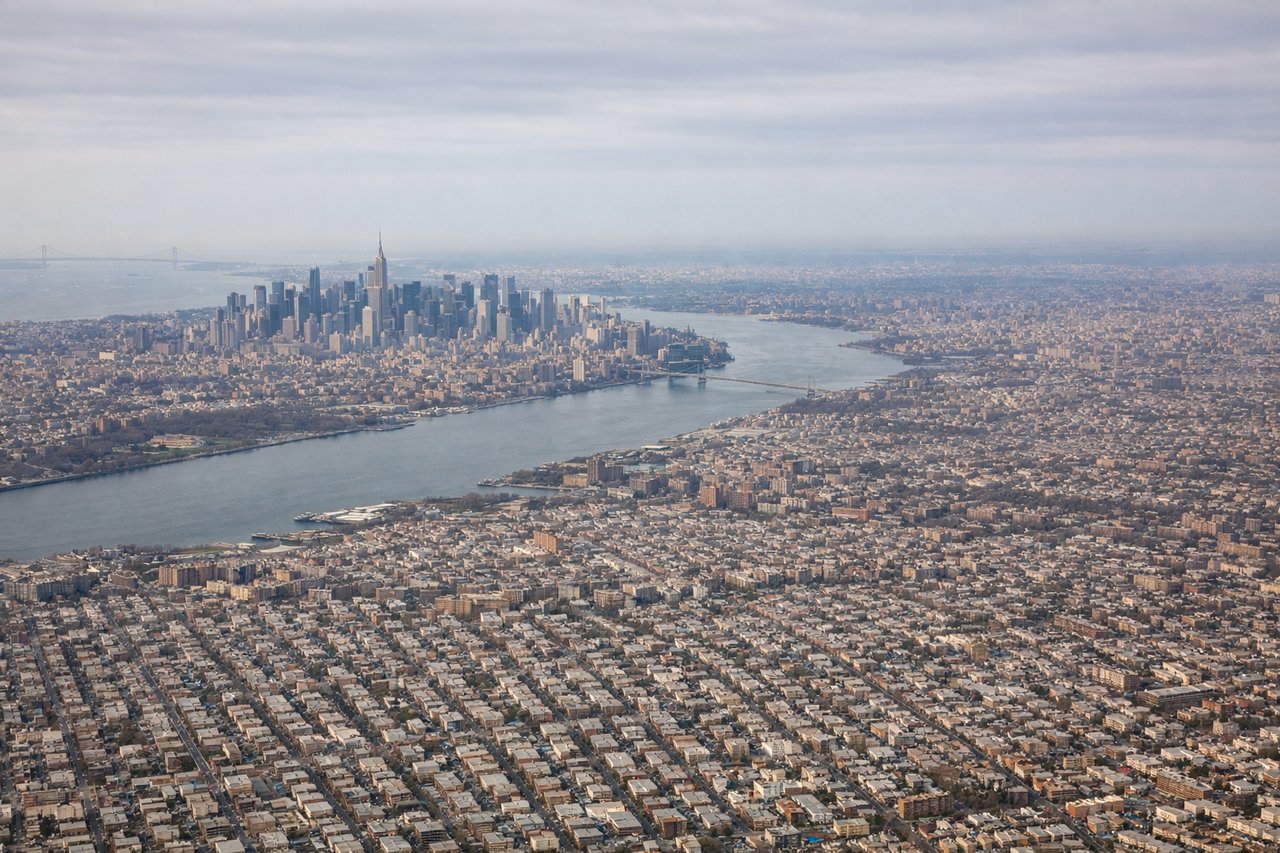
Takeoff from JFK
LEFTLeft-side seats offer views of Manhattan's skyline and the East River as you climb out westbound. You'll see the urban grid of Queens and Brooklyn receding beneath you, with the Atlantic coastline visible to the south.
Landing at BUR
RIGHTRight-side seats provide excellent views during the descent into Burbank. You'll see the San Gabriel Mountains to the northeast and the Los Angeles basin sprawl, with the Hollywood Hills and downtown LA visible to the southeast before final approach.
Landmarks on this routeAll landmarks →
Will your flight be in sunlight?
Pick a date and time in the Sun Map to watch the sun move across your whole flight.
About This Route
Which side of the plane should I sit on flying from John F Kennedy International (JFK) to Burbank Glendale Pasadena (BUR)?
Sit on the Right side of the plane for the best views on flights from New York to Burbank. While the takeoff offers good East Coast views, the landing approach into Burbank on the right side provides more dramatic and sustained scenery: the San Gabriel Mountains, the Hollywood Hills, and the Los Angeles basin create a visually richer descent than the relatively flat Queens/Brooklyn departure.
What can I see during takeoff from John F Kennedy International in New York?
During takeoff from John F Kennedy International (JFK), sit on the Left side for the best views. Left-side seats offer views of Manhattan's skyline and the East River as you climb out westbound. You'll see the urban grid of Queens and Brooklyn receding beneath you, with the Atlantic coastline visible to the south. Notable sights include: Manhattan skyline, East River, Jamaica Bay, Atlantic Ocean coastline.
What can I see when landing at Burbank Glendale Pasadena in Burbank?
When landing at Burbank Glendale Pasadena (BUR), sit on the Right side for the best views. Right-side seats provide excellent views during the descent into Burbank. You'll see the San Gabriel Mountains to the northeast and the Los Angeles basin sprawl, with the Hollywood Hills and downtown LA visible to the southeast before final approach. Notable sights include: San Gabriel Mountains, Los Angeles basin urban sprawl, Hollywood Hills, Verdugo Mountains.
How long is the flight from New York to Burbank?
The flight from John F Kennedy International (JFK) to Burbank Glendale Pasadena (BUR) takes about 5 hours 15 minutes. The shortest flight path between them is 2,460 miles (3,958 km); winds and air traffic control usually add a few percent.
What does the New York to Burbank flight path pass over?
The flight path crosses the Appalachian Mountains (visible around 1 hour out, appearing as a series of parallel ridges running northeast-southwest across Pennsylvania and West Virginia), then transitions over the flat Great Plains. Around the 2.5-hour mark, you'll see the Mississippi River valley. As you approach the Rockies (around 3.5 hours), the terrain becomes increasingly mountainous. The Continental Divide and high desert plateaus of Colorado and Utah are visible in the final 1.5 hours before descent into Southern California.