While the left side offers dramatic mountain scenery at takeoff, the right side provides more consistent visual interest across the entire flight. The approach to Singapore from the right side captures the transition from open ocean through the Strait of Malacca to the island's distinctive port and airport infrastructure—a more engaging finale than the departure views.
Flown BUR to SIN? Did we get it right?
Flight Path
Burbank to Singapore is 8,755 miles (14,090 km), a flight of about 17 hours 30 minutes.
The flight path crosses the Pacific Ocean (minimal scenic features), then transitions over the Philippines archipelago (Luzon visible on some routing), continues across the South China Sea (open water), passes near or over the Malay Peninsula (depending on exact routing), and approaches Singapore from the northwest via the Strait of Malacca. Most of the flight is over open ocean with limited landmark visibility.
Great circle distance and headings ›

Phase by phase
Takeoff from BUR
LEFTLeft-side seats offer views of the San Gabriel Mountains immediately after departure. The aircraft climbs eastward over the Los Angeles basin, and left windows capture the dramatic ridge line and peaks that form the eastern boundary of the metro area.
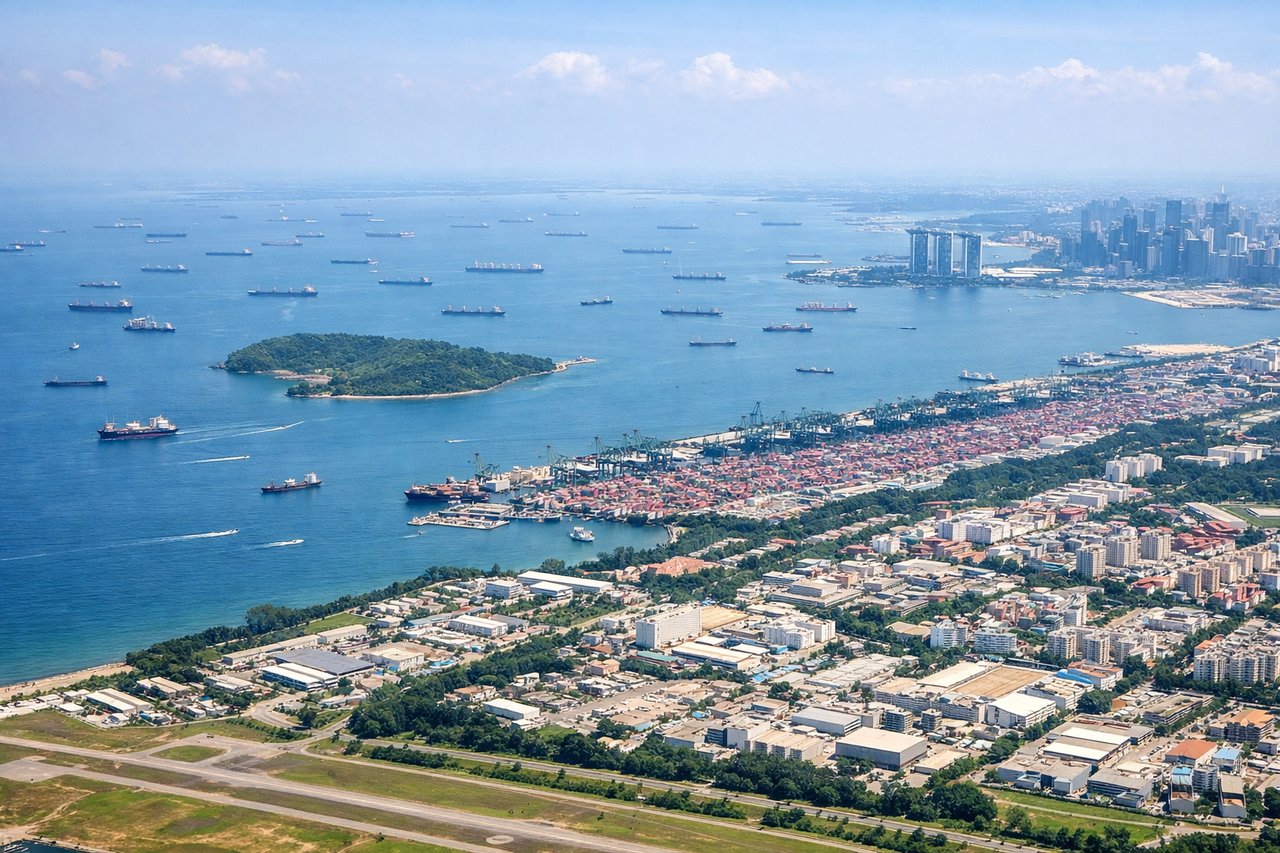
Landing at SIN
RIGHTRight-side seats provide excellent views during the approach to Singapore Changi. The aircraft descends from the northwest over the Strait of Malacca and the Johor Strait, and right windows capture the transition from open water to the densely developed island of Singapore and its surrounding port infrastructure.
Will your flight be in sunlight?
Pick a date and time in the Sun Map to watch the sun move across your whole flight.
About This Route
Which side of the plane should I sit on flying from Burbank Glendale Pasadena (BUR) to Singapore Changi (SIN)?
Sit on the Right side of the plane for the best views on flights from Burbank to Singapore. While the left side offers dramatic mountain scenery at takeoff, the right side provides more consistent visual interest across the entire flight. The approach to Singapore from the right side captures the transition from open ocean through the Strait of Malacca to the island's distinctive port and airport infrastructure—a more engaging finale than the departure views.
What can I see during takeoff from Burbank Glendale Pasadena in Burbank?
During takeoff from Burbank Glendale Pasadena (BUR), sit on the Left side for the best views. Left-side seats offer views of the San Gabriel Mountains immediately after departure. The aircraft climbs eastward over the Los Angeles basin, and left windows capture the dramatic ridge line and peaks that form the eastern boundary of the metro area. Notable sights include: San Gabriel Mountains, Los Angeles downtown skyline (to the south), Pasadena foothills, San Fernando Valley (spreading north).
What can I see when landing at Singapore Changi in Singapore?
When landing at Singapore Changi (SIN), sit on the Right side for the best views. Right-side seats provide excellent views during the approach to Singapore Changi. The aircraft descends from the northwest over the Strait of Malacca and the Johor Strait, and right windows capture the transition from open water to the densely developed island of Singapore and its surrounding port infrastructure. Notable sights include: Johor Strait (separating Malaysia and Singapore), Singapore's northern coastline and port facilities, Pulau Ubin island, Changi Airport runways and reclaimed land.
How long is the flight from Burbank to Singapore?
The flight from Burbank Glendale Pasadena (BUR) to Singapore Changi (SIN) takes about 17 hours 30 minutes. The shortest flight path between them is 8,755 miles (14,090 km); winds and air traffic control usually add a few percent.
What does the Burbank to Singapore flight path pass over?
The flight path crosses the Pacific Ocean (minimal scenic features), then transitions over the Philippines archipelago (Luzon visible on some routing), continues across the South China Sea (open water), passes near or over the Malay Peninsula (depending on exact routing), and approaches Singapore from the northwest via the Strait of Malacca. Most of the flight is over open ocean with limited landmark visibility.