Left side scores higher due to superior takeoff scenery (Nile Delta and Cairo's urban density) and consistent desert-to-coast transition during cruise. While right side offers dramatic Mount Lebanon views during landing, the left side's full-flight experience—combining Egypt's iconic river landscape, urban sprawl, and the gradual transition northward through the Levantine coast—provides greater overall variety and landmark density across the entire 1h 15m flight.
Flight Path
Eastern Mediterranean coastline (Syria/Lebanon border region), Anti-Lebanon Mountains running north-south inland, Bekaa Valley (visible at cruise altitude as a depression between Mount Lebanon and Anti-Lebanon ranges)
Great circle distance and headings ›

.jpg?width=600)
.JPG?width=600)
Phase by phase
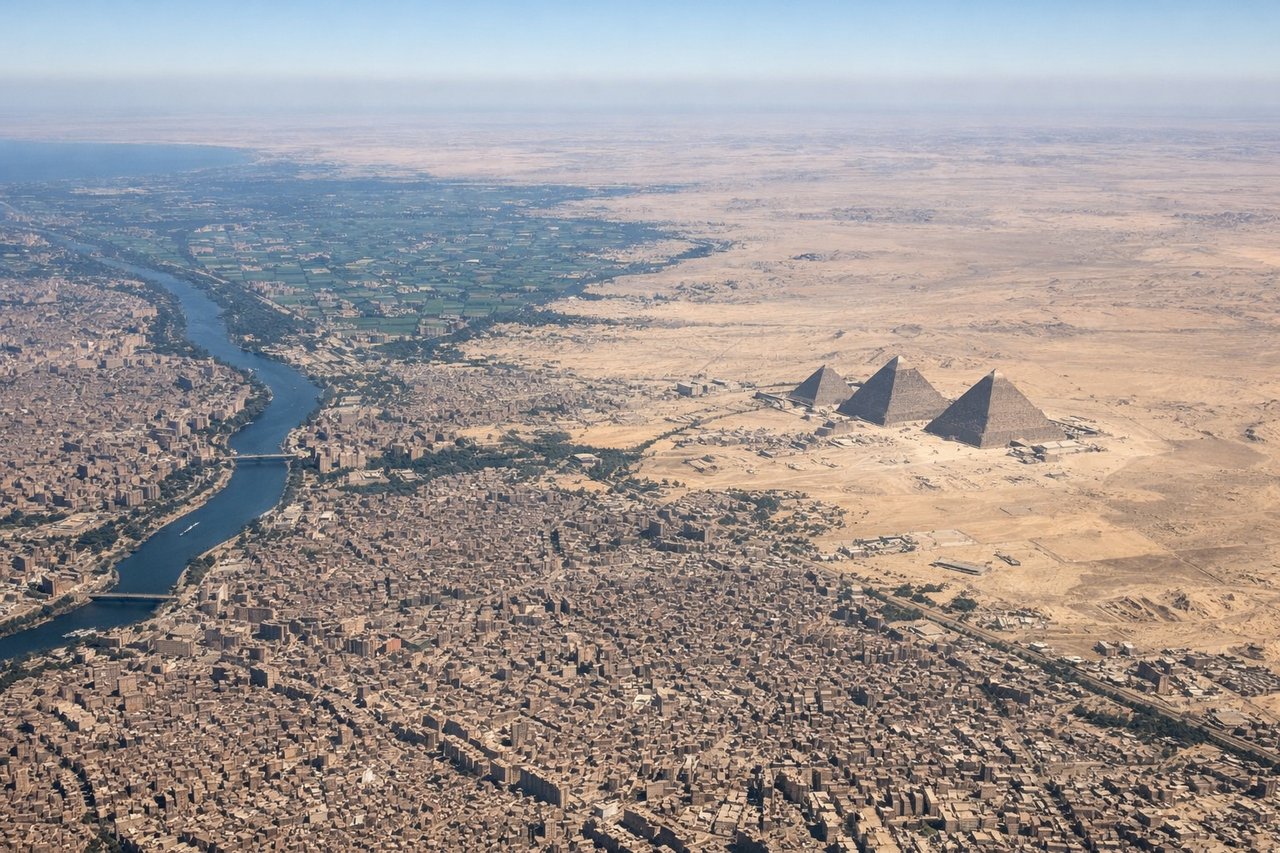
Takeoff from CAI
LEFTLeft side captures Cairo's urban sprawl and the Nile Delta during initial climb. The Nile's distinctive green ribbon and Cairo's dense cityscape provide immediate visual interest as the aircraft climbs northeast from runway 05.
Landing at BEY
RIGHTRight side offers superior approach scenery. Arriving aircraft typically descend over the Mediterranean Sea west of Beirut, then turn inland for runway 17/34 approaches. Right-side passengers see the Mediterranean coastline, Mount Lebanon's dramatic peaks rising inland, and Beirut's waterfront and harbor before touchdown.
Landmarks on this routeAll landmarks →
Will your flight be in sunlight?
See exactly which side of the plane gets sun and shade at your departure time.
About This Route
Which side of the plane should I sit on flying from Cairo International (CAI) to Beirut International (BEY)?
Sit on the Left side of the plane for the best views on flights from Cairo to Beirut. Left side scores higher due to superior takeoff scenery (Nile Delta and Cairo's urban density) and consistent desert-to-coast transition during cruise. While right side offers dramatic Mount Lebanon views during landing, the left side's full-flight experience—combining Egypt's iconic river landscape, urban sprawl, and the gradual transition northward through the Levantine coast—provides greater overall variety and landmark density across the entire 1h 15m flight.
What can I see during takeoff from Cairo International in Cairo?
During takeoff from Cairo International (CAI), sit on the Left side for the best views. Left side captures Cairo's urban sprawl and the Nile Delta during initial climb. The Nile's distinctive green ribbon and Cairo's dense cityscape provide immediate visual interest as the aircraft climbs northeast from runway 05. Notable sights include: Nile River and Delta, Cairo metropolitan area, Lake Nasser (visible at higher altitude during climb).
What can I see when landing at Beirut International in Beirut?
When landing at Beirut International (BEY), sit on the Right side for the best views. Right side offers superior approach scenery. Arriving aircraft typically descend over the Mediterranean Sea west of Beirut, then turn inland for runway 17/34 approaches. Right-side passengers see the Mediterranean coastline, Mount Lebanon's dramatic peaks rising inland, and Beirut's waterfront and harbor before touchdown. Notable sights include: Mediterranean Sea, Mount Lebanon range, Beirut harbor and waterfront, Anti-Lebanon Mountains (distant, on horizon).
How long is the flight from Cairo to Beirut?
The flight from Cairo International (CAI) to Beirut International (BEY) takes 1h 15m.
What does the Cairo to Beirut flight path pass over?
Eastern Mediterranean coastline (Syria/Lebanon border region), Anti-Lebanon Mountains running north-south inland, Bekaa Valley (visible at cruise altitude as a depression between Mount Lebanon and Anti-Lebanon ranges)