While takeoff offers compelling delta views on the right, the landing approach on the left provides more dramatic and varied scenery—the Yamuna River's curves, Delhi's sprawling cityscape, and the Aravalli Hills create a more visually engaging final descent than the relatively uniform desert crossing during cruise.
Flown CAI to DEL? Did we get it right?
Flight Path
Cairo to Delhi is 2,736 miles (4,403 km), a flight of about 5 hours 15 minutes.
The flight path crosses the Thar Desert (visible as tan, featureless terrain with sparse settlements), passes near the Rajasthan-Uttar Pradesh border region, and follows a southeast trajectory. The Great Indian Desert dominates the midpoint of the journey, with occasional dry riverbeds and scattered towns visible below. No major mountain ranges or water bodies are prominently visible during the cruise phase; the landscape is predominantly arid plateau and desert scrubland.
Great circle distance and headings ›


Phase by phase
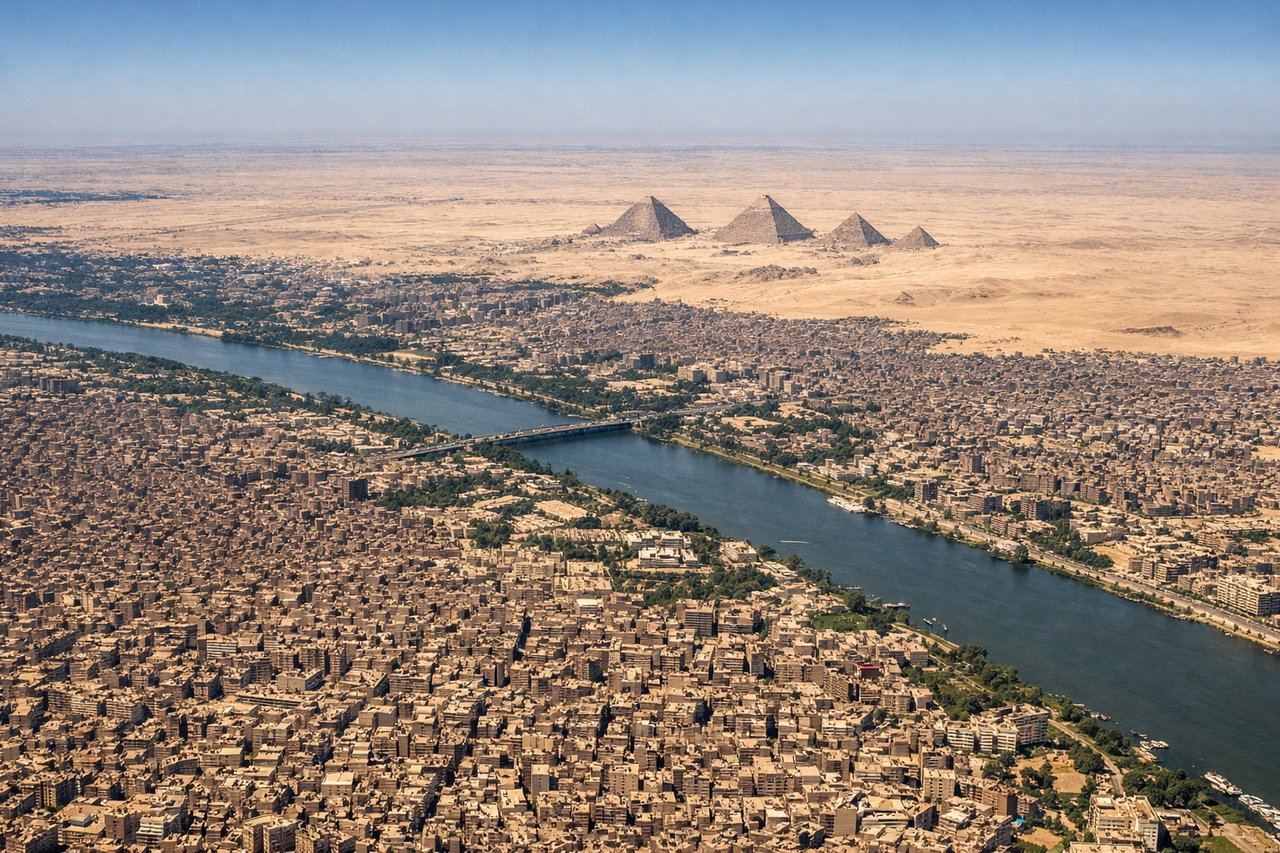
Takeoff from CAI
RIGHTRight-side seats offer views of the Nile Delta's intricate waterways and agricultural fields immediately after departure. The aircraft climbs northeast, and right-side windows capture the dense green patchwork of the delta against the surrounding desert.
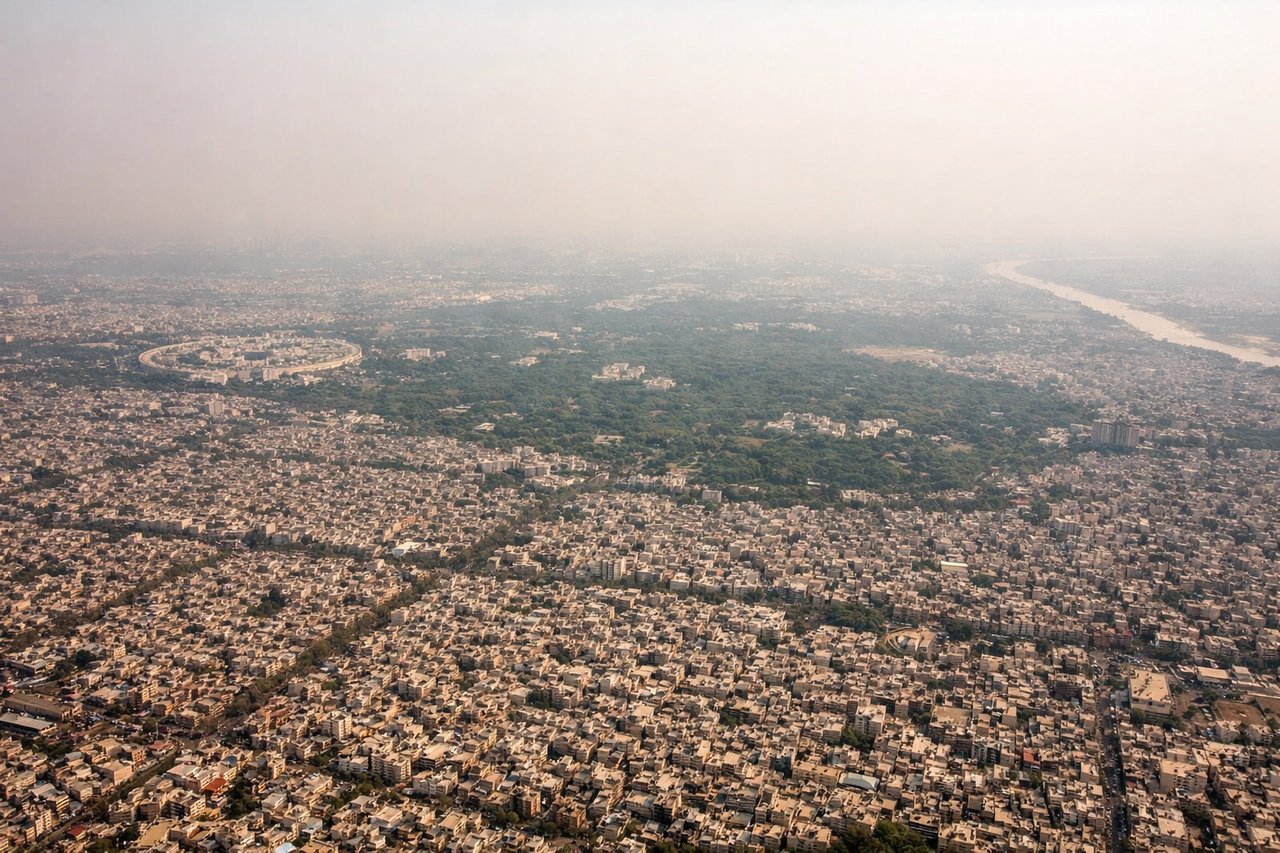
Landing at DEL
LEFTLeft-side seats provide excellent views of the Yamuna River, Delhi's urban landscape, and the Aravalli Hills as the aircraft descends on final approach from the northwest. The Yamuna's curves and the city's sprawl are particularly visible on descent.
Will your flight be in sunlight?
Pick a date and time in the Sun Map to watch the sun move across your whole flight.
About This Route
Which side of the plane should I sit on flying from Cairo International (CAI) to Indira Gandhi International (DEL)?
Sit on the Left side of the plane for the best views on flights from Cairo to Delhi. While takeoff offers compelling delta views on the right, the landing approach on the left provides more dramatic and varied scenery—the Yamuna River's curves, Delhi's sprawling cityscape, and the Aravalli Hills create a more visually engaging final descent than the relatively uniform desert crossing during cruise.
What can I see during takeoff from Cairo International in Cairo?
During takeoff from Cairo International (CAI), sit on the Right side for the best views. Right-side seats offer views of the Nile Delta's intricate waterways and agricultural fields immediately after departure. The aircraft climbs northeast, and right-side windows capture the dense green patchwork of the delta against the surrounding desert. Notable sights include: Nile Delta agricultural grid, Cairo city sprawl to the southwest, Mediterranean Sea coastline (northern horizon), Eastern Desert plateau edge.
What can I see when landing at Indira Gandhi International in Delhi?
When landing at Indira Gandhi International (DEL), sit on the Left side for the best views. Left-side seats provide excellent views of the Yamuna River, Delhi's urban landscape, and the Aravalli Hills as the aircraft descends on final approach from the northwest. The Yamuna's curves and the city's sprawl are particularly visible on descent. Notable sights include: Yamuna River with its distinctive meanders, Delhi's urban grid and high-rise clusters, Aravalli Hills ridge (southwest of airport), Indira Gandhi International Airport runways.
How long is the flight from Cairo to Delhi?
The flight from Cairo International (CAI) to Indira Gandhi International (DEL) takes about 5 hours 15 minutes. The shortest flight path between them is 2,736 miles (4,403 km); winds and air traffic control usually add a few percent.
What does the Cairo to Delhi flight path pass over?
The flight path crosses the Thar Desert (visible as tan, featureless terrain with sparse settlements), passes near the Rajasthan-Uttar Pradesh border region, and follows a southeast trajectory. The Great Indian Desert dominates the midpoint of the journey, with occasional dry riverbeds and scattered towns visible below. No major mountain ranges or water bodies are prominently visible during the cruise phase; the landscape is predominantly arid plateau and desert scrubland.