While the Nile Delta takeoff is scenic, the right side benefits from a longer, more varied stretch of coastal and mountainous terrain during cruise near southern Turkey plus a dramatic Bosphorus-adjacent arrival into Istanbul, giving it the edge over the flight as a whole.
Flight Path
Eastern Mediterranean Sea crossing with the coastline of Cyprus occasionally visible to the east, followed by the Taurus Mountains along Turkey's southern coast before the route continues north over the Anatolian plateau toward Istanbul.
Great circle distance and headings ›

.jpg?width=600)
_in_Istanbul.jpg?width=600)
Phase by phase
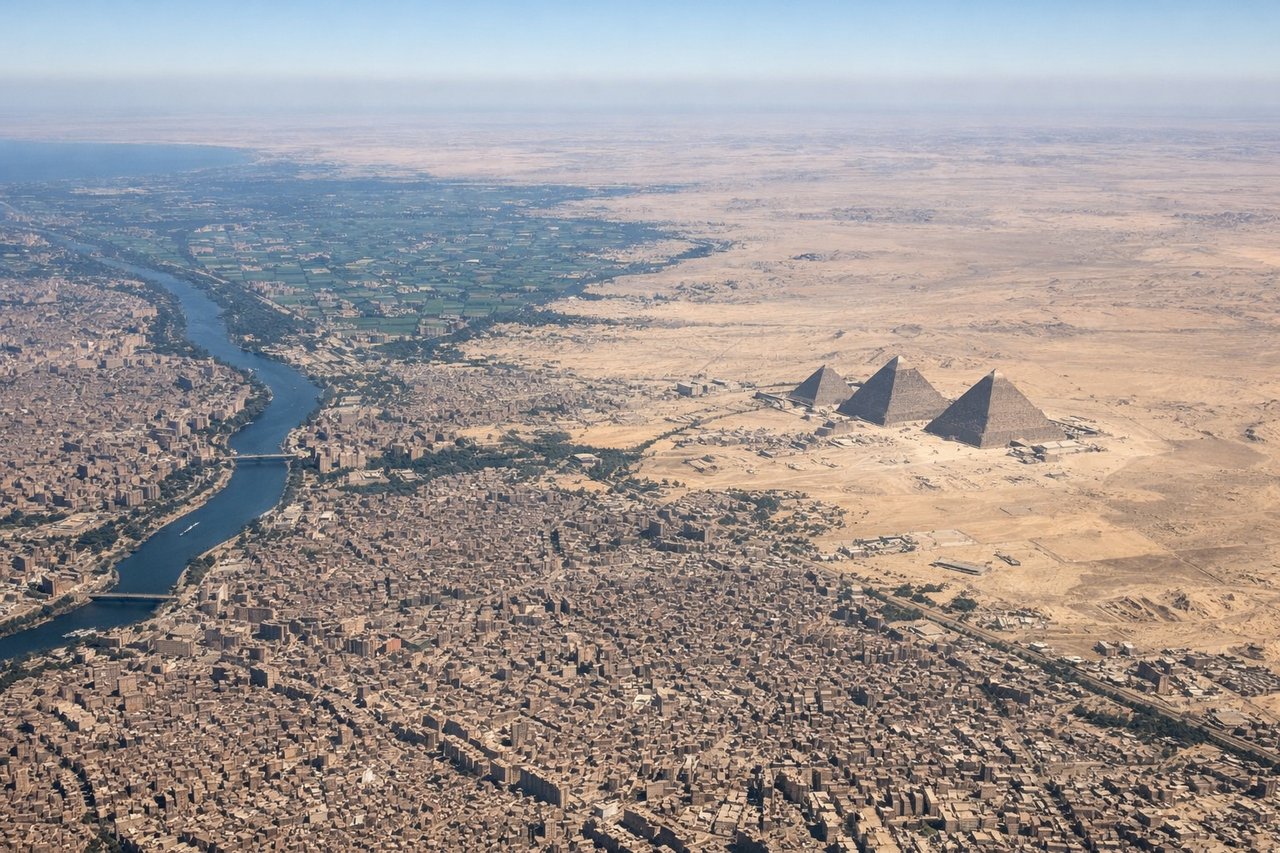
Takeoff from CAI
LEFTClimbing out of Cairo heading north, the Nile Delta unfolds directly to the west of the flight path — a striking green fan of farmland cutting through the desert, with the Nile's braided channels and Cairo's dense urban sprawl visible just after rotation. The right side mostly shows flat eastern desert with little contrast.
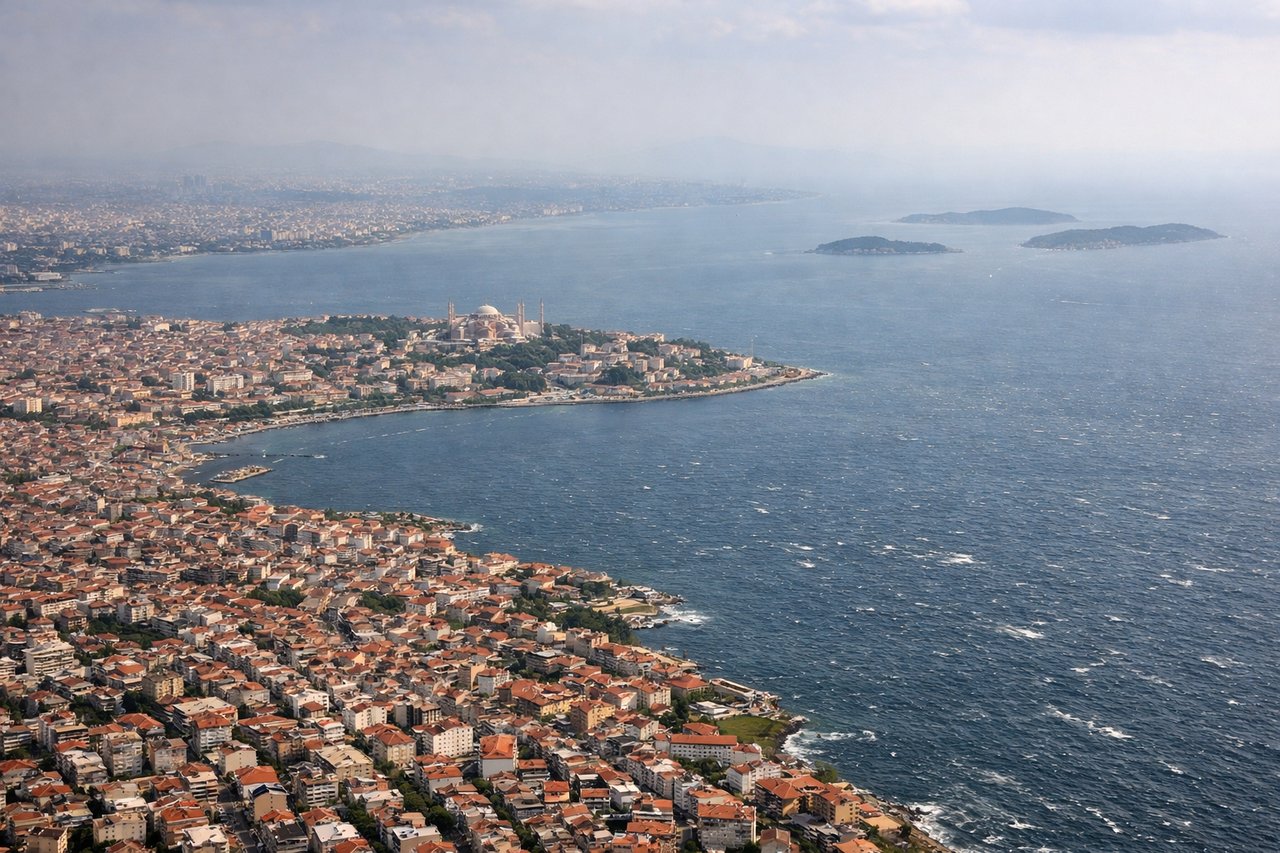
Landing at IST
RIGHTOn approach into Istanbul from the south, arrivals often track up along or near the Sea of Marmara before turning toward the runways, putting the Bosphorus strait, the historic peninsula, and the city's skyline on the right side of the aircraft. This gives a dramatic final look at one of the world's most recognizable urban waterways.
Landmarks on this routeAll landmarks →
Will your flight be in sunlight?
See exactly which side of the plane gets sun and shade at your departure time.
About This Route
Which side of the plane should I sit on flying from Cairo International (CAI) to İstanbul Airport (IST)?
Sit on the Right side of the plane for the best views on flights from Cairo to Istanbul. While the Nile Delta takeoff is scenic, the right side benefits from a longer, more varied stretch of coastal and mountainous terrain during cruise near southern Turkey plus a dramatic Bosphorus-adjacent arrival into Istanbul, giving it the edge over the flight as a whole.
What can I see during takeoff from Cairo International in Cairo?
During takeoff from Cairo International (CAI), sit on the Left side for the best views. Climbing out of Cairo heading north, the Nile Delta unfolds directly to the west of the flight path — a striking green fan of farmland cutting through the desert, with the Nile's braided channels and Cairo's dense urban sprawl visible just after rotation. The right side mostly shows flat eastern desert with little contrast. Notable sights include: Nile River and Delta farmland, Cairo urban sprawl, Giza plateau (briefly to the southwest), eastern desert plateau on the opposite side.
What can I see when landing at İstanbul Airport in Istanbul?
When landing at İstanbul Airport (IST), sit on the Right side for the best views. On approach into Istanbul from the south, arrivals often track up along or near the Sea of Marmara before turning toward the runways, putting the Bosphorus strait, the historic peninsula, and the city's skyline on the right side of the aircraft. This gives a dramatic final look at one of the world's most recognizable urban waterways. Notable sights include: Sea of Marmara coastline, Bosphorus strait entrance, Istanbul historic peninsula skyline, Princes' Islands offshore.
How long is the flight from Cairo to Istanbul?
The flight from Cairo International (CAI) to İstanbul Airport (IST) takes 2h 45m.
What does the Cairo to Istanbul flight path pass over?
Eastern Mediterranean Sea crossing with the coastline of Cyprus occasionally visible to the east, followed by the Taurus Mountains along Turkey's southern coast before the route continues north over the Anatolian plateau toward Istanbul.