The right (west) side tracks closer to the Nile corridor for most of the flight, offering the Giza Pyramids on departure, glimpses of the river's green ribbon through the desert during cruise, and the Valley of the Kings escarpment on arrival into Luxor — landmarks the left side simply doesn't have.
Flight Path
The Nile River valley's narrow green agricultural strip winding through the Eastern Sahara, visible intermittently to the west of the direct flight path, bordered by the arid plateau of the Eastern Desert.
Great circle distance and headings ›.jpg?width=600)


Phase by phase
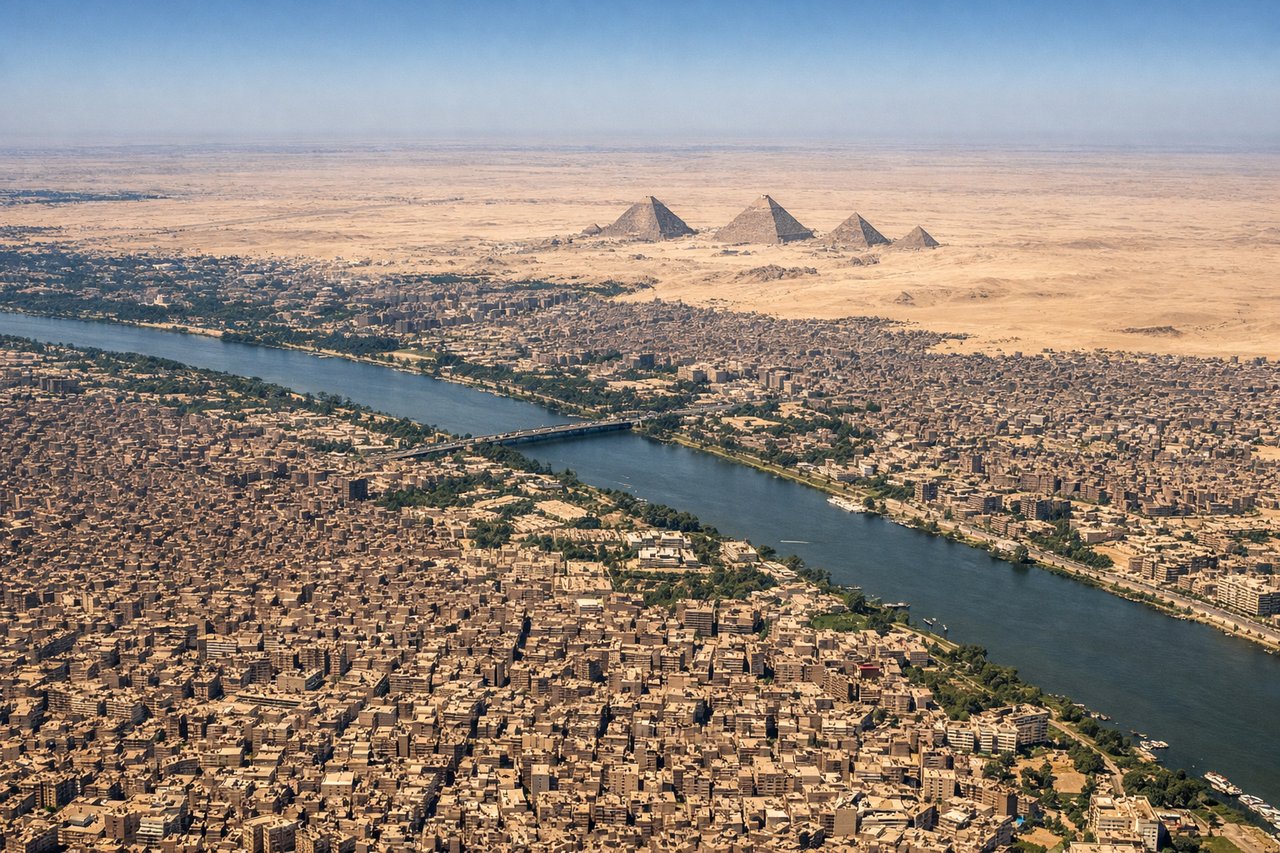
Takeoff from CAI
RIGHTDeparting CAI to the south, the standard turn onto the southbound track swings the aircraft over the Nile Delta's green fields and irrigation channels, with a chance of the Giza Plateau and its pyramids appearing in the middle distance to the west before the desert takes over. The left side mostly shows the flat eastern outskirts of Cairo and open desert with no comparable landmark.
Landing at LXR
RIGHTOn approach into Luxor from the north, the final descent tracks close to the Nile, putting the dramatic limestone cliffs of the West Bank—home to the Valley of the Kings and the mortuary temples—on the right side of the aircraft. The left side faces the flatter Eastern Desert with far less visual interest.
Landmarks on this routeAll landmarks →
Will your flight be in sunlight?
See exactly which side of the plane gets sun and shade at your departure time.
About This Route
Which side of the plane should I sit on flying from Cairo International (CAI) to Luxor International (LXR)?
Sit on the Right side of the plane for the best views on flights from Cairo to Luxor. The right (west) side tracks closer to the Nile corridor for most of the flight, offering the Giza Pyramids on departure, glimpses of the river's green ribbon through the desert during cruise, and the Valley of the Kings escarpment on arrival into Luxor — landmarks the left side simply doesn't have.
What can I see during takeoff from Cairo International in Cairo?
During takeoff from Cairo International (CAI), sit on the Right side for the best views. Departing CAI to the south, the standard turn onto the southbound track swings the aircraft over the Nile Delta's green fields and irrigation channels, with a chance of the Giza Plateau and its pyramids appearing in the middle distance to the west before the desert takes over. The left side mostly shows the flat eastern outskirts of Cairo and open desert with no comparable landmark. Notable sights include: Nile Delta farmland, Cairo's western suburbs, Giza Pyramids (if flight path swings west), Nile River channels.
What can I see when landing at Luxor International in Luxor?
When landing at Luxor International (LXR), sit on the Right side for the best views. On approach into Luxor from the north, the final descent tracks close to the Nile, putting the dramatic limestone cliffs of the West Bank—home to the Valley of the Kings and the mortuary temples—on the right side of the aircraft. The left side faces the flatter Eastern Desert with far less visual interest. Notable sights include: Nile River, West Bank cliffs (Valley of the Kings escarpment), Luxor's green river valley, desert-to-farmland contrast.
How long is the flight from Cairo to Luxor?
The flight from Cairo International (CAI) to Luxor International (LXR) takes 1h 05m.
What does the Cairo to Luxor flight path pass over?
The Nile River valley's narrow green agricultural strip winding through the Eastern Sahara, visible intermittently to the west of the direct flight path, bordered by the arid plateau of the Eastern Desert.