Cairo to Tunis is 1,302 miles (2,096 km), a flight of about 3 hours 10 minutes.
While takeoff favors the right side for delta views, the landing approach into Tunis is visually superior and more dramatic—the Gulf of Tunis, Lake of Tunis, and the city's coastal setting provide more concentrated scenic interest. Left-side seats capture the approach descent, which is typically more engaging than the initial climb.
Flight Path
The flight path crosses the Mediterranean Sea northwestward. At cruise altitude (around 25,000-30,000 feet), the Libyan coast recedes to the south, and the open Mediterranean dominates the view. No major landmarks are visible at midpoint—this is open water. The North African coastline gradually transitions from Egyptian to Libyan to Tunisian as the aircraft progresses. Approaching Tunisia, the Dorsal mountain range (Atlas system) becomes visible on the horizon to the west, though it remains distant and subtle at cruise altitude.
Great circle distance and headings ›
.jpg?width=600)

.jpg?width=600)
Phase by phase
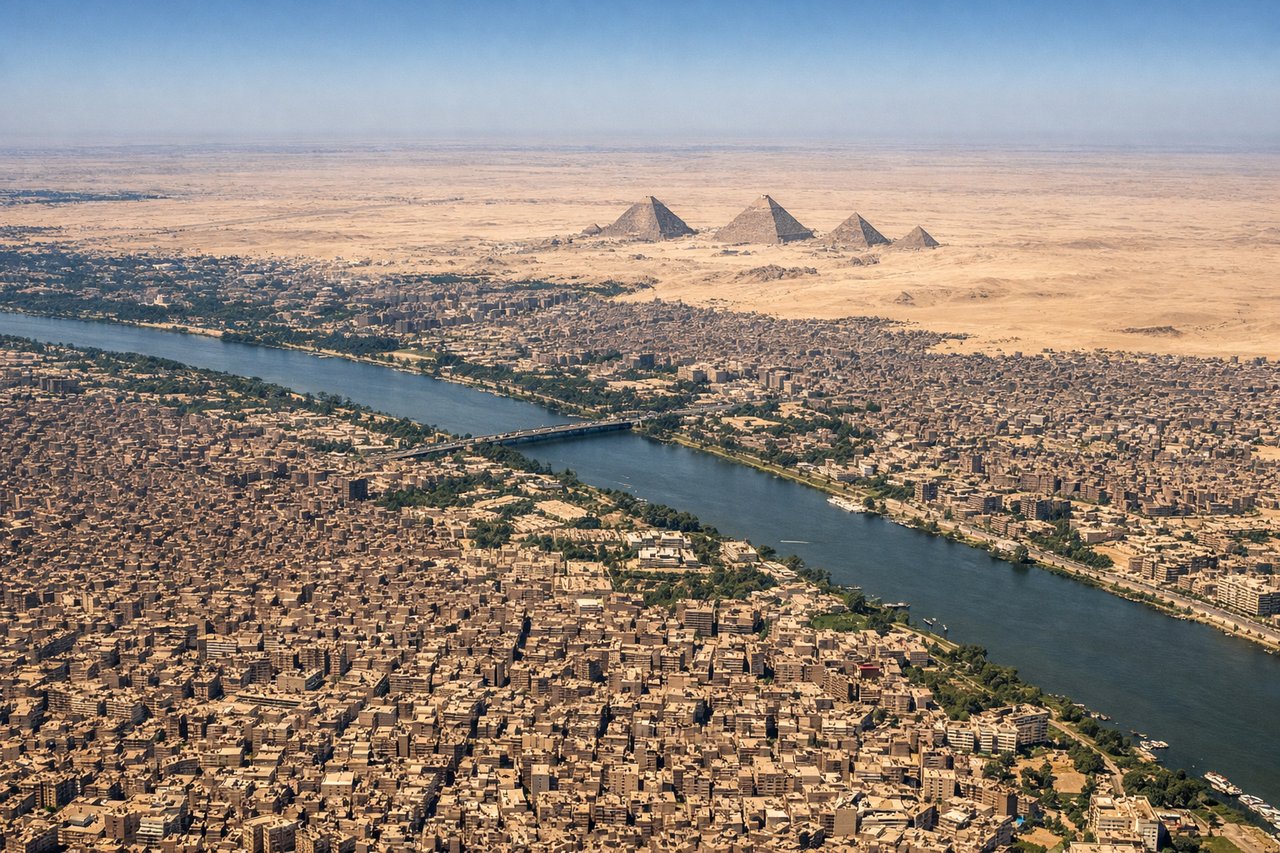
Takeoff from CAI
RIGHTRight-side seats offer views of the Nile Delta's intricate waterways and agricultural fields immediately after departure. The aircraft climbs northwestward, and right-side windows capture the dense green patchwork of the delta against the desert, plus views toward the Mediterranean coast ahead.
Landing at TUN
LEFTLeft-side seats provide excellent views during descent into Tunis. The aircraft approaches from the southeast, and left windows frame the Gulf of Tunis, the city of Tunis itself spreading across the coastal plain, and the distinctive Lake of Tunis (Lac de Tunis) separating the city from the Mediterranean.
Landmarks on this routeAll landmarks →
Will your flight be in sunlight?
Pick a date and time in the Sun Map to watch the sun move across your whole flight.
About This Route
Which side of the plane should I sit on flying from Cairo International (CAI) to Carthage (TUN)?
Sit on the Left side of the plane for the best views on flights from Cairo to Tunis. While takeoff favors the right side for delta views, the landing approach into Tunis is visually superior and more dramatic—the Gulf of Tunis, Lake of Tunis, and the city's coastal setting provide more concentrated scenic interest. Left-side seats capture the approach descent, which is typically more engaging than the initial climb.
What can I see during takeoff from Cairo International in Cairo?
During takeoff from Cairo International (CAI), sit on the Right side for the best views. Right-side seats offer views of the Nile Delta's intricate waterways and agricultural fields immediately after departure. The aircraft climbs northwestward, and right-side windows capture the dense green patchwork of the delta against the desert, plus views toward the Mediterranean coast ahead. Notable sights include: Nile Delta agricultural grid, Cairo metropolitan area receding southward, Lake Manzala (shallow lagoon northeast of delta), Mediterranean Sea coastline.
What can I see when landing at Carthage in Tunis?
When landing at Carthage (TUN), sit on the Left side for the best views. Left-side seats provide excellent views during descent into Tunis. The aircraft approaches from the southeast, and left windows frame the Gulf of Tunis, the city of Tunis itself spreading across the coastal plain, and the distinctive Lake of Tunis (Lac de Tunis) separating the city from the Mediterranean. Notable sights include: Gulf of Tunis (Mediterranean inlet), Lake of Tunis (shallow lagoon), Tunis city sprawl, Carthage archaeological site area on northern peninsula.
How long is the flight from Cairo to Tunis?
The flight from Cairo International (CAI) to Carthage (TUN) takes about 3 hours 10 minutes. The shortest flight path between them is 1,302 miles (2,096 km); winds and air traffic control usually add a few percent.
What does the Cairo to Tunis flight path pass over?
The flight path crosses the Mediterranean Sea northwestward. At cruise altitude (around 25,000-30,000 feet), the Libyan coast recedes to the south, and the open Mediterranean dominates the view. No major landmarks are visible at midpoint—this is open water. The North African coastline gradually transitions from Egyptian to Libyan to Tunisian as the aircraft progresses. Approaching Tunisia, the Dorsal mountain range (Atlas system) becomes visible on the horizon to the west, though it remains distant and subtle at cruise altitude.