While takeoff offers compelling delta scenery on the right, the landing approach on the left provides more dramatic and sustained visual interest with the Danube's meanders and Alpine foothills. The left side captures the most geographically distinctive features of the destination region.
Flown CAI to VIE? Did we get it right?
Flight Path
Cairo to Vienna is 1,470 miles (2,366 km), a flight of about 4 hours 15 minutes.
The flight path crosses the eastern Mediterranean coast near Port Said, then proceeds northwest over the Levantine coast and eastern Mediterranean Sea. Over water for roughly 2 hours, you'll see the Sinai Peninsula to the south and the Levantine coastline (Syria, Lebanon) to the north during early cruise. The flight then transitions over southern Turkey and the Taurus Mountains, with the Anatolian Plateau visible to the north. As you approach central Europe, the Carpathian Mountains appear on the horizon before descending into the Danube Basin and Vienna approach.
Great circle distance and headings ›


Phase by phase

Takeoff from CAI
RIGHTRight-side seats offer views of the Nile Delta's intricate irrigation channels and the sprawling Cairo metropolitan area as you climb northward. The delta's geometric field patterns and the contrast between cultivated green and desert sand are striking from altitude.
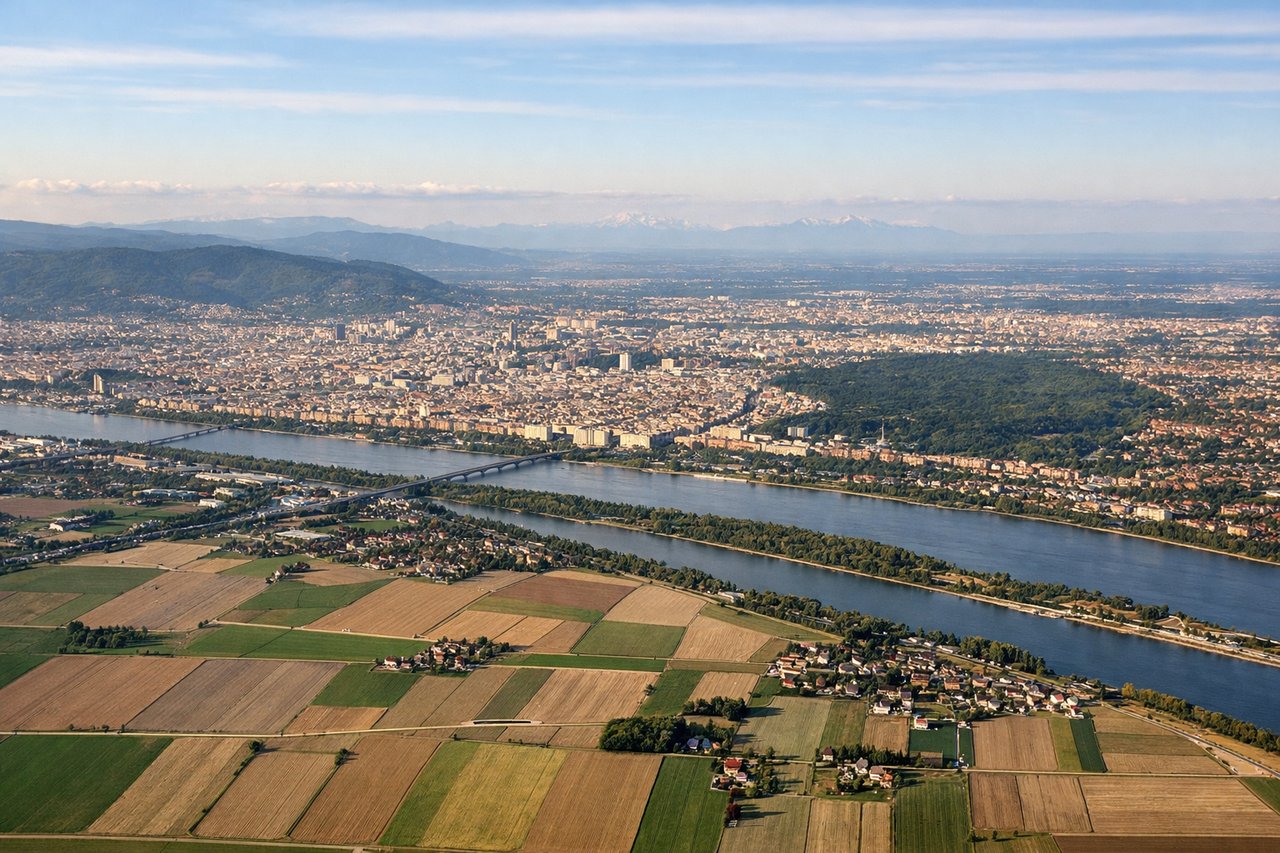
Landing at VIE
LEFTLeft-side seats during descent into Vienna provide excellent views of the Danube River's distinctive meanders and the Alpine foothills as you approach from the southeast. The river's oxbow bends are particularly visible and photogenic during final approach.
Will your flight be in sunlight?
Pick a date and time in the Sun Map to watch the sun move across your whole flight.
About This Route
Which side of the plane should I sit on flying from Cairo International (CAI) to Schwechat (VIE)?
Sit on the Left side of the plane for the best views on flights from Cairo to Vienna. While takeoff offers compelling delta scenery on the right, the landing approach on the left provides more dramatic and sustained visual interest with the Danube's meanders and Alpine foothills. The left side captures the most geographically distinctive features of the destination region.
What can I see during takeoff from Cairo International in Cairo?
During takeoff from Cairo International (CAI), sit on the Right side for the best views. Right-side seats offer views of the Nile Delta's intricate irrigation channels and the sprawling Cairo metropolitan area as you climb northward. The delta's geometric field patterns and the contrast between cultivated green and desert sand are striking from altitude. Notable sights include: Nile Delta with its branching waterways, Cairo city sprawl extending south and west, Lake Manzala to the northeast, Eastern Desert plateau edge.
What can I see when landing at Schwechat in Vienna?
When landing at Schwechat (VIE), sit on the Left side for the best views. Left-side seats during descent into Vienna provide excellent views of the Danube River's distinctive meanders and the Alpine foothills as you approach from the southeast. The river's oxbow bends are particularly visible and photogenic during final approach. Notable sights include: Danube River with characteristic meanders, Alpine foothills to the south and west, Vienna city sprawl, Carpathian Basin plains.
How long is the flight from Cairo to Vienna?
The flight from Cairo International (CAI) to Schwechat (VIE) takes about 4 hours 15 minutes. The shortest flight path between them is 1,470 miles (2,366 km); winds and air traffic control usually add a few percent.
What does the Cairo to Vienna flight path pass over?
The flight path crosses the eastern Mediterranean coast near Port Said, then proceeds northwest over the Levantine coast and eastern Mediterranean Sea. Over water for roughly 2 hours, you'll see the Sinai Peninsula to the south and the Levantine coastline (Syria, Lebanon) to the north during early cruise. The flight then transitions over southern Turkey and the Taurus Mountains, with the Anatolian Plateau visible to the north. As you approach central Europe, the Carpathian Mountains appear on the horizon before descending into the Danube Basin and Vienna approach.