The right side captures the most dramatic scenery at departure (Nile Delta and Mediterranean), while the left side dominates arrival (Lake Ontario and Toronto waterfront). However, right-side seats offer the more visually distinctive and geographically unique features overall, particularly the Nile Delta's agricultural patterns which are rarely seen from other commercial routes.
Flown CAI to YTZ? Did we get it right?
Flight Path
Cairo to Toronto is 5,727 miles (9,216 km), a flight of about 13 hours 15 minutes.
The flight path crosses the Mediterranean Sea, southern Europe (likely over Greece or southern Italy depending on routing), the Alps or Balkans, central Europe, and the Atlantic Ocean. Notable features include the Mediterranean coastline, European mountain ranges, and the Atlantic's open water. The route typically follows established airways over the Atlantic, with no major visible landmarks during the mid-ocean crossing phase.
Great circle distance and headings ›


Phase by phase
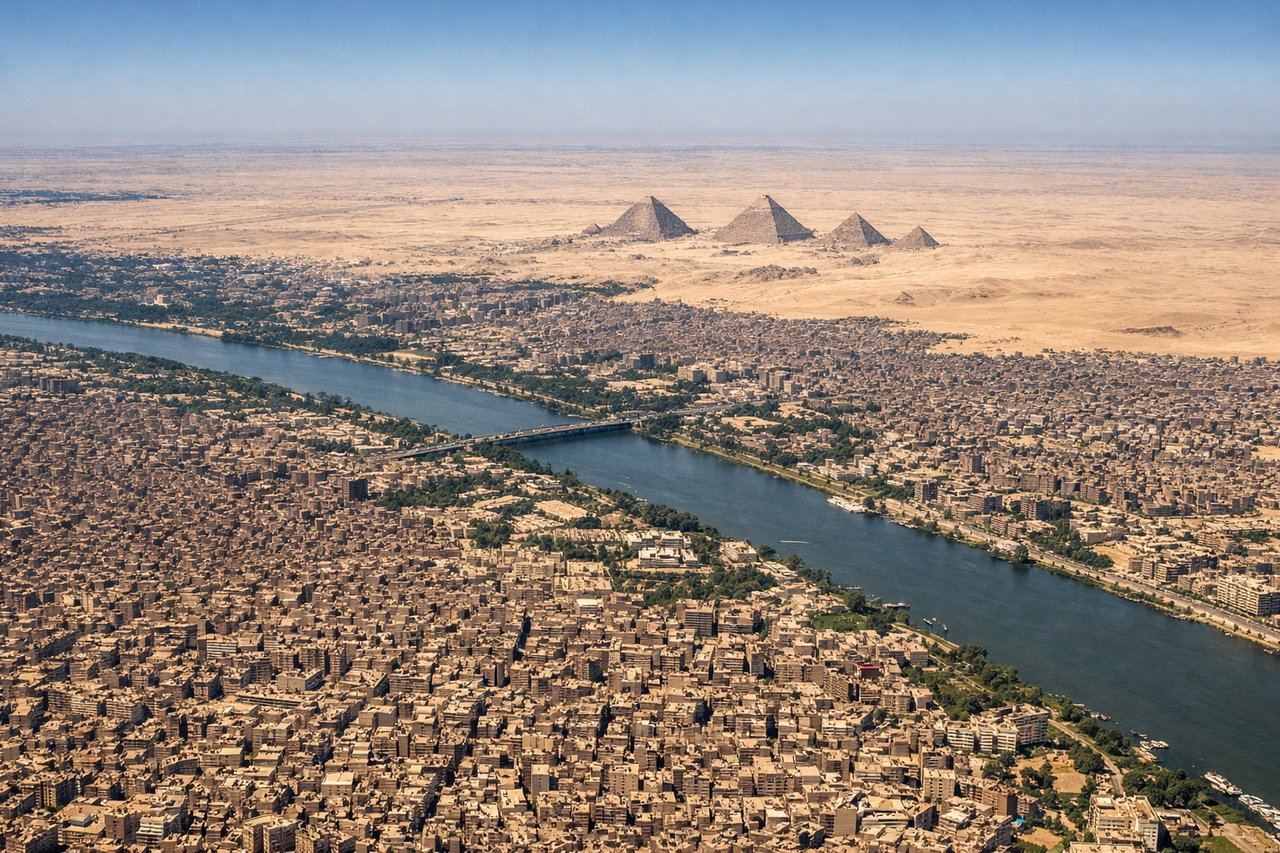
Takeoff from CAI
RIGHTRight-side seats offer views of the Nile Delta as the aircraft climbs northward from Cairo International. The delta's distinctive fan-shaped irrigation pattern and the Nile River's braided channels are clearly visible during the initial climb-out phase.
Landing at YTZ
LEFTLeft-side seats provide excellent views during the descent approach into Toronto. The aircraft typically descends over Lake Ontario from the southeast, offering views of the lake's vast expanse, the Toronto waterfront, and the city's downtown core along the shoreline.
Will your flight be in sunlight?
Pick a date and time in the Sun Map to watch the sun move across your whole flight.
About This Route
Which side of the plane should I sit on flying from Cairo International (CAI) to City Centre (YTZ)?
Sit on the Right side of the plane for the best views on flights from Cairo to Toronto. The right side captures the most dramatic scenery at departure (Nile Delta and Mediterranean), while the left side dominates arrival (Lake Ontario and Toronto waterfront). However, right-side seats offer the more visually distinctive and geographically unique features overall, particularly the Nile Delta's agricultural patterns which are rarely seen from other commercial routes.
What can I see during takeoff from Cairo International in Cairo?
During takeoff from Cairo International (CAI), sit on the Right side for the best views. Right-side seats offer views of the Nile Delta as the aircraft climbs northward from Cairo International. The delta's distinctive fan-shaped irrigation pattern and the Nile River's braided channels are clearly visible during the initial climb-out phase. Notable sights include: Nile Delta with agricultural grid patterns, Mediterranean Sea coastline near Alexandria, Cairo urban sprawl to the south, Suez Canal corridor to the east.
What can I see when landing at City Centre in Toronto?
When landing at City Centre (YTZ), sit on the Left side for the best views. Left-side seats provide excellent views during the descent approach into Toronto. The aircraft typically descends over Lake Ontario from the southeast, offering views of the lake's vast expanse, the Toronto waterfront, and the city's downtown core along the shoreline. Notable sights include: Lake Ontario's open water, Toronto Islands (Toronto Island Park), downtown Toronto skyline along the waterfront, Scarborough Bluffs to the east.
How long is the flight from Cairo to Toronto?
The flight from Cairo International (CAI) to City Centre (YTZ) takes about 13 hours 15 minutes. The shortest flight path between them is 5,727 miles (9,216 km); winds and air traffic control usually add a few percent.
What does the Cairo to Toronto flight path pass over?
The flight path crosses the Mediterranean Sea, southern Europe (likely over Greece or southern Italy depending on routing), the Alps or Balkans, central Europe, and the Atlantic Ocean. Notable features include the Mediterranean coastline, European mountain ranges, and the Atlantic's open water. The route typically follows established airways over the Atlantic, with no major visible landmarks during the mid-ocean crossing phase.